Nature
 PUBLISHED


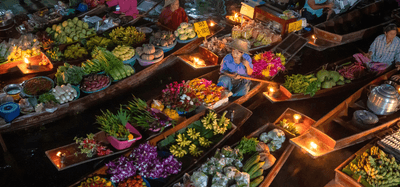


In practically every corner of the world, vegetable market stalls are becoming less colorful, increasingly homogenized, and quite frankly boring – and these scientists from the World Vegetable Center think that’s a very big problem.
Vegetable diversity is nosediving
Most of the vegetables humans eat today are relatively recent inventions, domesticated descendants of wild plants that humans began selectively breeding around the Neolithic Revolution, roughly 12,000 years ago.
In more recent times, that already-narrow roster has dwindled even further thanks to industrialized agriculture, cultural homogenization, and globalized supply chains.
Traditional varieties and their wild relatives have fallen out of favor, leaving just a shrinking selection of tamed vegetables on supermarket shelves. The end result is a steep decline in the diversity of vegetables available to people worldwide.
There are over 1,480 edible vegetable species that exist, yet the vast majority remain underused and unenjoyed. Everybody knows carrots, potatoes, and onions, but when was the last time you had winged beans, gai lan, or the oca of the Andes Mountains?
Why the loss of vegetable diversity is bad
Scientists at the World Vegetable Center, perhaps surprisingly, believe this is a very negative development for a variety of reasons.
First is health. By limiting the variety of vegetables we consume, we restrict our diet and the nutrients we obtain.
“The solution isn’t simply to grow more vegetables – it’s also to grow more kinds of vegetables,” Dr. Maarten van Zonneveld, who led the research while Head of Genetic Resources at the World Vegetable Center and who is now Head of Genebank and Biodiversity Science Goal leader at the International Potato Center, said in a statement.
“Much of the vegetable biodiversity we need is still out there – in traditional varieties and their wild relatives. The urgency is to conserve it properly so that we can use it wisely to diversify diets amid climate change.”
Indeed, the environment and agricultural resilience are another big reason to big up the obscure vegetable. Underused crops – like spider plant in Africa, bitter gourd in Asia, and slippery cabbage in the Pacific – all carry traits that could help breed new varieties better able to withstand heat, drought, pests, and disease.
There’s also the argument that monoculture, the practice of growing a single crop variety across vast areas, is a risky business, both economically and ecologically. For instance, if a disease takes root in one plant, it rapidly spreads through the entire identical field like wildfire.
“Vegetable biodiversity is one of the world’s greatest assets for improving diets and adapting agriculture to a changing climate, but we’re losing it at exactly the time we need it most,” added Dr. Colin Khoury, Global Conservation Lead at the Crop Trust.
“Conserving vegetable biodiversity isn’t just about protecting the past – it’s about securing more options for the future,” he added.
What can we do?
To remedy the problem, the researchers put together four priorities for governments, funders, and researchers:
- Secure vegetable biodiversity for the future by conserving and restoring traditional vegetable varieties and their wild relatives before they are lost
- Use vegetable biodiversity to develop improved varieties by expanding research, breeding, and access to diverse genetic resources.
- Promote vegetable biodiversity to diversify diets by increasing the production and availability of a wider range of vegetables.
- Embed vegetable biodiversity in policy by fusing agriculture, health, education, climate, and biodiversity strategies.
If the world achieves these aims, the researchers believe the death of vegetable diversity might be averted.
The new study is published in the journal Proceedings of the National Academy of Sciences.