Nature
 PUBLISHED




One of the less-noticed effects of tsunamis, for humans at least, is the way they can carry species into unfamiliar territory, such as saltwater fish into normally fresh waters.
A study of the effects of the Great East Japan Earthquake of 2011 has revealed how jumbled the genetics became in an affected area, but also how rapidly old species boundaries returned.
New species do not form overnight. Instead, a slow divergence occurs, frequently driven by geographic isolation. Related species retain the capacity to interbreed for a long time, as the presence of Neanderthal and Denisovan genes in our own DNA can testify.
Human activity frequently breaks down geographic barriers between species, for example, transporting animals from one island to another, where the new arrivals often fraternize with the locals, producing hybrid offspring. Since this is usually an ongoing process, opportunities to understand how lasting a single event might be are rare.
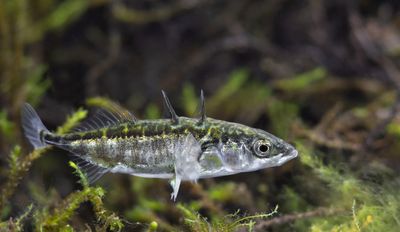
Fortunately, however, there are decades or centuries between tsunamis, particularly those as destructive as the one that hit Japan in 2011. That event brought together marine Japan Sea sticklebacks, Gasterosteus nipponicus, and freshwater threespine sticklebacks, Gasterosteus aculeatus, – species separated for 680,000 years - in ponds the tsunami created, causing a rare natural experiment.
Although the newly formed ponds were initially filled with sea water, which arrived along with the G. nipponicus, they lie in depressions carved out by the force of the waves and land subsidence, so the water was replenished by rain. Consequently, the ponds are now largely fresh.
Although G. nipponicus are considered marine, they spend part of their lives in freshwater, so they not only survived in this new environment, but bred with the G. aculeatus brought down by the tsunami’s backwash. In 2012, a survey of ponds in the center of Otsuchi Town found that 38 percent of the fish living there were hybrids, with both marine and freshwater ancestry.
However, rather than heralding the birth of a new species, the event proved that G. nipponicus doesn’t do so well without access to the sea. As each year passed, successive generations of Otsuchi sticklebacks had less and less nipponicus material in their genome, until by 2020 they were almost genetically indistinguishable from G. aculeatus that never met their marine cousins.
Gasterosteus usually breeds annually, so it took 10 generations for the marine alleles (gene variations) to disappear. This is much faster than random genetic drift would suggest.
Selection pressure was heavier in some parts of the genome than others. Unsurprisingly, genomic regions associated with freshwater adaptation disappeared more rapidly than other G. nipponicus traces. Other areas that didn’t last long included those that control migration to the sea, mate choice and the fertility or otherwise of hybrid males.
In an outstanding representation of natural selection, hybrids that received those parts of the genome from their G. aculeatus parent did better, at least reproductively, than those that got the G. nipponicus alleles.
“There were two major surprises in this study,” Dr Takuya Hosoki and Dr Jun Kitano of Japan’s National Institute of Genetics said in a statement. “First, we did not expect genomic regions associated with major reproductive barriers to be purged so rapidly. Second, we were surprised that most of the foreign genome continued to disappear over subsequent generations.” In other words, even the G. nipponicus genes that would appear neutral in these freshwater environments didn’t last long.
The contrast with the Neanderthal alleles that have stuck around in our genomes for thousands of generations is stark, raising questions about why we haven’t followed the same path.
“An important next question is whether this combination of a few strong reproductive barriers and many weak genetic incompatibilities represents a general mechanism by which species boundaries are maintained after hybridization,” Hosoki and Kitano continued.
Previous studies of natural hybridization incidents have either usually started long after the hybridization event, or have been on longer-lived species, making it harder to follow through for so many generations.
However, the work provides an interesting echo of a study on marine G. aculeatus fish in Alaska, who were uplifted by an equally large 1964 earthquake into waters that quickly became fresh. In that case, within fifty years the isolated sticklebacks were genetically distinct from their marine counterparts.
The study is open access in Nature Ecology & Evolution.