Nature
 PUBLISHED



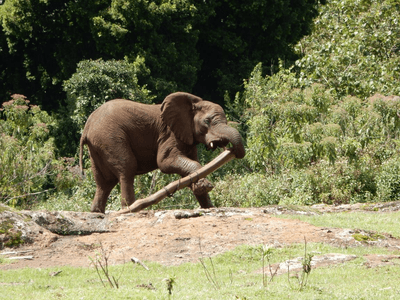


African elephants’ have been found to be canny users of plants favored in traditional medicine, many of which have been proven to have the capacity to fight infections.
While the pharmacological choices of Asian elephants have been studied before, it hadn't been officially reported in African elephants. We now know they do, including fascinating accounts of the elephants proactively protecting their young with medicine.
In previous work, researchers found that sick and wounded chimpanzees seek plants with antibacterial and anti-inflammatory properties. An update last year showed that members of a troop take a "no chimp left behind" approach to medicine, treating each other after fights or encounters with hunters’ snares.
Now some of the same researchers have shown that the circle of healers reaches beyond our nearest relatives to species that go much further back in our evolution: African elephants.
“Every species on the planet self-medicates in some way or another,” Dr Michael Huffman, a primatologist at Nagasaki University, previously told IFLScience. However, the sophistication of self-medication varies between species, and accounts of medicating each other are much rarer.
Elephant pharmacology
Around 1,800 years ago, the Roman author Claudius Aelianus wrote in De natura animalium that elephants consume olive tree flowers and oil after being wounded by spears. Aelianus claimed that this practice healed their wounds, although there has since been some dispute about whether he meant to write "aloe" rather than "oil".
Yet despite these early observations, Western science has barely expanded its knowledge of African elephant self-medication since. When it comes to Asian elephants, however, there are reports of self-medication, including a treatment for diarrhea which is probably appreciated by almost everyone.
“Most of the time the people who live in close proximity to animals have known their secrets for generations,” said Dr Elodie Freymann, from the Bernhard Nocht Institute for Tropical Medicine (BNITM), in a statement.
“Our job as scientists is now to start asking the right questions.”
To find out more about possible self-medication in African elephants, researchers interviewed eight members of the Sabaot community, a group indigenous to the Mount Elgon region of Kenya.
Each person recalled times when they observed sick elephants seeking out specific plants.
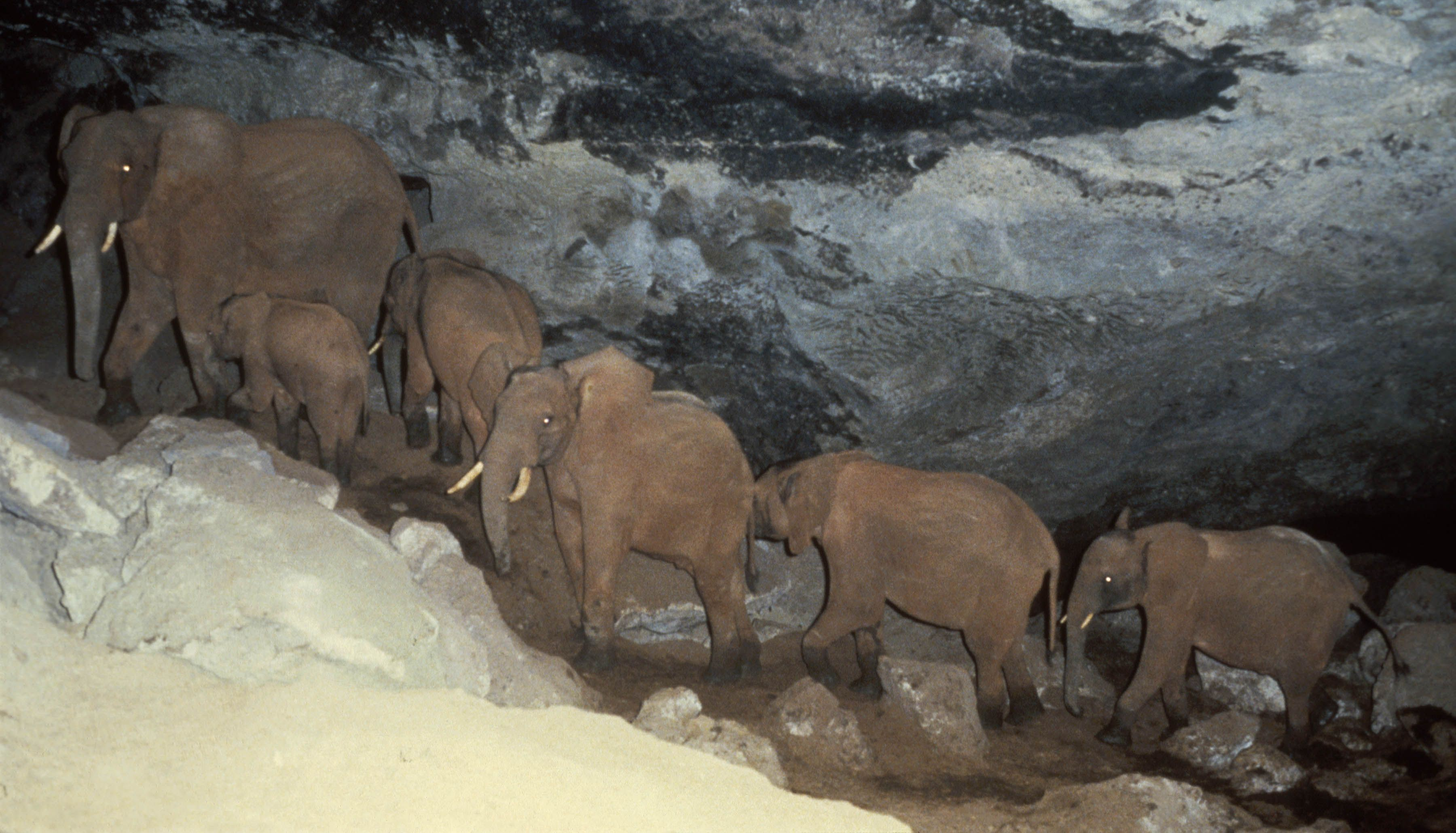
The locals reported the use of 35 plant species in total, as well as four types of soil or mineral. Mount Elgon’s elephants are already famous for mining salt from caves, sometimes going up to 200 meters (700 feet) underground, so it was already known that they don’t rely on biological products alone.
The locals considered 25 of the plants eaten by elephants as having medicinal properties, although the paper’s authors are more cautious and only highlighting 8 of them as being consumed differently between sick animals to healthy ones.
This includes, for example, eating the plants in small amounts, or after making long journeys to find rare specimens. But while many animals are known to use one or two medicinal plants, as might be expected the elephants’ have a bigger pharmacy.
Not just self-medication
The elephants don't just stop at medicating themselves. The local community described cases of treatment for other elephants, known as “allo-medication”, sometimes with remarkable complexity.
For example, mother elephants have been observed chewing particular leaves, bark or roots and then mixing the wadge with their milk to create a sort of smoothie for their calves.
Although the specific condition being treated could not always be identified, the locals thought the mothers were probably treating upset digestive systems, like a human baby with reflux.
They also thought this mixture of plant and milk was often being administered regardless of whether the calf was sick or not, implying that it was used more as preventative agent. A vaccine smoothie then, although elephant anti-vaxxers have presumably either died out long ago, or learned to keep their opinions to themselves.
.png "Those trunks are certainly flexible, but who knew they could mix chewed plants with milk for the young?")
The authors noted that 87 percent of the plants the elephants used for medication were also used by locals. Whether those plants not used by humans are not beneficial to our kind, or an opportunity we have yet to exploit, remains to be seen.
“Our results show how closely the plant life of Mount Elgon is linked to the health of both elephants and people,” Dr Fabien Schultz from the BNITM said in a statement.
“When elephants and local communities use the same plants as medicine, protecting these habitats becomes a health issue. In the coming years, together with our partners, we want to investigate more closely how this knowledge is transmitted and which plants and locations require special protection.”
But there’s another reason that this knowledge is good, besides for our own benefit. If these plants are important to elephant health, then their preservation becomes a priority.
It’s well known that wildlife don’t thrive when one or two tree species replaces a natural forest, but the full subtlety may not have been grasped. Just because you rarely see an elephant consuming a particular plant doesn’t mean it may not be life-saving when they do.
The authors describe their work as being informed by a One Health approach, an understanding that “the health of humans, animals, and ecosystems is inseparably interconnected.”
The study is open access in Scientific Reports