


 Nature
 PUBLISHED



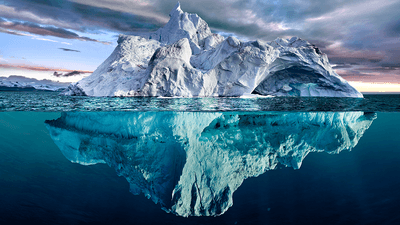


A camera placed just off the coast of Ilulissat, Greenland, has captured the dramatic moment a gigantic iceberg flipped over, sending waves in the direction of the coastal city.
Icebergs, as any motivational poster will tell you, are largely hidden below the surface. Only around 11 percent of an iceberg peeks above the surface at any one time, while the rest remains hidden to all but penguins, polar bears, and underwater drones.
But every now and then, we do get a good look at the underside of one of these behemoths as they melt, break off, and do a kickass backflip.
Large icebergs often flip soon after breaking away from their parent ice shelf, rolling into a more stable position. In this case, it's not known how long this particular iceberg has been separated from its parent.
"At the edge of the glacier, the top is very white and kind of snowy, but when it breaks off of the glacier, an iceberg often flips over," NASA's Dan Berisford explains. "When it does, then the part of the ice that was underwater is this deep blue."
"And as they drift along, chunks melt off and they rotate a little bit, and so you see these water lines on the edge of the iceberg where one side sunk and the other popped up, and now you can see where the water used to be. And sometimes they have waterfalls off the side, if it’s a big flat-topped iceberg. But they tell the story of where they came from."
In footage taken on July 25 2026, you can see one iceberg off the coast of Greenland do just that.
Over the course of 55 minutes (edited here by afarTV into a 10-minute clip), you can watch as the iceberg approaches the shoreline and stops. It then begins to flip over, revealing a brilliant blue belly as ice falls off the side in large sheets.
The iceberg then towers high above the water, before crashing down once more, now upside-down.
On one level, the whole process is a dramatic look at an iceberg seeking a new equilibrium. Once enough melting or falling ice shifts its center of mass, what looked like a pretty solid and stable block of ice can suddenly become unstable, rotating until it reaches its new, floating position.
On another level, it is just a nice thing to gawp at in wonder.

 1
1