Nature
 PUBLISHED




What you'll discover in this article
- Fossils footprints found in Antarctica date back 54 million years.
- “These are the first known mammal footprints ever found in Antarctica, and they also represent the earliest evidence of a carnivorous mammal on the entire continent," lead author Héctor Mansilla Vera told IFLScience.
- These footprints might be evidence of the diversity of Antarctic life before the glaciation of the continent during the Eocene-Oligocene transition.
Fossils, footprints, and trackways can tell us a lot of information about where ancient animals lived, bred, and spread out to. However, Antarctica's fossil record is pretty scarce when it comes to which species might have been roaming around.
Now the discovery of some ancient pawprints opens up a whole new area of discussion about ancient mammals and just how far they made it.
In the Fossil Hill Formation on Antarctica's King George Islands, fossil remnants date back around 54 million years. A team of scientists have discovered footprints in the area, made by what they think is an ancient mammal.
Given the footprints' size and the three rounded toe pads, the researchers can use a formula to estimate the size of the track-maker as roughly 1.3 kilograms (2.9 pounds).
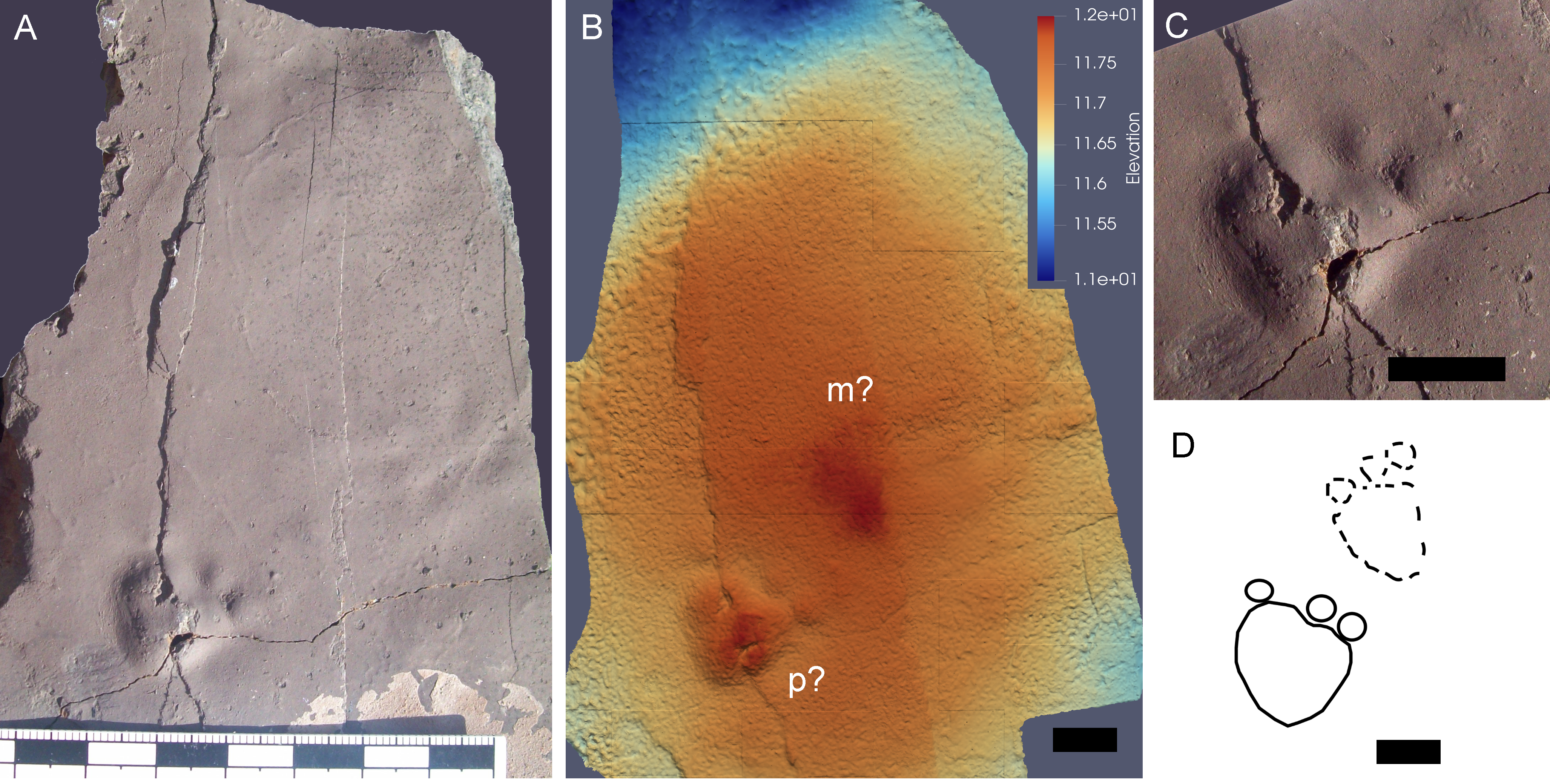
“These are the first known mammal footprints ever found in Antarctica, and they also represent the earliest evidence of a carnivorous mammal on the entire continent. The track comes from King George Island, in the Antarctic Peninsula, specifically from the Fossil Hill Formation, and we have assigned it a Ypresian age, which is early Eocene, based on ⁴⁰Ar/³⁹Ar dating that gave us 54.66 ± 0.56 million years,” lead author Héctor Mansilla Vera told IFLScience.
The body size calculation is especially important as it helps rule out animals that could have potentially made the tracks, including therians, which were typically much larger herbivorous mammals, and xenarthrans. These included ground sloths, which fossils records from Antarctica suggest would have reached around 10 kilograms (22 pounds) in this region and had very different footprints.
Monotremes like those that would have been living in Australia at the time, such as platypuses, also would have had significantly different pawmarks and so could be ruled out as the track-maker.
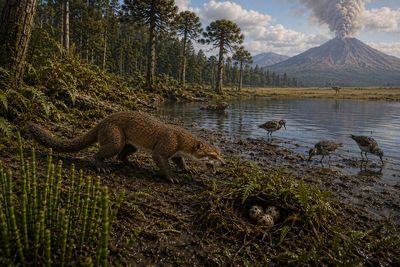
Instead, the team thinks the track was made by a species of sparassodont – the main mammalian carnivore predator clade in South America, which could have hypothetically crossed over from South America to Antarctica on a land bridge.
While the fossil record is remarkably sparse in this area, remains have also been found on the La Meseta Formation of Seymour Island. These sparassodonts would have looked similar to modern-day weasels, badgers, and otters.
“What makes this discovery truly extraordinary is that this is, to date, potentially the only record of a Cenozoic metatherian carnivorous mammal in Antarctica. And here is where the story gets even more fascinating: this animal may very well represent one of the very last – and perhaps one of the only possible – terrestrial vertebrate groups to have inhabited the continent before its climatic collapse,” continued Mansilla Vera.
It further suggests that these endemic South American mammals had reached high latitudes by the early Paleogene.
"It is also worth highlighting that, up to now, the La Meseta Formation in the same basin has been the only place yielding remains of continental terrestrial vertebrates in Antarctica, yet remarkably, no carnivore had ever been found there – until our discovery," said Mansilla Vera.
"That makes this track a double breakthrough: it fills a long‑standing gap in the fossil record and also reshapes our understanding of Antarctic food webs just before the deep freeze."
This discovery may be a first for the mammals, but Antarctica has revealed its fair share of unusual fossils in the past. The first dinosaur fossil ever found on the continent belonged to a Titanosaur, which despite being small for its kind would likely still have been 6-7 meters (19-23 feet) long.
And how can we forget "The Thing"? It's exactly as mysterious as it sounds, a dinosaur-era fossilized egg that has had scientists scratching their heads for 15 years and counting.
The study is published in Polar Biology.

 1
1