Nature
 PUBLISHED


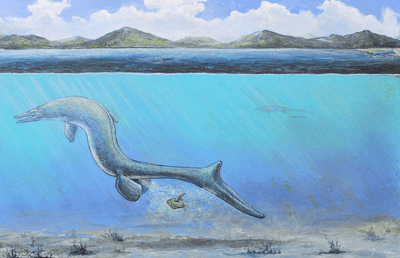


A giant egg nicknamed “The Thing” has forced a rethink of the breeding behavior of giant Cretaceous creatures – primarily because mosasaurs, the most likely suspects for having laid The Thing, were previously thought to not lay eggs at all. The discovery is unlike other eggs from the Cretaceous, both in size and shell composition.
It sounds like the start of a horror film: an enormous egg gets found – preferably somewhere remote – and no one knows what lurks inside. In the film version something is accidentally spilled on it, or it gets placed in an incubator, and the creature inside hatches and wreaks havoc. Life works differently, and the only thing to hatch from the egg known as The Thing is a scientific mystery.
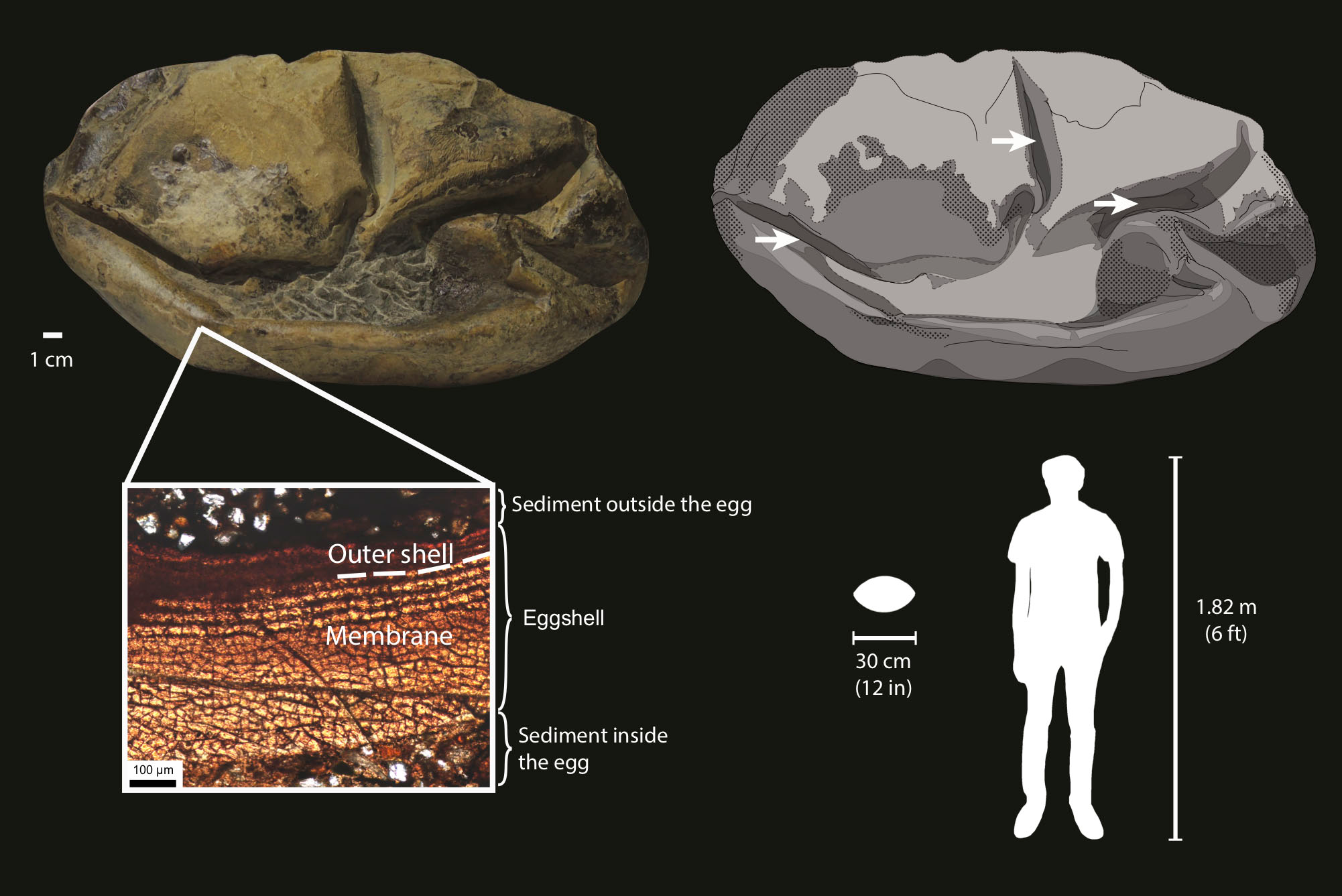
Nevertheless, the true part is that The Thing is enormous by egg standards. As a paper describing it noted in 2020, the largest known egg belonged to the elephant bird, which went extinct just 1,000 years ago when humans reached Madagascar. That’s despite the fact that some dinosaurs weighed at least 50 times as much as elephant birds. The Thing is slightly smaller than an elephant bird egg, but about a third larger by volume than any known egg from a non-bird dinosaur.
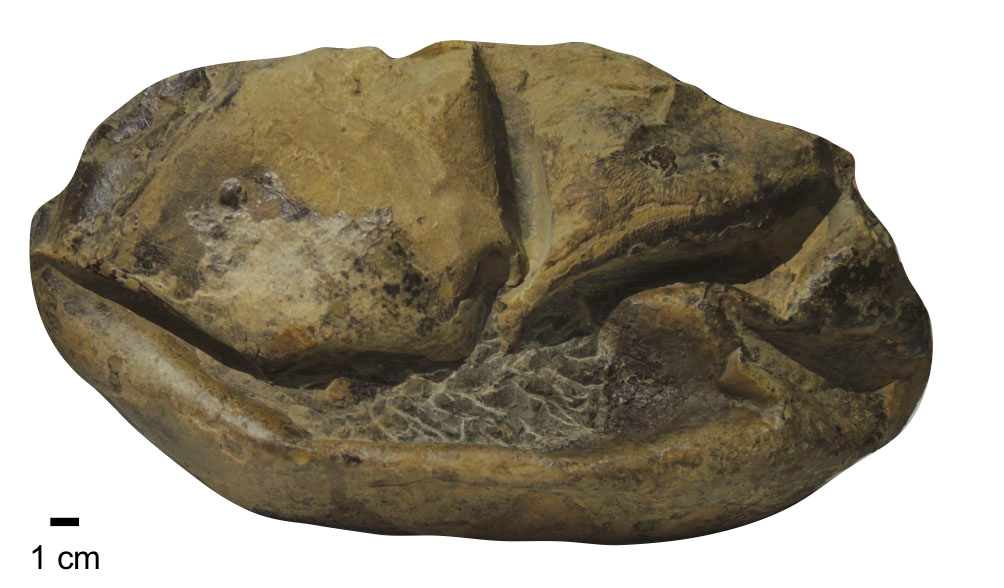
Clearly this was the egg of something large, and with an age of about 68 million years, a dinosaur is the obvious first guess. However, when it was identified, Dr Lucas Legendre of the University of Texas at Austin said in a statement, "It is from an animal the size of a large dinosaur, but it is completely unlike a dinosaur egg. It is most similar to the eggs of lizards and snakes, but it is from a truly giant relative of these animals." The authors named the species that laid it Antarcticoolithus bradyi, but that doesn’t tell us what they were.
The largest birds’ eggs have thick shells to give them strength, but The Thing’s shell is thin, which is probably why it has partially collapsed and folded in on itself. The fact that it bent, rather than breaking, indicates an soft-shell egg without a calcareous layer.
The Thing’s shell also lacks distinct pores. The team that first described it conclude it was from a marine reptile at least 7 meters (23 feet) long but note: “All clades of which have previously been proposed to show live birth.” Eggs are all very well for land animals, or those that breed in restricted locations, like salmon in rivers. Fish that live far from shore often favor live birth, and it was thought that mosasaurs and plesiosaurs did the same.
It's quite likely many large marine Cretaceous marine reptiles did use live birth, but clearly Antarcticoolithus bradyi took a different path. The authors note that by their nature, soft-shelled eggs would not fossilize as well as hard-shelled ones, so the fact we find evidence of so few from ancient times doesn’t prove they weren’t common.
Although the authors identified mosasaurs as the most likely family for Antarcticoolithus bradyi to belong to, their paper doesn’t indicate a great deal of confidence. Seymour Island where The Thing was found, also preserves skeletons of both adult at baby mosasaurs and plesiosaurs. “Many authors have hypothesized that this was sort of a nursery site with shallow protected water, a cove environment where the young ones would have had a quiet setting to grow up,” Legendre said.
Those who get their palaeontology from Jurassic Park/World may be seriously misled about mosasaurs, which were big, but not that big. Their closer relationship to known soft-shell laying animals makes them a more likely candidate to include Antarcticoolithus bradyi than other large marine reptiles, but it’s hardly a sure bet.
Since this analysis was published, there have been no responses in the scientific literature offering alternative ideas as to Antarcticoolithus bradyi’s nature. However, the discovery has been cited in a variety of other research, for example as a point of comparison in discussions of whether some early dinosaur eggs were hard or soft-shelled.
There are obvious challenges to searching for fossils in Antarctica. Most of what we know about the animals that lived there before it was icebound comes from elsewhere – particularly from southern Australia, which was attached to Antarctica for much of the dinosaurs’ reign, and presumably shared similar fauna. However, while most of the continent itself hides its fossils under a veil of ice, Seymour Island and other offshore islands also provide insight into that time.
The Thing was first discovered in 2011, but the scientists who found it had no idea what to make of a 28-by-18-centimeter (11-by-7-inch) stone shaped a little like a rugby ball. It sat in the Chilean Museum of Natural History until 2018 when Professor Julia Clarke of the University of Texas visited and proposed it might be an egg, a conclusion she and colleagues subsequently confirmed.