Humans
 PUBLISHED

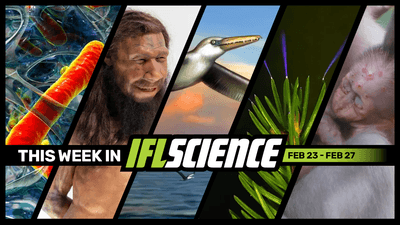


This week, new genetic data suggests prehistoric human women really had a thing for Neanderthal men, thunderstorms give the tips of trees an electric glow that’s barely visible to the human eye, and wild monkeys have been falling sick with mpox after eating squirrels, offering insight into the process of interspecies disease transmission. Finally, five years after an inconspicuous piece of space rock fell on a driveway in the UK, it’s still giving us glimpses into the early Solar System.
Create an IFLScience account to get all the biggest science news delivered straight to your inbox every Wednesday and Saturday.
Bacteria That Literally Eat Tumors From The Inside Out May Be The Future Of Cancer Treatment
We’ll bet you didn’t have this on your 2026 bingo card. Scientists have been experimenting with using bacteria to eat cancerous tumors from the inside out, and – thanks to some clever genetic tweaks – it’s proving surprisingly effective. So much so, the authors of a new study say they hope to progress to preclinical studies in the not-too-distant future. Read the full story here
"Maybe We Never Really Had That Many Of Their X Chromosomes": Prehistoric Human Women Had The Hots For Neanderthal Dudes
The fact that most people alive today carry a wee fraction of Neanderthal DNA proves that our prehistoric ancestors hooked up with members of this now-extinct hominin lineage. However, new genetic data reveals that these ancient affairs mainly involved human women and Neanderthal men, who were seemingly much more attracted to each other than human blokes were to Neanderthal ladies. Read the full story here
Enormous Prehistoric Bird With Strange, Toothed Beak Was Horrifying – And We Still Don’t Know How It Caught Its Prey
We can all agree birds are terrifying. They are the last surviving dinosaurs after all, and if you’ve ever been dive-bombed by a seagull, you know they haven’t forgotten that fact. New research on the bird with the largest wingspan ever suggests it didn’t catch fish by skimming across the surface of the ocean – so how exactly did it keep itself fed? Read the full story here
Thunderstorms Really Do Give Trees’ Tips An Electric Glow – And Might Be Shaping Their Evolution
During a thunderstorm, two North Carolina trees were photographed producing an ultraviolet glow that moved among their leaves. The findings have now been replicated in other states, demonstrating that the phenomenon does not require particularly unusual circumstances. More than just a beauty denied to our eyes, the electrical discharges that cause this glow may shape trees’ evolution. Read the full story here
Wild Monkeys Fall Sick With Mpox After Eating Squirrels: Is This How The Virus Jumped To Humans?
For the first time, researchers have captured direct evidence of the monkeypox virus (MPXV) jumping between two wild animal species. Detecting interspecies transmission in the wild is notoriously difficult, but this remarkable piece of scientific detective work offers insight into how viruses circulate in ecosystems and how they may ultimately spill over into humans. Read the full story here
TWIS is published weekly on our Linkedin page, join us there for even more content.
Feature of the week:
The Space Rock That Hit A Driveway And Became A Window On The Early Solar System
The evening of February 28, 2021, shouldn't have been anything special for the Wilcock family. It was the middle of the UK's third national lockdown during the COVID pandemic, and things were rather dull. But the heavens had other plans. A piece of space rock as old as our planet was about to plunge into the atmosphere and land over their town of Winchcombe. Read the full story here
More content:
Have you seen our e-magazine, CURIOUS? Issue 43, February 2026, is available now. This month, we asked, “Why Do We Need The Dark?” – check it out for exclusive interviews, book excerpts, long reads, and more.
PLUS, the We Have Questions podcast – an audio version of our coveted CURIOUS e-magazine column – continues. In episode 18, we ask, “What Do Other Worlds Smell Like?”
Our Break It Down podcast now has a new monthly format, coming at you in both audio and visual. So tune in each month to hear about some of the wildest science stories and adventures we’ve been on. Kick off this month with “AI Assassins, Inside A De-Extinction Lab, And Life On Mars?”
The Big Questions podcast season 5 has now concluded, but here’s one more bonus episode to help see you into 2026: Can Magic Be Used As A Tool In Science? You can catch up on the whole of season 5 here.