Nature
 PUBLISHED
 4
4


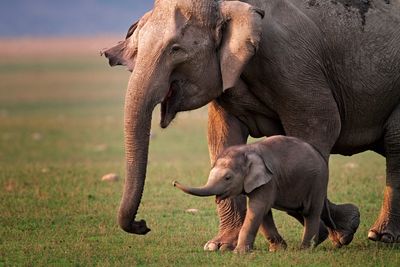


Funerals could easily be assumed to be a uniquely human phenomenon, but a new study appears to challenge that after researchers observed Asian elephants burying dead calves and loudly mourning for them.
Both African and Asian elephants have previously been observed interacting with their dead and displaying grief-like behaviors, but the current study aimed to take it a step further by determining whether a calf’s cause of death had any effect on the behavior seen.
Between September 2022 and October 2023, researchers observed five different cases of calf burial in the north of India’s Bengal region. They detailed the behavior seen in the elephants using photographs and fieldnotes and conducted postmortems on the calves to ascertain the cause of death.
The findings revealed an unusual behavior, though one that the researchers note shouldn’t be generalized. “We suggest that the carcasses were buried in an abnormal recumbent style irrespective of the reasons for the calf's death," the team writes in their paper, noting that all had different causes of death, none of which involved humans.
In every case, the herd carried the dead calves by their trunk and/or legs, roaming with them until they found the “right” spot – irrigation channels on tea estates, far away from humans. There, the calves were buried on their backs with their legs up.
It’s believed that this is a group effort. “We also observed the efforts of various herd members through their footprints in levelling the soil above/around the carcass – supporting the social-bonds hypothesis […] we also infer that carcass burying was a combined effort from allomothers and herd members of different age groups,” the authors write.

According to anecdotal evidence from those working on the tea estates, in one case, the elephant herd stood around the burial site and made “loud vocalizations”, which included trumpeting and roaring.
That doesn’t sound entirely dissimilar to what might happen at a human funeral, which can feature speeches and songs. The herds didn’t appear to hold a wake though – no awkward small talk over a pint and a lukewarm ham sandwich found here. In every case observed, the herd fled the burial site within 40 minutes.
And they didn’t return to the site either. The authors explain how previous research has detailed how African elephants visit carcasses of dead members of the herd – but in the cases observed in the current study, burial sites appeared to be actively avoided.
“A formal interview with the tea garden managers shows that the elephants now use a parallel pathway and completely avoid their previous ‘active’ route.”
And who could blame them? We’d be too sad to go back too, and we weren’t even there.
The study is published in the Journal of Threatened Taxa.