Nature
 PUBLISHED
 3
3



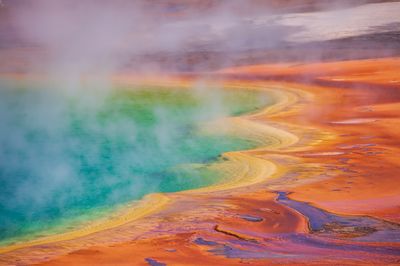


The first great branching of the evolutionary tree, between bacteria and archaea, may have happened before either of them existed as free-living cells.
This means that while there may have been only one time in Earth’s history when the genetic code emerged, what we consider life is proposed to have originated - astonishingly - twice.
Scientists seeking to understand the origins of life have historically thought that there was a single event, perhaps in a warm still pond or around a deep-sea hydrothermal vent.
At some point, sugars, amino acids, and molecules rich in phosphates combined to form RNA, which replicated itself. Eventually, evolution took hold, leading to the wondrous diversity of plants, animals, bacteria, and fungi we have today.
Much research has gone into seeking the Last Universal Common Ancestor (LUCA) of it all, in the expectation that there was one organism at the base of all the ancestral lines of life we see on Earth today.
Now, Natalia Mrnjavac, a PhD student at Heinrich Heine University Düsseldorf, doesn’t deny there was a LUCA, but questions whether it deserves to be called alive.
LUCA? Or should that be LUCAs?
If a time machine allowed us to return to the time the first cells appeared around 4 billion years ago, “we would see two very different kinds of cells emerging, pioneer bacteria and pioneer archaea, making their first attempts at life outside the confines of a hydrothermal vent,” Mrnjavac said in a statement.
The conclusion is based on analysis of the DNA of single-celled organisms, as well as their protein structures and the metabolic chemical reactions they use to live. These are so fundamentally different between bacteria and archaea that the team concluded that the divergence must have arisen before they were even functioning cells.
Mrnjavac and co-authors categorized all 420 chemical reactions programmed for in the cells’ code, which build the necessities of life out of the chemicals that existed on Earth originally, from the simplest to the most complex.
Today these reactions depend on enzymes, but as Professor William Martin says, “the surprise is that the enzymes that catalyze those reactions are not conserved across the evolutionary divide that separates bacteria and archaea[…] LUCA possessed enzymes for only about half of the reactions of metabolism.”
“The other half was catalyzed by metals in the environment where LUCA arose.”
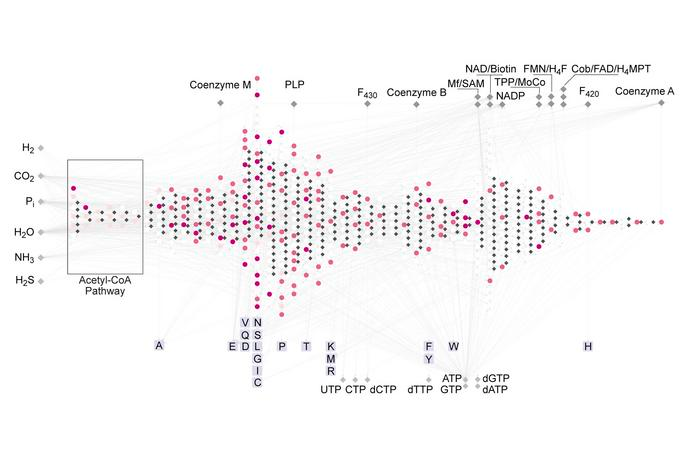
This might imply that cells started off by taking up metals from the environment, which they then used to drive reactions until they evolved their own enzymes to do the same thing.
However, the paper’s authors don’t think that is how it went.
Instead, they think that “the bacteria and archaeal lineages made the transition to the free-living state independently,” explains Martin. Each evolved out of a sort of soup in which genes were making reactions happen, but had lacked the boundaries to be considered organisms.
“Only free-living cells are alive,” Martin continued. “Let’s call it by name: we are looking at one origin of the genetic code, but two origins of life.”
If this is right, there was no recognizable LUCA lifeform, only genetic code processing the chemicals in a resource-rich environment.
The team propose that the first self-replicating code relied entirely on metals to catalyze the molecules that would become life. This allowed more complex chemistry to occur, leading to the replacement of more and more of these metals with enzymes.
During this metal-hybrid phase, bacteria and archaea’s paths diverged. Subsequently, both evolved enough enzymes to live independently.
“We can see cases where the ancestors of bacteria and archaea independently evolved structurally distinct enzymes to catalyze the same essential metabolic reaction,” Mrnjavac said.
How to power metabolic reactions
Catalysts, whether enzymes or inorganic, still require energy to make metabolism happen.
Today, this is usually provided by a molecule called adenosine triphosphate (ATP). However, ATP is far too complex to have existed before there were enzymes to make it, so biologists contemplating the origins of life have long been looking for an alternative.
The authors think they have found it in palladium. This metal catalyzes phosphite to perform the reactions that today involve ATP and enzymes.
“It’s amazing, and it makes early evolution a lot easier to grasp,” says Manon Schlikker, a PhD student also involved in the study.
As a metal so rare it is now one of the most expensive on Earth, made briefly famous by claims it could drive cold fusion, palladium could never have supported the abundance of life we see today.
If the authors are right, however, all it needed to do was provide the energy resource that could get things rolling, powering reactions that created much more complex molecules that could then take over from there.
You can see why both bacteria and archaea needed to find an alternative to something so scarce.
As genetic activity emerged, the researchers think that more common metals such as iron and nickel catalyzed other reactions. These were also eventually replaced by enzymes, but not because they were rare.
Instead, the metals are thought to be not specific enough and catalyze too many different reactions. Enzymes, however, are more targeted.
The work strongly favors hydrothermal vents as the cradles of life, since they are much richer in metals than lakes and ponds. Implications for finding life on other planets remain to be explored.
The study is open access in Science Advances