Nature
 PUBLISHED
 1
1


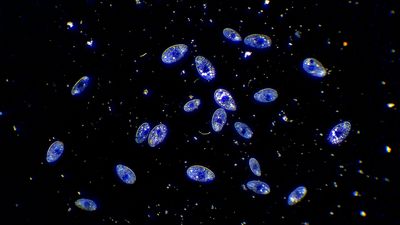


Duplicated genes that appear in every branch of the tree of life can provide us with insight into the evolution that occurred between the first lifeform and the last from which we all descend, geneticists claim.
As far as we can tell, life only evolved on Earth once, and everything alive today is a descendant of that initial breakthrough. However, the divergence that gave us mushrooms, mice, and maple trees probably didn’t take place straight away. That is, the tree of life had a trunk, possibly quite a long one, before it started branching off into familiar kingdoms like animals, plants, fungi, and bacteria, let alone into further divisions within each.
The point immediately before the branching began is known as the Last Universal Common Ancestor (LUCA). We think we have learned something of LUCA’s nature by looking for traits all surviving lifeforms share. But what about LUCA’s predecessors? What can we learn about the steps that turned those first strands of RNA into LUCA? It’s widely assumed the answer is nothing, but a new paper challenges that view.
“While the last universal common ancestor is the most ancient organism we can study with evolutionary methods,” said Professor Aaron Goldman of Oberlin College in a statement, “some of the genes in its genome were much older.”
Attempts to reconstruct LUCA have reached the conclusion it was a relatively complex organism, one that could not have spontaneously appeared. Instead, LUCA was the product of a long period of evolution from simpler life.
Remarkably, Goldman and colleagues say they can expose some of that process by reconstructing LUCA’s genes.
To understand how this is possible, consider that an individual lifeform will often have multiple versions of a gene family, known collectively as a paralog. Around 70 percent of our genes are part of paralogs, and even for E. coli the figure is 46 percent. The authors offer the example of the genes that code for hemoglobin, which allows our body to carry oxygen through our blood. Humans have eight of these; redundancy in something this essential is a wise investment.
The hemoglobin paralog is much younger than LUCA, but it still has its origins with a single gene, thought to have occurred around 800 million years ago. Copying errors (and early on perhaps horizontal gene transfer) have caused different versions of this gene to turn up in animals’ DNA over that time, and some turned out to be useful enough that they got to stay.
To be considered a universal paralog, at least two versions of a gene must be present in all branches of the tree of life. Universal paralogs are a sign, Goldman and co-authors argue, that this gene had duplicated imperfectly before LUCA, and all life now carries an inheritance of this pre-LUCA duplication.
“The history of these universal paralogs is the only information we will ever have about these earliest cellular lineages, and so we need to carefully extract as much knowledge as we can from them,” MIT’s Dr Greg Fournier said. “There are precious few universal paralogs that we know,” Goldman said, but that just makes those we have found more precious.
Goldman, Fournier, and Dr Betül Kaçar have published a study of the seven known universal paralogs, noting that all of them are for genes that control the way proteins are produced or how molecules cross cell membranes. We expect life couldn’t get far beyond its simplest forms without needing these. The universal paralogs are confirmation these capacities evolved long before LUCA, offering time for duplication to take place.
Goldman’s lab previously took a closer look at one universal paralog, which embeds proteins in cell membranes, using computational biology techniques to reconstruct the protein encoded by the ancestral gene to perform this role. This was not necessarily the first version of the protein, but the one that did the job well enough that its descendants were passed down to LUCA, and therefore all life today.
LUCA probably had more paralogs than this, the authors note, but if even a single descendant has lost all but one of the genes in a LUCA paralog, it won’t be universal and its ancestry is obscured.
“By following universal paralogs,” Kaçar said, “we can connect the earliest steps of life on Earth to the tools of modern science. They provide us a chance to transform the deepest unknowns of evolution and biology into discoveries we can actually test.”
The study is published in Cell Genomics.