Nature
 PUBLISHED
 2
2


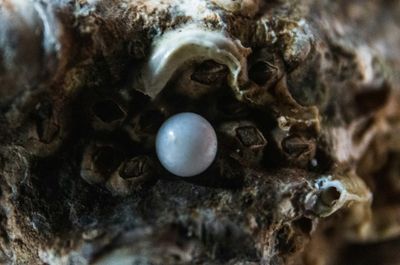


The famous Girl With a Pearl Earring painting was created by Dutch artist Johannes Vermeer way back in 1665, revealing how people have sought out these glossy gems for hundreds of years. However, unlike other jewels, pearls aren’t minerals that can be mined from the Earth, but are in fact produced when an oyster, mussel or other mollusk gets invaded by a parasite or pathogen.
How Pearls Are Made
Because of their soft, gooey bodies, mollusks rely on their hard outer shell to keep them safe. However, when an irritant makes it through this line of defense, they need to find another way to protect themselves - and pearls are their clever solution.
Essentially, a pearl is just a blob of shell that the creature builds around any unwanted intruder, whether that’s a grain of sand or some kind of parasite. In this way, mollusks immobilize the alien body, locking it inside a smooth, glossy tomb.
To create this protective jewelry, mollusks pull in calcium carbonate from the surrounding water, which they use to produce a material called aragonite. Bound together with layers of a protein called conchiolin, this aragonite eventually fuses into nacre, a different form of carbonate that is also known as mother of pearl.
It’s nacre that gives pearls their luxurious sheen, and this same substance is also found on the inside of oyster and mussel shells.
A wide variety of mollusks share this unique defense mechanism, although pearls are extremely hard to come by in the wild. For this reason, the jewelry industry relies on farmed pearls, which are usually produced by commercially reared oysters.
To generate these valuable nacre spheres, oyster farmers manually insert a small irritant - like a speck of glass or plastic - inside an oyster’s shell, before placing the animal back in the water. The mollusk then begins to encase this item inside a pearl, which can take up to five years to fully form.
Different Types Of Pearl
While oysters are most commonly used for commercial pearl farming, many different mollusks can produce them. Among the most valuable are Tahitian pearls - also known as black pearls.
Produced by the black lip oyster that lives in the waters around French Polynesia, this darker jewel actually comes in a range of colors, such as charcoal grey or deep green. True black pearls are highly unusual, although when they do occur, they are highly sought after.
Clams also make pearls, although not as readily as oysters. The largest pearls ever discovered have all been found inside the species Tridacna gigas, which is the world’s largest bivalve and is commonly referred to as the giant clam.
The official world record for the largest pearl belongs to the so-called Giga Pearl, which was found in the Philippines in 1959 and weighs 27.65 kilograms (60 pounds, 15 ounces). However, more recent reports suggest that another specimen, known as the Pearl of Puerto Princesa, may be even bigger.
Also from the Philippines, this pearl was discovered by a local fisherman some time around 2006, and is reported to weigh approximately 34 kilograms (75 pounds).
A Not So Pearly Future
Like many marine creatures, mollusks face an uncertain future due to climate change. Warming seas and the acidification of the ocean due to increased carbon dioxide in the atmosphere are both likely to impact the biology of oysters, mussels and other shellfish in ways that compromise their ability to produce pearls.
For example, enhanced acidity is known to damage the shells of these creatures. As a consequence, the animals may need to divert the majority of their nacre to their shells, leaving less available for the production of pearls.