Nature
 PUBLISHED



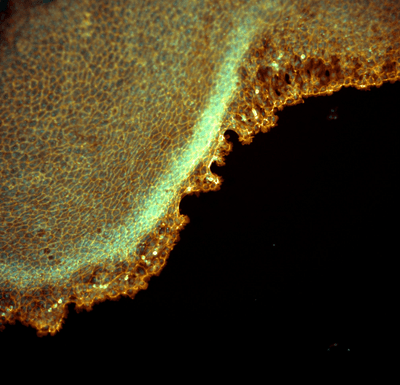


For the first time, scientists can watch living Antarctic fish cells at work in real time, and it's already showing how extreme environments can force living things to adapt even at the microscopic level.
Researchers at the British Antarctic Survey and the University of Cambridge have developed a new microscope capable of high-precision imaging at temperatures just above 0°C (32°F).
Obtaining microscopic images of live cold-adapted cells has previously been a technical hurdle because most microscopes are built to work at higher temperatures. Imaging was just about possible, but the cold-loving cells died quickly in the warmth of a lab and the end product was relatively low-resolution.
As a result, the inner workings of cold-adapted species haven't been properly observed at a microscopic level – until now.
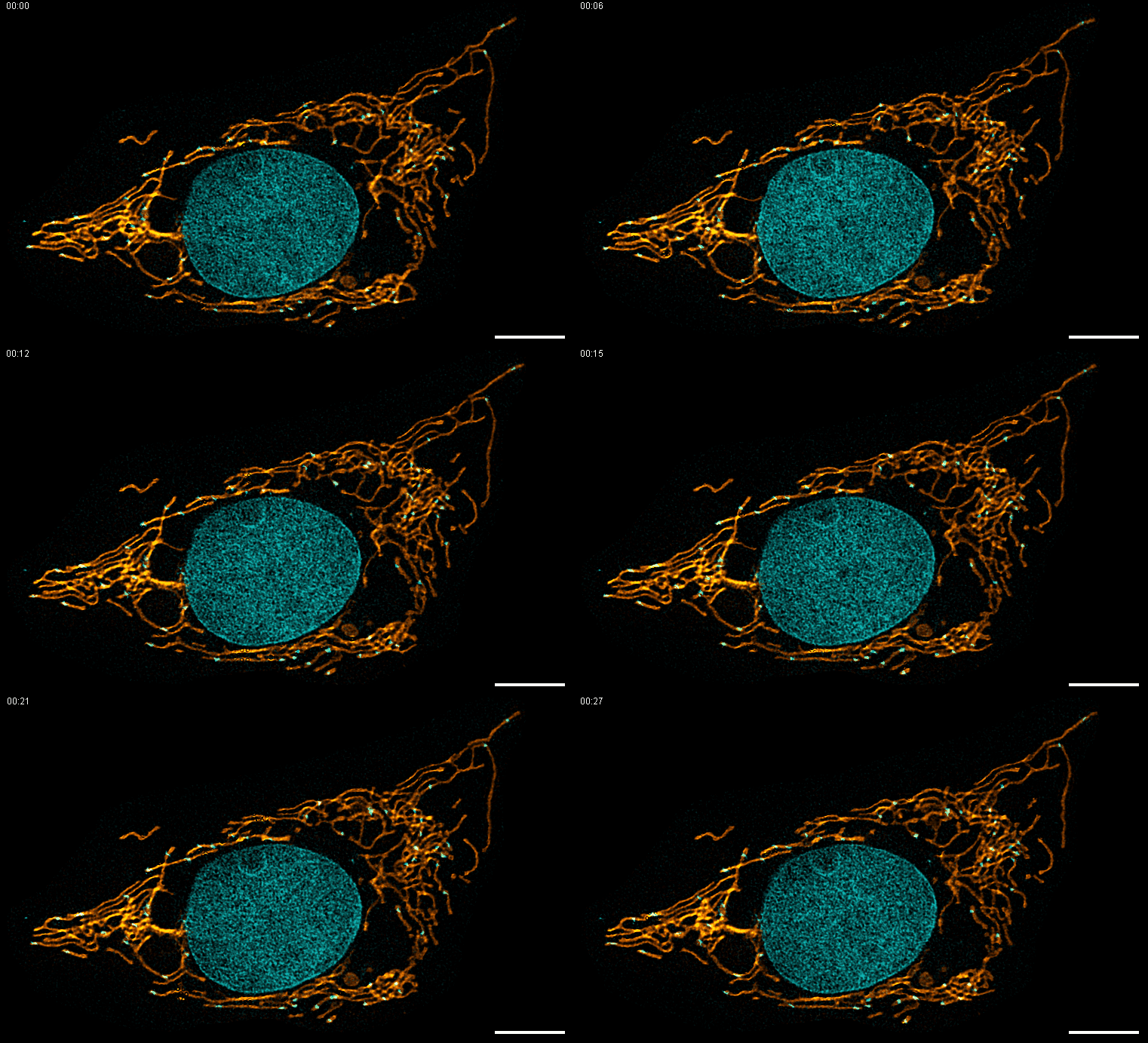
The team used their new microscope to image the living cells of an Antarctic spiny plunderfish, a species native to the near-freezing waters of the Southern Ocean and sub-Antarctic islands. They then compared it with cultured cells from the shanny, a small and somewhat unremarkable fish found in mild UK waters.
The experiment is also notable because it's the first time cells from an Antarctic fish have been cultured in the lab, and the researchers had to develop new techniques to keep the cells alive that can now be used in future research.
Built for an extreme life
The study highlighted many of the fascinating adaptations that allow the spiny plunderfish to survive in near-freezing waters.
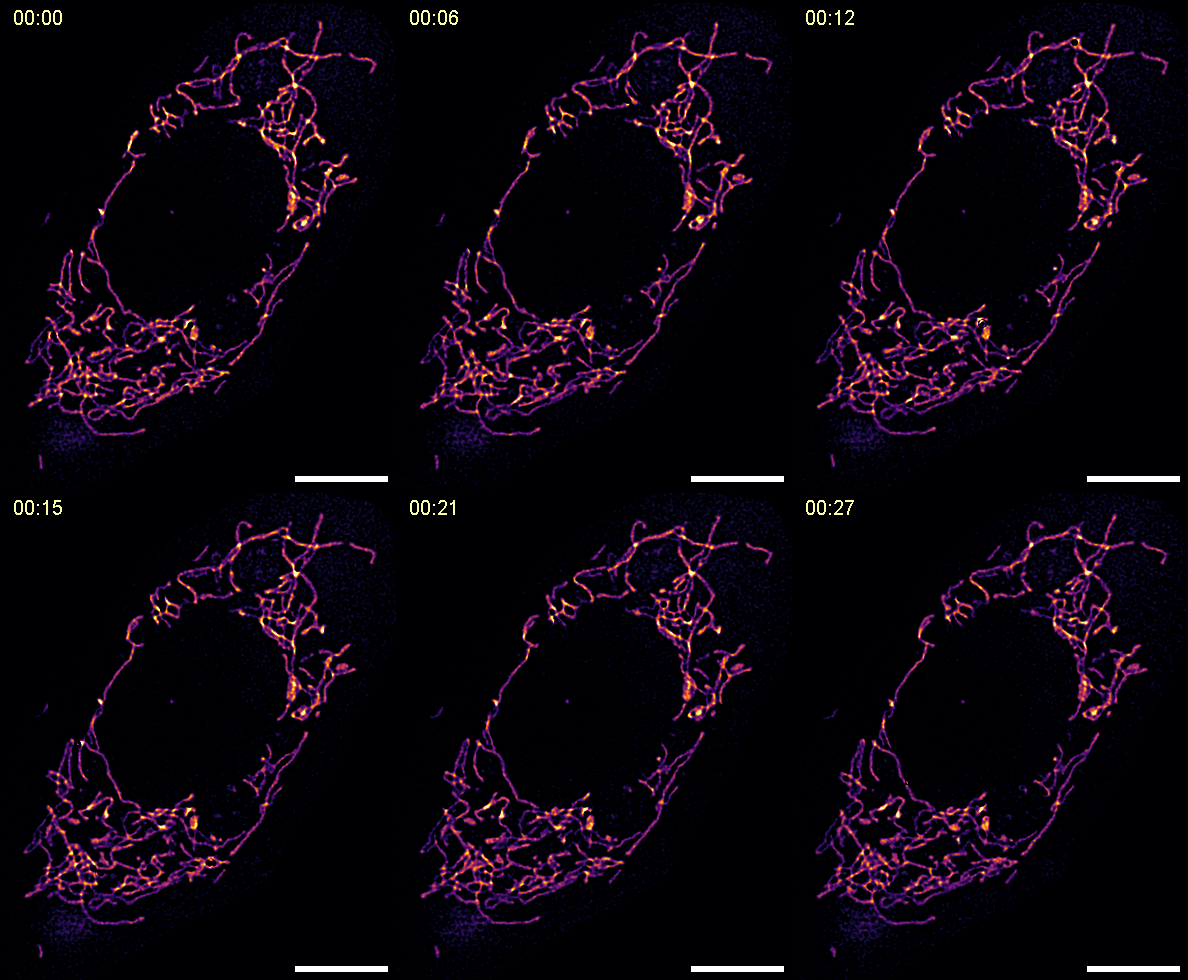
For one, the cold-water fish's cells had significantly more mitochondria than those of its temperate cousin, and they had merged into larger, connected networks.
The researchers suspect this difference is the result of it being more difficult to make proteins in the cold. As mitochondria, famously, are the powerhouse of the cell, it's possible the fish have compensated for this difficulty by cranking up their energy supply so they can still build enough protein.
Secondly, the Antarctic fish also had larger lysosomes, the slightly less well-known "trash cans" of the cell that break down waste and old cell parts. The size increase is possibly because proteins are more likely to become damaged and misfolded in cold environments, so the cell has to work harder to dispose of them.
“Protein isn’t just something we eat – it’s a critical part of basic cell biology," Dr Francesca van Tartwijk, a cell biologist with the British Antarctic Survey and the University of Cambridge, who is leading this research, said in a statement.
"Proteins start off as long chains of molecules called amino acids, a bit like a string of beads. These chains then fold themselves into a precise shape, almost like origami, and this shape determines everything about what a protein can do.”
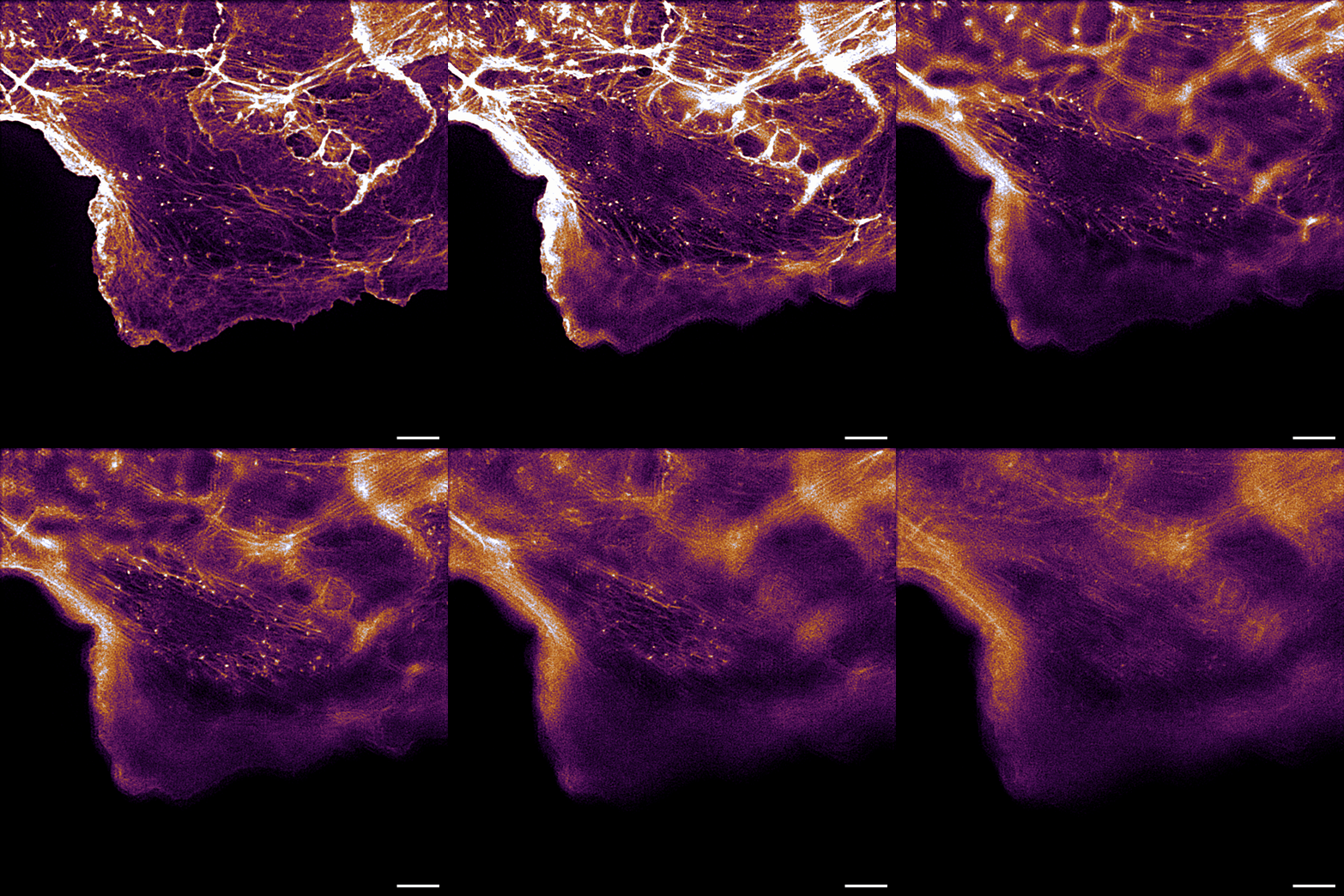
“Low temperatures – like in the Southern Ocean – slow down and disrupt this process – and make mistakes in the folding more likely. A misfolded protein is useless at best, but can be really harmful, so these cold-adapted cells need ways of dealing with them,” she explained.
Life in the slow lane
Life in Antarctic waters seems to work slowly, from a human perspective. Animals of the Southern Ocean have super-sluggish metabolisms, grow very slowly, and live extremely long lives. However, these results show that isn’t the case at a cellular level. The mitochondria and other organelles work at a similar pace to animals in temperate climates, which is a bit of a surprise given the rest of their biology.
This knowledge, the researchers say, could prove very useful when understanding how Antarctic fish will react to rising sea temperatures.
“Antarctic animals are incredibly vulnerable to climate change – we already know this," said Professor Melody Clark, the Genetics Leader at British Antarctic Survey and co-lead of the Cold Fish project.
"Raising temperatures just a few degrees can be lethal. We want to unpick why Antarctic species have such low tolerances for increases in temperature – are their limits set by their cell biology, or is it their whole-body systems, like circulation.”
Ice to meet you
One of the best-known residents of the Antarctic sea is the aptly named icefish, which are able to survive in water as cold as -1.8°C (28.8°F), the freezing point of saltwater, without turning into a popsicle.
The fish achieve this by pumping large quantities of antifreeze proteins through their blood, which stops ice crystals from forming in tissues.
The icefish's blood is also completely transparent because it's devoid of hemoglobin or red blood cells. The animal gets away with this because icy cold waters hold far more dissolved oxygen than warm water, allowing sufficient oxygen to dissolve directly into the blood plasma.
With the help of the new microscope, it's hoped even more remarkable superpowers of Antarctic Ocean dwellers will be revealed.
"It is super exciting to be able to study living cells at sub-zero temperatures and see with our own eyes what is going on,” said Professor Clemens Kaminski, Head of Department at CEB and co-lead on the project.
“The next step is to develop imaging technologies that will allow us to study biological systems under controlled conditions that more closely reflect the polar environments in which they evolved," he added.
A new paper describing the findings has been posted on the preprint server bioRxiv.