Nature
 PUBLISHED


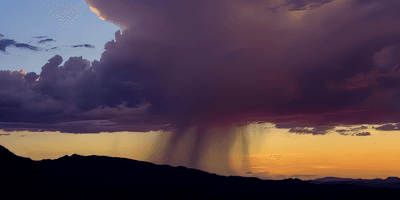


The growing “super El Niño” has entered record-breaking territory and shows no sign of slowing down. The meteorological monster is so strong, some fear it could kill nearly half a million people in the months ahead.
A new report from the Climate Impact Lab forecasts that the developing El Niño could be responsible for over 451,000 deaths in the next six months.
Extreme heat is their primary concern, but the researchers warned that droughts, wildfires, and flooding will also take their toll on certain parts of the world.
“We have long been able to predict the impacts of temperatures on crops, and now we can predict their impact on the worst outcome – death. The result is that we now can estimate that 451,000 people may die in the coming months due to El Niño,” Michael Greenstone, a co-founder of the Climate Impact Lab and the Milton Friedman Distinguished Service Professor in Economics at the University of Chicago, said in a statement.
“This is such a large number that it can be numbing, but it is made up of parents and children, grandparents and neighbors, people going to work, caring for families, and living their lives,” he added.
Nearly half a million deaths
The Global South will be hardest hit, with Africa bearing much of the brunt.
The report projects 66,800 additional deaths across the Sahel, the semi-arid strip across Africa between the Sahara Desert to the north and the fertile savannas to the south, with around 31,400 of those lives being lost in Nigeria.
Around 17,500 additional heat deaths are expected in Sudan, Niger will face 10,000, and Chad 8,000. In Southeast Asia, extreme heat could cause an additional 19,400 deaths across the Philippines, Vietnam, Thailand, and Cambodia, and a further 19,300 deaths in Indonesia.
India is projected to see 15,800 more deaths, with a further 13,300 deaths occurring in Brazil.
North America, Europe, Australia, and other parts of Asia will feel the impact of El Niño, although the report suggests the effect on mortality will be significantly less severe.
What is El Niño?
El Niño is a climate phenomenon characterized by warmer ocean temperatures across the central and eastern tropical Pacific Ocean, triggering a domino effect that has a broad influence on the weather across the world.
Scientists call this “teleconnection,” whereby different weather conditions are remotely connected with other components in the climate system. El Niño might start as warming temperatures in the tropical eastern Pacific, but this change will have a knock-on effect across the globe.
In some parts of the world, droughts and wildfires are more likely, while others experience stronger typhoons, heavier rainfall, and flooding.
The latest El Niño event started in June 2026 and has continued to gain strength at a record pace over the past few months. By early August, temperatures in the eastern Pacific were 2.6°C (4.68°F) above normal, well ahead of the trend in previous record-breaking years.
A record smasher
Now, another new report from the UK Met Office states that the ongoing El Niño has broken previous records, making it the strongest event in the observational record.
The record is all the more worrying since El Niño hasn’t even reached its seasonal peak yet – the worst is yet to come.
“We have been signalling for months that the developing El Niño will be an unprecedented event. The fact that it has already exceeded previous records – with several weeks to go before it peaks later this year – shows the enormity of this El Niño,” Professor Adam Scaife, Head of Long Range Prediction at the Met Office, said in a statement.
“Scientists are still assessing whether the impacts will be in proportion to its magnitude, but we are already seeing expected effects worldwide,” he noted.
Do I need to stock up on tinned food and toilet paper?
Earlier this month, the UN's World Meteorological Organization (WMO) issued a stark warning that governments around the world must prepare for the rise of El Niño and the potential impact it will have on agriculture, public health, energy, and water resources.
In the UK, Environment Secretary Dame Angela Eagle said that the powerful natural phenomenon El Niño would lead to "more extreme storms in this country" and citizens should consider stocking up on essentials in case supply chains collapse.
“If you’ve got a store of a bit of food that can keep you going for a while before the emergency services can get to you, you’re going to be a lot better off than if you haven’t. So some of it is that kind of preparation for just being a bit more resilient,” she told The Guardian.
Other experts have suggested this is not something to be "overly worried", but you shouldn’t be surprised if supermarkets' shelves look a bit empty over the coming months
"Things that were in supermarkets and seen as relatively abundant may all of a sudden be in shortage,” Professor Richard Wilding, an expert in supply chain strategy, told BBC News.