Nature
 PUBLISHED





How do paleontologists find clues about the past? Well, they look at just about everything from fossil bones and feathers, to trackways and poop.
There’s not much these intrepid history hunters will shy away from, and now even more has been revealed about the lives of ancient marine reptiles thanks to some sea monster vomit.
By looking at over 20 clumps of fossilized puke from Norway, researchers faced an ancient mystery. Who, exactly, made the vomit? What did it contain? And what can we learn about the lives of the creatures that made it?
Seasick sea monsters
It turned out that the vomit contained mostly shellfish shells, giving the researchers their first clues about who might have made it.
It suggests that the creatures did not crush the shells in their mouth, and could not break down the shells in their stomachs. Instead, instead the animal compressed the remains into regurgitated pellets.
This is a behavior still seen in modern-day animals, such as owls, that form pellets of indigestible bones and beaks that they regurgitate.
“There has been a lot of research into fossilised vomit over the last decade but most of it has focused on vertebrates eating other vertebrates,” palaeontologist Dr Dirk Knaust said in a statement.
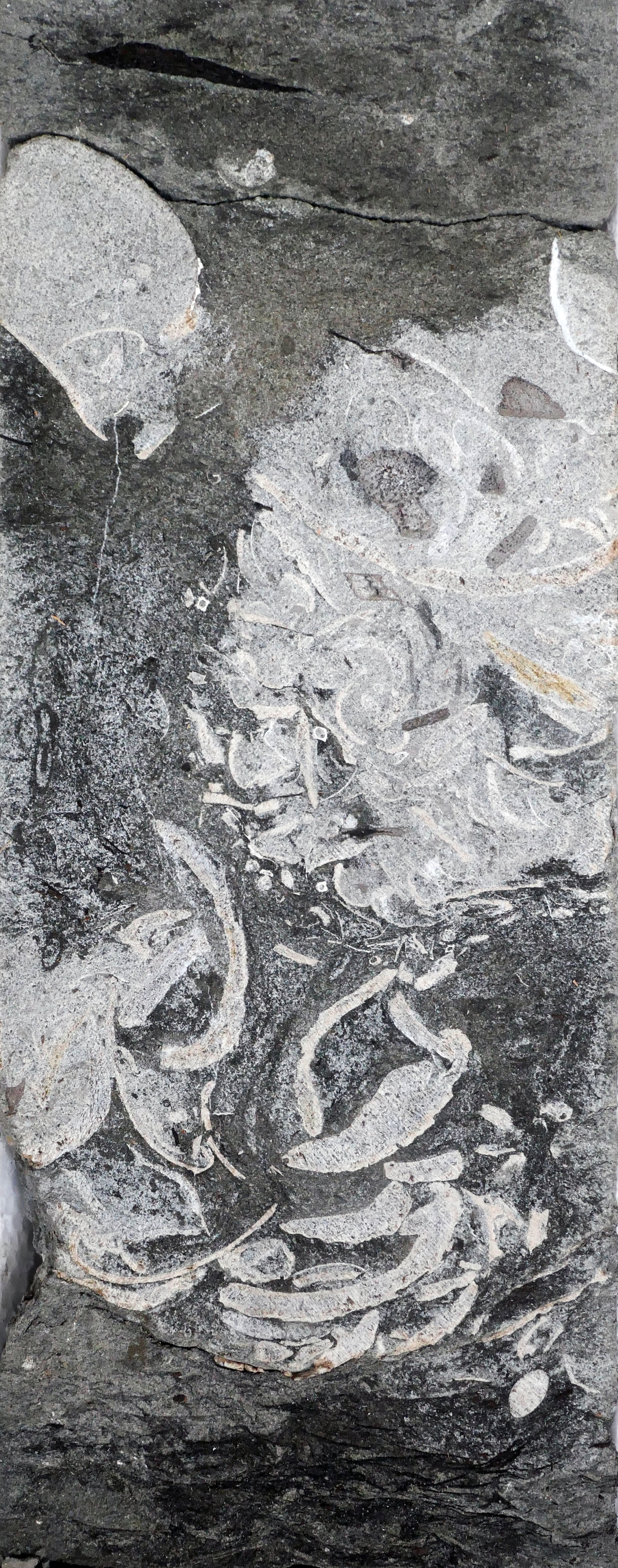
By comparing the contents of the vomit to other known fossil vomit specimens, the team was able to begin to identify who might have had an upset stomach all those millions of years ago.
They quickly ruled out fish or cephalopods, as the composition of the sick simply didn't fit. Sharks and crocodiles, however, started to become more likely. This was short-lived though, as they realized there was no evidence of any fish in the vomit.
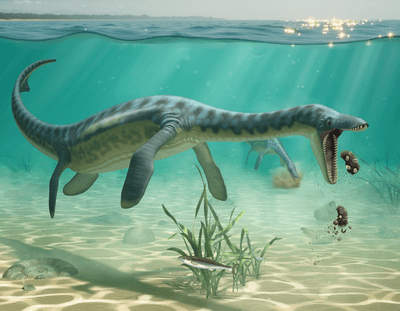
Instead, this left one possible contender: plesiosaurs. This is the first time that fossil vomit has been attributed to these marine reptiles.
“Plesiosaurs may have come close to shore to relax or sleep after hunting, and that’s likely when they vomited,” Knaust said. “We see fur seals and marine crocodiles doing something similar today but while they go onto land, plesiosaurs probably remained submerged due to their weight and shape.”
How long would it take for a plesiosaur to vomit?
Plesiosaurs were one of the most successful marine reptiles ever to have lived. With four paddle-like fins and an exceedingly long neck, scientists think that the reptiles would have dragged their heads along the seafloor, snapping up crustaceans and shellfish as it went.
The team suspects that cryptoclidid plesiosaurs specifically are the like likely vomiters. They grew to between four and eight meters long (13-26 feet) and were around during the Middle Jurassic, roughly 165 million years ago.
The shellfish remains were identified as species that needed steady salt levels more likely to be found in the open oceans. The fact that the vomit was found in a river delta, in which the salinity varies, supports the idea that the plesiosaurs swam from the sea into these brackish environments to vomit.
One clump of vomit was also discovered just next to fossilized poop and bones.
“This vomit survived partly because it was so compacted and covered in mucus,” explained Knaust. “Even so, most pellets would have been completely broken up by the waves and tides. Some clusters were, however, quickly covered by sediment arriving from the rivers, and some ended up in burrows left by crustaceans on the seafloor, where they were partially preserved and fossilised.”
While it might sound gross, fossil vom is a very useful to palaeontologists as it provides direct evidence for what an animal was eating, and can even lead to the discovery of a whole new species.
Even in modern species, vomit is still very much a part of the natural world: just ask Bubbles, the vomit-eating dolphin.
“The plesiosaur is such a fascinating animal,” Knaust said. “These findings add to other kinds of evidence that help us to understand their abilities and behaviour. And this is still just the beginning. There’s so much more we can learn from picking through what extinct animals threw up after dinner.”
The paper is published in Geological Magazine.