Nature
 PUBLISHED
 2
2




The uniquely sticky nature of gastric pellets brought up by animals like Komodo dragons means that they can endure for weeks, even if it rains. In incredibly rare cases, these pellets can get submerged in mud and infused with minerals until they form a fossil, just like those we find of dead animals. These fossils are known as regurgitalites, and they’re a rare and exciting find that provides direct evidence of animal behavior.
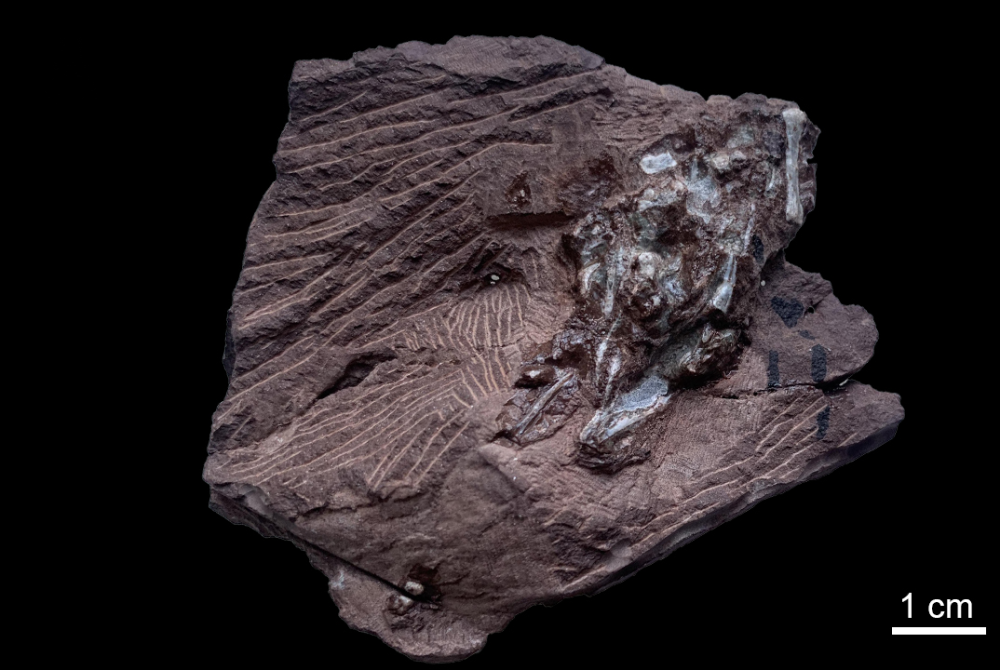
Now, a newly described fossil has broken the record for the oldest regurgitalite ever found on land, depicting the lunch of a creature that lived 290 million years ago – that’s around 50 million years before dinosaurs showed up. It marks an “extremely rare phenomenon,” said study author Arnaud Rebillard, doctoral candidate at the Museum für Naturkunde Berlin, to IFLScience. One that provides a window to the past from the POV of an ancient predator’s innards.
“Regurgitalites are direct witnesses of a behavior of an animal,” said Rebillard. “This is going to give us very important clues about the food web that existed back then, and we’re speaking about 290 million years ago.”
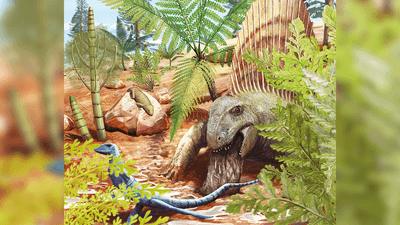
The fossilized vomit is thought to have been gagged into being by one of two carnivorous animals that were early relatives of mammals: Dimetrodon or Tambacarnifex. The fossil was retrieved from the Bromacker area in the UNESCO Global Geopark Thuringia Inselsberg – a region that was once home to Dimetrodon teutonis, the smallest Dimetrodon we’ve ever found at less than a meter (3 feet) long.
Synapsids like these didn’t get to be as selective about what they swallowed as humans do. This meant a lot of what went in couldn’t go through, and rather than burning energy on digesting the tough stuff, they just brought it back up.
That can include fur or keratinized tissues and, of course, bone. The placement of bones within fossilized exudates can help scientists to decide if what they’re looking at is a regurgitalite or coprolite, which is fossilized poop.
It is very important to have this window into one of the earliest terrestrial trophic webs that we know today.
Arnaud Rebillard
In a coprolite, you would expect to see more highly fragmented bones encased within the fossilized fecal matter. In contrast, regurgitalites tend to contain more articulated bones that are visible on the surface of the fossil.
That was the first clue that the fossil retrieved from Thuringia could be a regurgitalite. Another clue you can search for is phosphorous content.
“In coprolites, the bones are quite heavily digested and all of the bacteria that form and exist when it gets fossilized, basically everything turns into phosphorus inside,” said Rebillard. “For regurgitalites, because of the lesser digestion, we usually see a lack or almost an absence of phosphorous.”
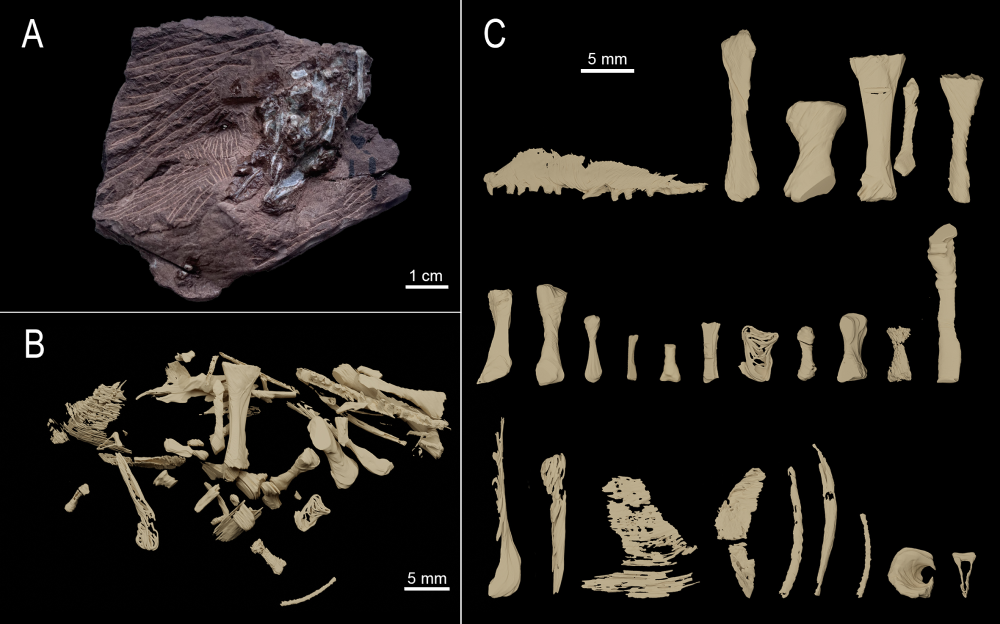
The theory held in the case of the Thuringia regurgitalite, which showed almost no phosphorous in the matrix surrounding the bones. It also contained the remains of three different animals, which makes it less likely to be an aggregation of bones swept into a fossil burrow – something Thuringia is famous for.
So, by all accounts it appears we are indeed looking at one of the oldest regurgitalites ever found, and one that stands out because unlike the handful that are older, it was brought up by an animal on land.
To have this temporal resolution for an environment that is almost 300 million years old is absolutely crazy.
Arnaud Rebillard
“[Terrestrial environments] are usually not the best for fossilization compared to lakes or seas or oceans,” said Rebillard. “It is very important to have this window into one of the earliest terrestrial trophic webs that we know today.”
“In this small cluster that you can hold in your hands, you have three animals that you can literally say were truly existing in the same place and at exactly the same time. To have this temporal resolution for an environment that is almost 300 million years old is absolutely crazy – it’s going to bring us plenty of new data on the palaeoecology that existed back then.”
Now that the team have been able to confirm that regurgitalites this old can be found in Thuringia, the goal is to go back and hopefully find more bromalite fossils, including coprolites.
“To have them both from the same locality would be super precious,” added Rebillard.
The study is published in the journal Scientific Reports.