Nature
 PUBLISHED





Have you ever seen something shiny that seemed to change color as you moved around it? Congratulations, you’ve experienced iridescence – a dazzling optical phenomenon that can be seen in many kinds of wildlife. It’s most famous among birds and certain insects, but a new iridescent icon has just hopped onto the scene in Australia. Weirdly, it’s a frog we’ve known about for a very long time.
The snazzy customer is the green and golden bell frog, to be precise. Known to science as Ranoidea [Litoria] aurea, it’s native to eastern Australia, where it hops across the ground feasting on insects. As one of the country’s largest frogs, it has quite the appetite.
There have been few documented cases and photographic evidence of colour shifts such as this among amphibians
John Gould
The only downside to gorging your way to bodacious status? You become an excellent meal for wading birds, snakes, fish, and foxes. This evolutionary pressure has inspired a rather dazzling defense mechanism in these frogs.
During fieldwork on Kooragang Island, New South Wales, conservation biologist John Gould from the University of Newcastle, Australia, captured three adult frogs. They included one male and two females, and their bodies were checked for signs of iridescence before being released where they were found.
Given the iridescence is confined to the blue thigh region, which may serve as a flash coloration to ward of predators, this optical effect may strengthen the visual signal to be more noticeable
John Gould
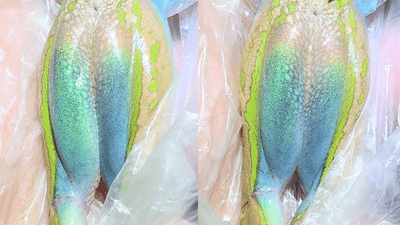
An analysis of the recordings revealed that the inner-thigh skin of green and golden bell frogs is predominantly blue with, to borrow Gould’s evocative words, “a glossy and metallic lustre.” This color, however, shifted when the frog was moved.
“Iridescence is an extraordinary optical effect often seen in birds, where the color of the tissue shifts with viewing angle,” said Gould to IFLScience. “There have been few documented cases and photographic evidence of color shifts such as this among amphibians.”
By changing the viewing angle, the frog’s thighs could be anything from dark ocean blue to the color of the sky, with hues ranging from turquoise to blue-green. The outer thigh and back skin remain the pea-green these frogs are known for, concealing a dazzling pair of hot pants that had gone undiscovered since the frog was first documented in 1827.
That the hotpants can’t be seen unless the frog jumps suggests the iridescence plays a role in anti-predator defense. When the frog is disturbed, it jumps, and this “flash coloration” signal startles would-be predators.
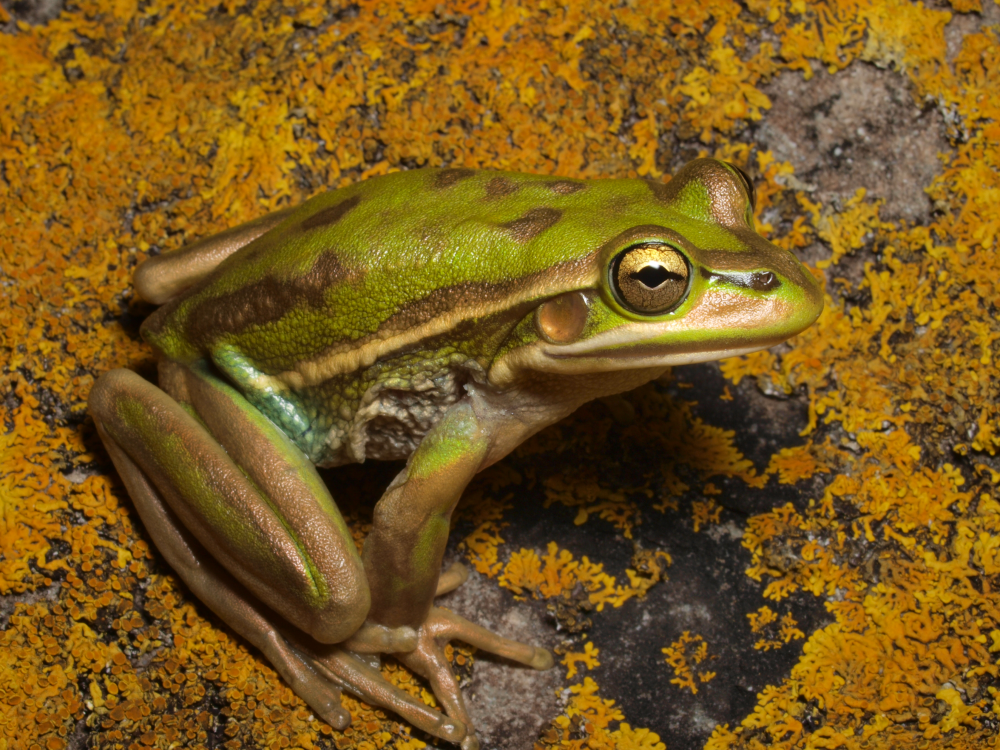
Flash coloration doesn’t require iridescence, but combining the two may enhance the effectiveness of that visual signal. This makes it more conspicuous and attention-grabbing when the frog moves, having a bigger influence over the beady eyes of whatever bird or reptile fancies itself a snack.
“Given the iridescence is confined to the blue thigh region, which may serve as a flash coloration to ward off predators, this optical effect may strengthen the visual signal to be more noticeable,” said Gould.
The discovery serves as a dazzling reminder that hidden iridescence may exist among other amphibians we already know very well. Furthermore, it challenges long-held assumptions about how blue coloration is produced in frog skin.
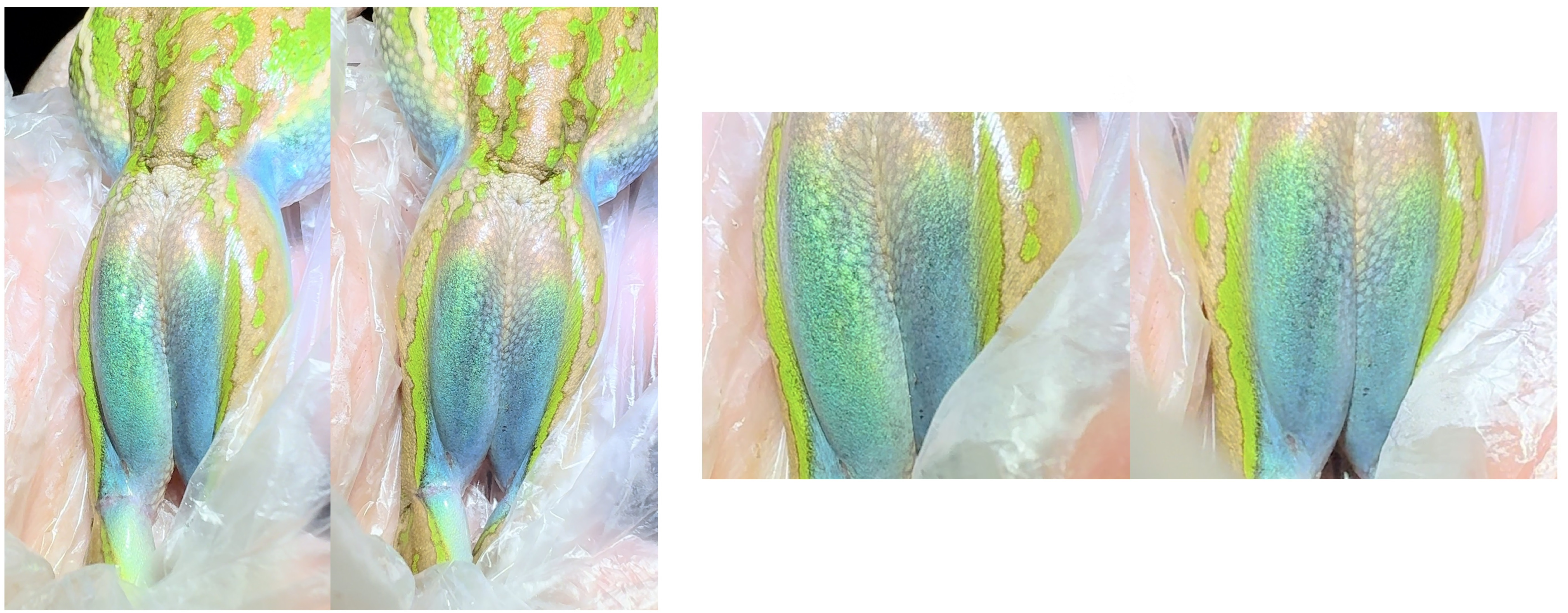
Blue pigment is rare in the animal kingdom. Instead, most blues are produced by structural coloration, in which light is scattered by microscopic structures. We used to think the blue in frogs was the result of light scattering randomly through such structures, but to achieve true iridescence, their organization has to be more ordered.
“This study demonstrates that amphibian skin can be far more complex than we previously appreciated,” said Gould in a release, “and suggests there may be other examples of iridescence waiting to be discovered.”
We’re coming for you, sparkly-pants amphibians.
The study is published in the journal Austral Ecology.


 1
1