Nature
 PUBLISHED
 10
10


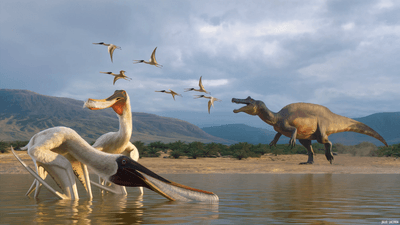


The pursuit of becoming a world-first fossil is one of dogged determination. The majority of life on Earth doesn’t get preserved, so you’ve got to die just right, bathed in just the right conditions. For one filter-feeding pterosaur, that meant spending an eternity encased in vomit.
Yes, for the first time ever, an extinct species has been described locked inside a regurgitalite – the scientific name given to fossilized vomit. It’s a world-first in more ways than one, also being the first filter-feeding pterosaur described from the tropics. The regurgitalite was retrieved from the Romualdo Formation in Northeast Brazil’s Araripe basin, home to the Kariri people.
The new-to-science species has been named Bakiribu waridza, from the Kariri words bakiribú waridzá, meaning “comb mouth”, as a hat tip to its unusual dentition and the region’s Indigenous inhabitants. It had extremely elongated jaws lined with dense, brush-like rows of teeth like those seen in Pterodaustro (its sister taxon) and Balaenognathus – both ctenochasmatid pterosaurs characterized by their teeth specialized for filter feeding.
The lump of rock it was identified within has been characterized as a regurgitalite owing to the many fish our pterosaur was preserved alongside. The fish are oriented in a way that suggests the classic piscivore eating technique of knocking back fish whole and head-first to avoid injury from backward-facing spines. As for who did the eating? The most likely candidates are a kind of spinosaurid dinosaur or ornithocheiriform pterosaur.
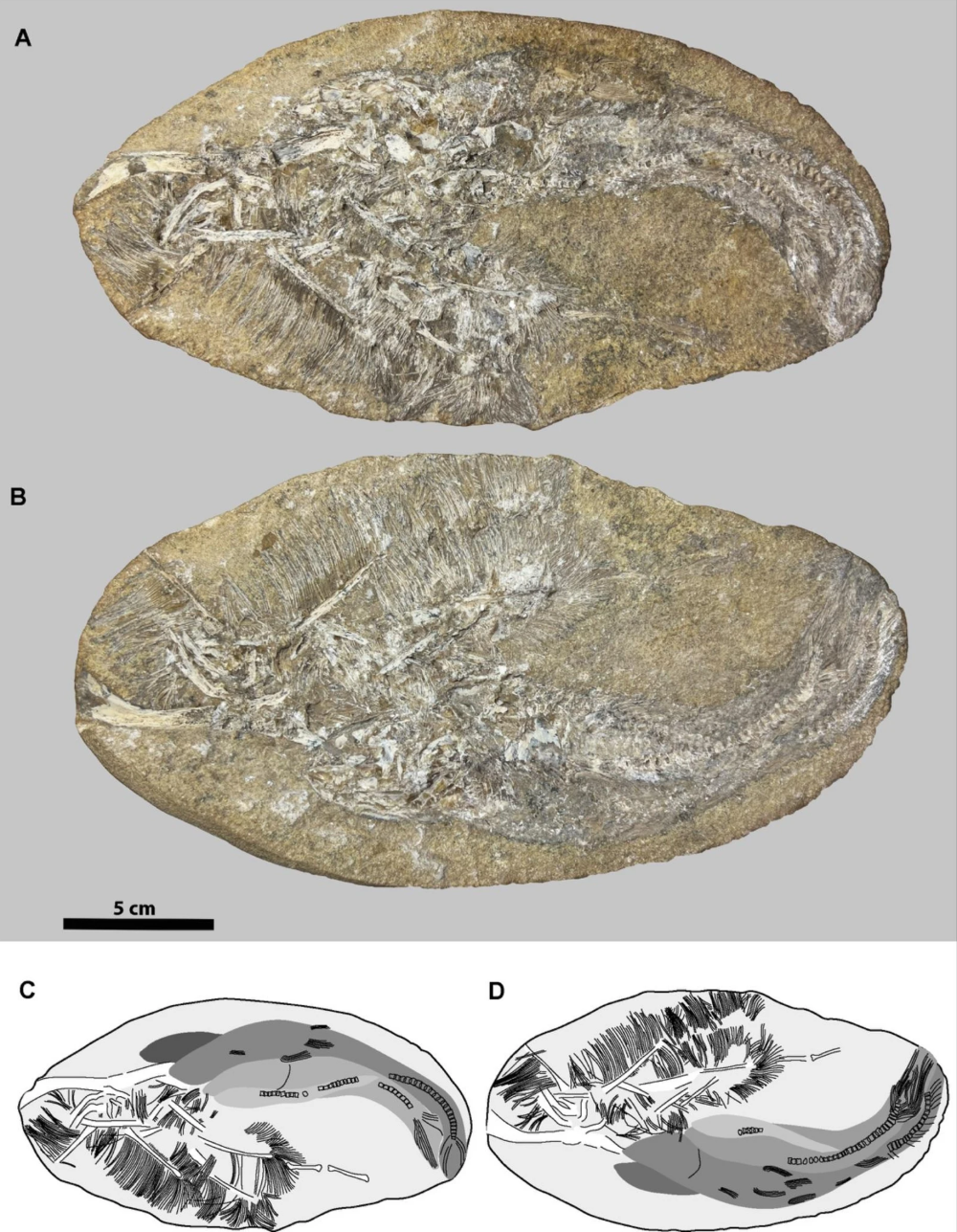
When predators vomit, their stomach contents are often encased in a mucus envelope to effectively stick it all together as it’s sicked up. This is why we find these mini fossil assemblages still gelled together in their relative positioning (only now with rock) millions of years later.
Piecing together “who ate whom” using undigested food remains offers a rare opportunity to study ancient food webs. In this instance, it appears the pterosaur may have had the last laugh in that the spatial arrangement suggests it was eaten before the fish, and its skeleton may have been the mechanical discomfort that motivated the predator to vomit.
So, Bakiribu refused to go down without a fight, and its efforts have been rewarded. It now represents the first record of a ctenochasmatid pterosaur from the tropical latitudes of Gondwana and the first archaeopterodactyloid documented in the Romualdo Formation.
“Its unique combination of anatomical traits—particularly its very elongated jaws, dense dentition with long and slender teeth, subquadrangular crowns in cross-section, and acrodont-like tooth implantation in both jaws—sheds new light on the evolutionary trajectory of filter-feeding pterosaurs,” conclude the authors. “The exceptional preservation of the specimen within a regurgitalite, alongside head-aligned fish remains, provides rare direct evidence of trophic interactions in the Early Cretaceous Araripe paleoecosystem.”
“Bakiribu adds to the growing evidence that the Araripe Basin serves as a critical window into Early Cretaceous biodiversity, ecological complexity, and continental-scale faunal exchanges.”
The study is published in the journal Scientific Reports.