Nature
 PUBLISHED



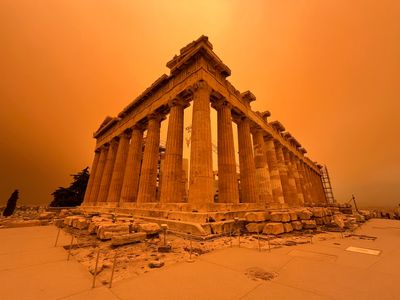


Tilt your head up on a hazy day in Athens, Naples, or Madrid, and you might be looking at a little bit of Africa.
After Europe has spent decades cleaning up its air pollution, restless dust all the way from the Sahara Desert is becoming an increasing burden on air quality.
In a new study, scientists used artificial intelligence (AI) to track the movement of dust across Europe between 2012 and 2021. While levels of tiny particles of air pollution from gas-guzzling engines and industry have declined, there was a significant surge in desert dust, especially in southern Europe.
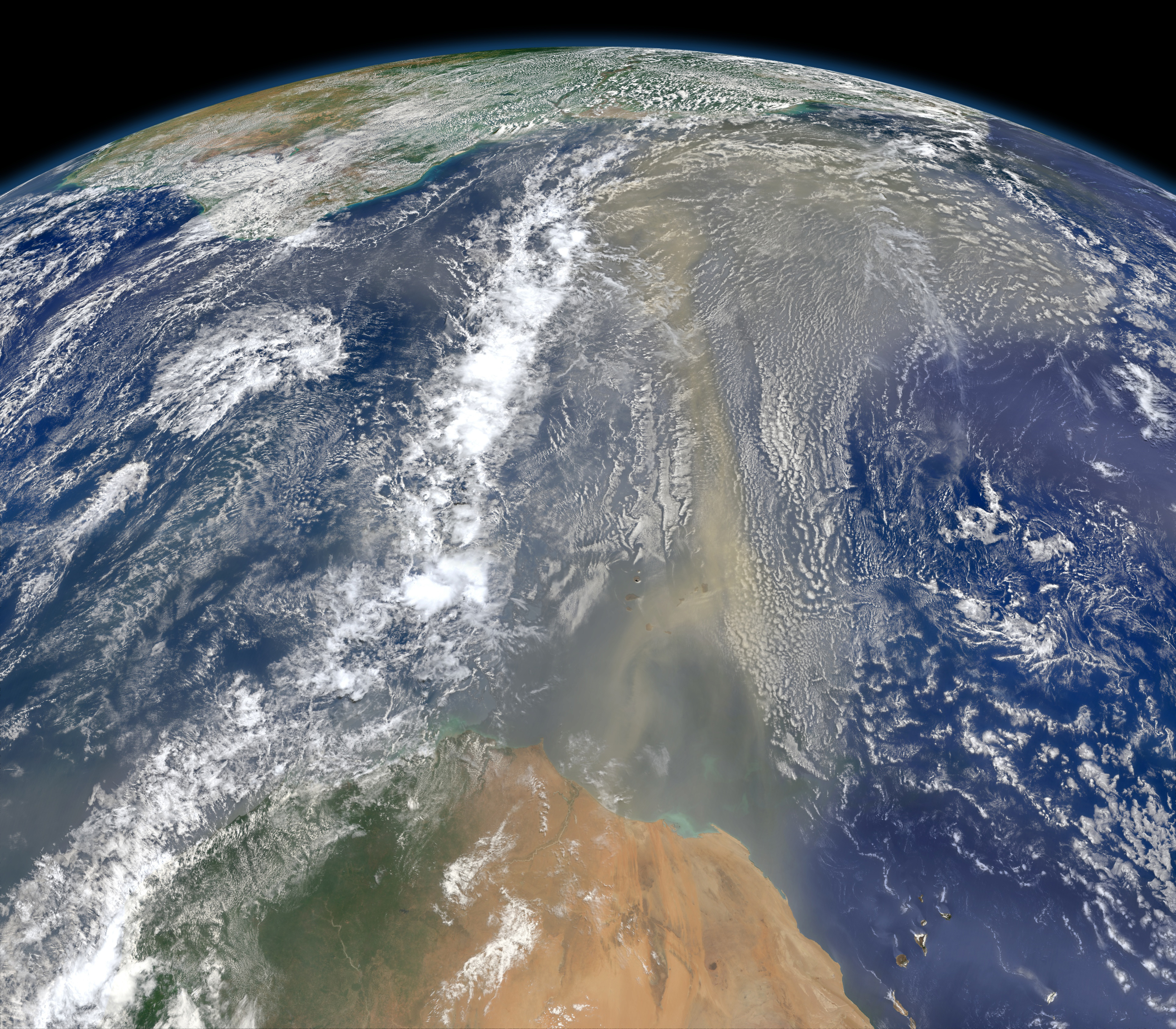
The sand is sweeping up from the Sahara in North Africa, blowing across the Mediterranean, and hanging in the atmosphere over southern Spain, Portugal, Italy, the Balkans, and Greece.
The Saharan sand is even reaching as far as northern Europe, although it's a minor dusting compared to more southern regions closer to Africa.
Nevertheless, the levels of desert dust reaching northern Europe increased at a pace identical to that of the south, suggesting it "could become a growing concern for these regions in the future," the study reads.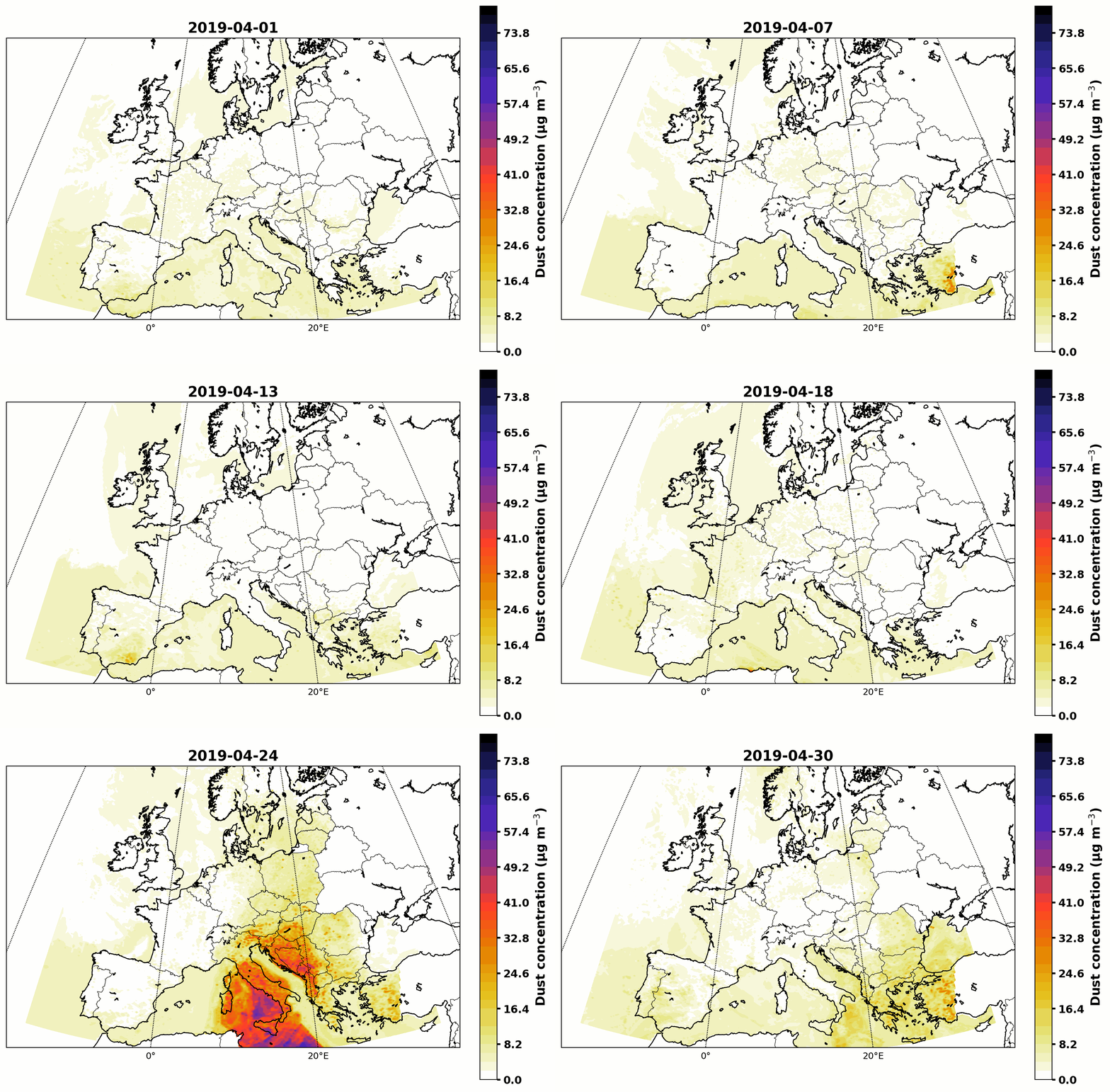
Sometimes, that dust makes its presence known in a dramatic fashion. On October 16, 2017, the skies over the British Isles turned a surreal sepia hue and the Sun glowed blood red.
The eerie spectacle was the work of ex-Hurricane Ophelia, which dragged Saharan sand across much of Europe, and then combined with smoke from severe wildfires in Portugal and Spain.
Growing pains of the Sahara Desert
The reason behind the uptick is the increasing desertification of the Sahara.
As a result of natural climate cycles and human-driven global warming, this immense body of sand is expanding. It’s estimated the desert has increased in size by 10 percent over the course of the 20th century, and it’s a trend that continues.
“It is not yet definitively clear to what extent human-induced climate change has contributed to this development or whether it is further intensifying it,” Kaspar Dällenbach, project leader from the PSI Center for Energy and Environmental Sciences in Switzerland, said in a statement.
“However, our current understanding suggests that the increase in desert dust is at least facilitated by human greenhouse gas emissions and the associated global warming. This leads to drier conditions in certain regions and the expansion of deserts.”
Paired with the swelling of the Sahara, altered circulation patterns in the atmosphere are also blowing increasingly strong winds across the Mediterranean.
“The number of storms carrying desert dust to us from the Sahara and the Arabian Desert has not actually increased,” said Petros Vasilakos, another researcher at the PSI Center for Energy and Environmental Sciences and lead author of the study.
“But they have become more intense over the ten years studied, and as a result they are now transporting more dust to Europe than they did before.”
The team can trace the dust because it has a unique chemical fingerprint. By looking at the different chemical compositions, they can then work out where it came from.
Particulate matter from urban construction sites, for example, is very high in calcium due to the concrete and crushed stone, while particulates from traffic and household emissions are made largely of carbon from the combustion of fossil fuels.
Desert dust, meanwhile, is rich in aluminum, one of the most abundant elements in the Earth's crust.
A new health issue
One of the biggest questions is whether this influx of Saharan sand will have an impact on human health. Inhaling specks of Saharan dust can penetrate deep into the lungs and potentially trigger inflammation, oxidative stress, and tissue damage. In turn, this can increase the risk of heart attacks and respiratory problems like asthma.
But the researchers say we won't know the full impact of the recent dust increase until extensive long-term studies are completed. In the meantime, they hope the AI-fueled methods used in the study can enable better real-time monitoring of dust in the near future.
“While conventional models are good at predicting strong desert dust episodes, they rarely capture smaller dust events and have difficulty accurately determining the dust concentration at ground level,” said Dällenbach.
“With our measurement data and the AI, which estimates concentrations for other regions of Europe on the basis of measurements from more than a hundred locations, we were able to supplement the model with this information and thus create a reliable, health-relevant particulate matter map of dust particles for all of Europe.”
The new study is published in the journal Nature.