Nature
 PUBLISHED


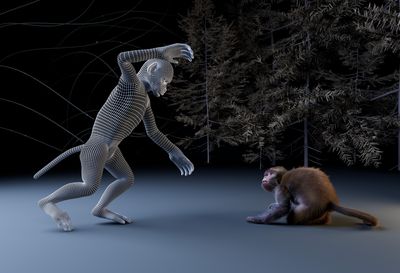


If you feel uneasy around clowns, dolls, or humanoid robots, then you’re probably residing in the uncanny valley – a space where things are almost normal, but just a little off. According to new research, it isn’t just humans who seem to keep falling into this disturbing little valley, with monkeys also experiencing this creepy psychological effect.
The concept of the uncanny valley was first applied to the field of robotics in the 1970s, when Japanese researcher Masahiro Mori noted that people tend to find androids more and more pleasing as they become more humanlike, but experience a massive burst of repulsion when these bots become almost realistic.
This sense of disgust then subsides as robots reach a more natural level of resemblance to us, creating a U-shaped curve of emotional affinity that looks just like a valley.
It’s not entirely clear what causes this response, but the leading theory states that non-human entities that look similar to us mess with our predictive cognition.
In other words, these slightly off-color representations seem more or less familiar, but display traits that don’t match with our internal predictions about what a human ought to look like, resulting in a creepy sense of unease.
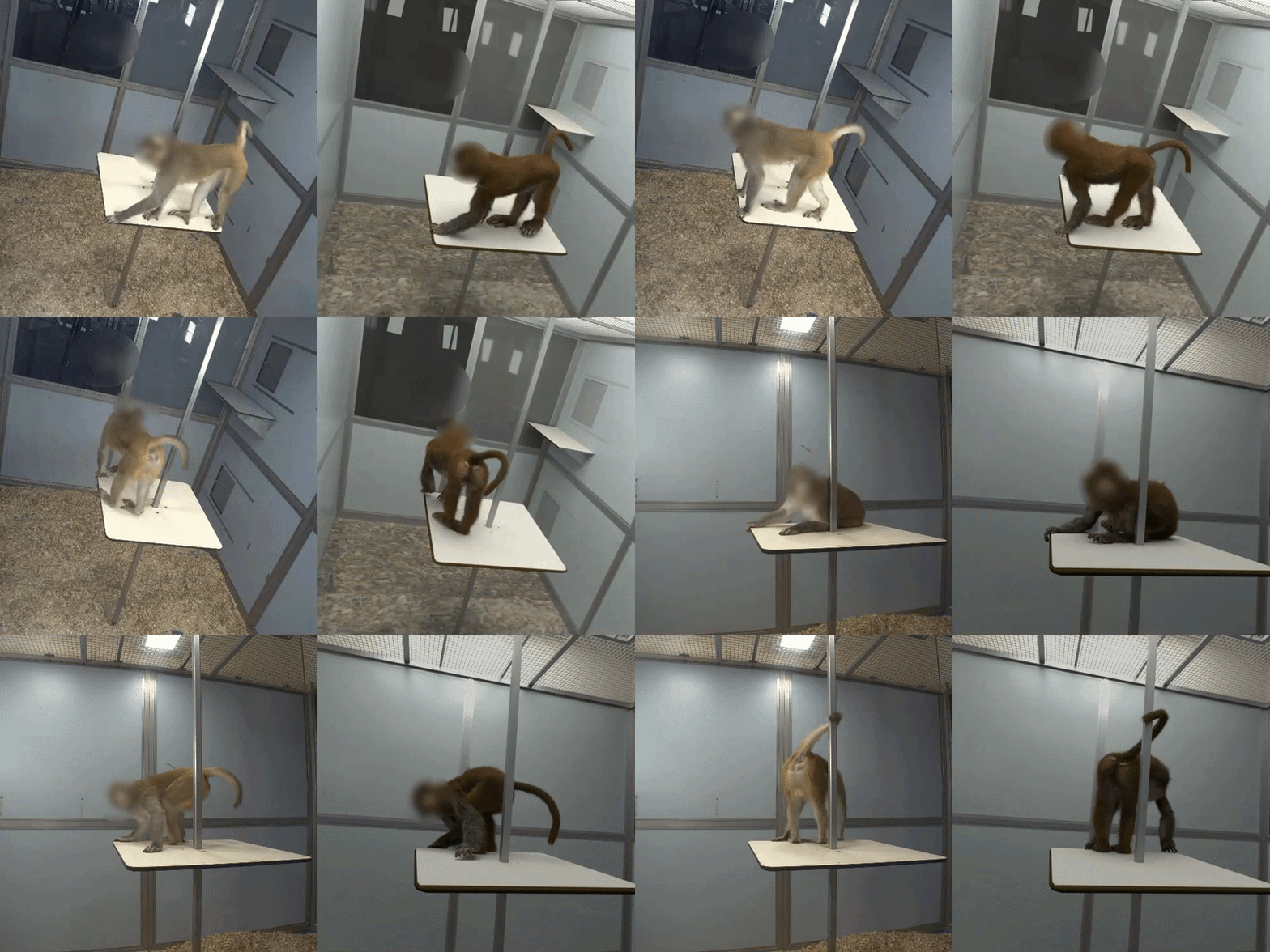
To test whether this phenomenon also affects non-human primates, researchers sat eight male rhesus macaques in front of a screen and showed them videos of both real monkeys and fully realistic avatars.
The animals paid exactly the same level of attention to both the genuine and false figures, indicating that they found them to be equally realistic.
However, when the avatars were tweaked ever so slightly, the macaques suddenly avoided looking at these almost-simian characters. In contrast, the monkeys showed no such avoidance of avatars that were more unrealistic, suggesting that they were probably experiencing something akin to the uncanny valley.
“We were able, for the first time, to demonstrate an uncanny valley effect for body perception in monkeys,” write the study authors. This finding, they say, “supports the similarity of the perceptual processes of body perception in humans and [non-human primates].”
The results of this study therefore hint at the deep evolutionary roots of the uncanny valley, suggesting that the unpleasant phenomenon may be linked to some ancestral cognitive function or survival strategy. For instance, it has been proposed that a sense of revulsion towards things that don’t seem quite right could represent a primal instinct to avoid threatening imposters or diseased individuals.
Weirdly, though, a similar sense of creepiness can also be experienced when viewing non-human stimuli such as liminal spaces. These include things like empty corridors, open roads, or abandoned buildings, all of which have the potential to unsettle us due to their subtle deviation from predictable patterns.
In anthropology, liminality is defined as a state that is "betwixt and between" two fixed conditions, being neither one nor the other. Like the misshapen creatures of the uncanny valley, then, liminal spaces creep us out because they seem almost familiar, yet something about them defies categorization and contradicts our expectations about how the world should be.
The study is published in the journal PLOS Biology.

 1
1