Nature
 PUBLISHED
 4
4


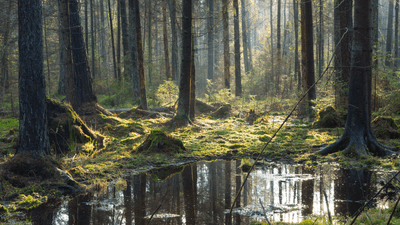


If you live near a forest or wood (yes, there is a difference!) then congratulations! You’ve won life. To walk in wild spaces is so much more than just a privilege; it's beneficial for our mental and physical health too. But are the trees really all that wild?
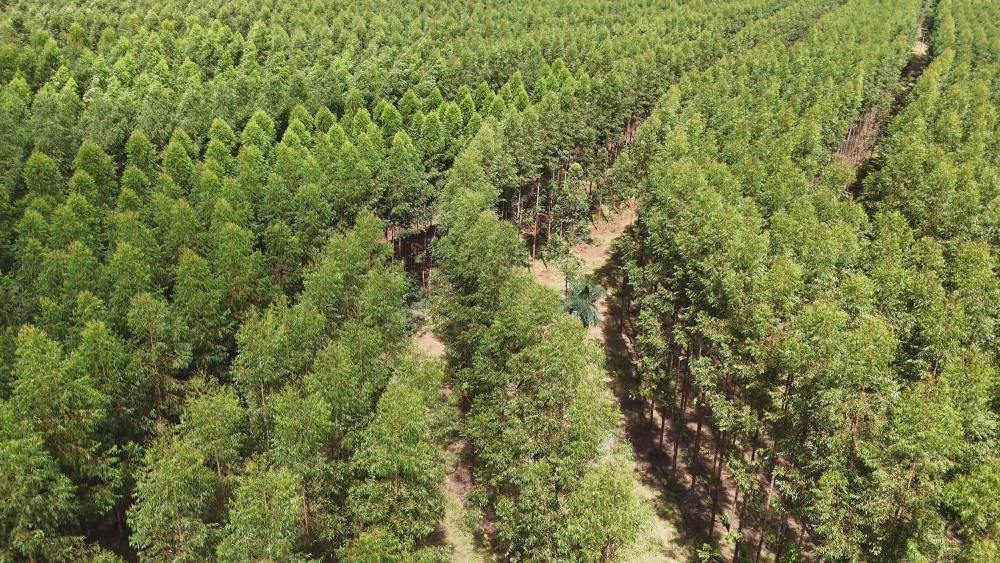
A large proportion of the world's forests are either actively managed or historically altered.
That means fallen trees are cleared away, most trees are about the same age (and tend to be commercially viable species), and they're often planted in a way that gives developing trees more room to grow.
It makes you wonder: what would forests look like if humans had just left them alone?
To find that answer, you’d do well to visit Europe’s best-preserved primeval forest: Białowieża.
The Białowieża region on the border between Poland and Belarus has been continuously forested since the end of the last Ice Age, around 10,000 to 12,000 years ago. This makes it one of the largest remaining remnants of the ancient forests that once covered much of the European Plain.
It now contains some of Europe's best-preserved old-growth and primeval forest ecosystems.
Although the forest has never been extensively cleared or converted to agriculture, a 2012 paper argued that people have influenced parts of it for centuries through less intensive activities such as grazing, selective logging, beekeeping, and other traditional land uses.
However, natural ecological processes have remained dominant in the core region, and it is this that separates Białowieża from the forests most of us experience.
What stands out about Białowieża is the way in which the forest life is fueled by death.
As trees fall in the forest, they lie where they land. When these fallen trees aren’t cleared away, they clutter the forest floor and so make it difficult for animals like humans to pass through. Ignore the desires of those fussy apes, however, and you reap all kinds of other benefits.
To the natural world, death isn’t just a part of life – it’s critical to it. The decomposition ecosystem demonstrates just how many species’ life cycles are dependent on carcasses, and the same is true of decaying plant matter.
Far from clutter, it is these fallen trees that are the foundation of forest ecosystems. They provide habitats for endangered insects and rare fungi. They lock in moisture, protecting living trees against drought. They act as nurseries for seedlings and provide nutrients to soils.
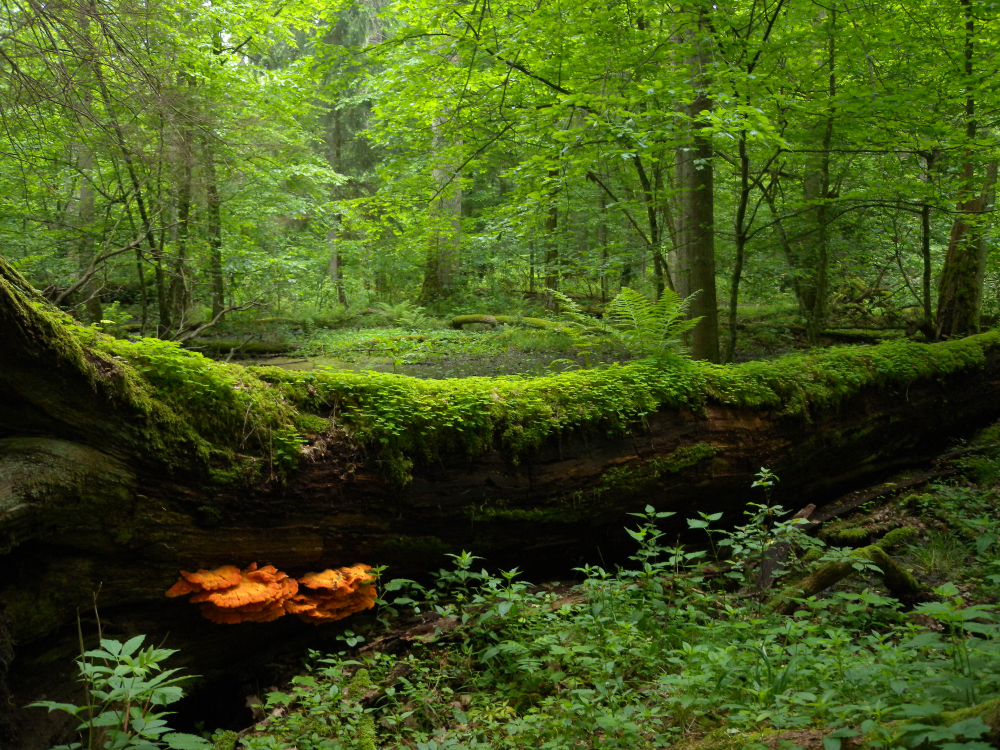
According to the Dead Wood Society, thousands of creatures depend on dead or decaying wood for at least part of their life cycle. These are known as saproxylic species, many of which are threatened in Białowieża.
Other notable wildlife walking among the ancient trees include Eurasian wolves, lynx, moose, red deer, wild boar, and the European beaver. It is perhaps most famous for being the world’s primary stronghold for European bison, but it’s a different Białowieża resident that’s blown this writer away.
Meet the moor frog, Rana arvalis.
IFLScience’s own Josh Davis was walking in an area of flooded forest in Białowieża when he came across dozens of singing moor frogs. While they are known for their impressive ability to survive freezing temperatures during winter (although not quite to the extent of the wood frog), it was something else that caught Davis’s eye.
You see, all the singing frogs had turned a vibrant shade of blue.
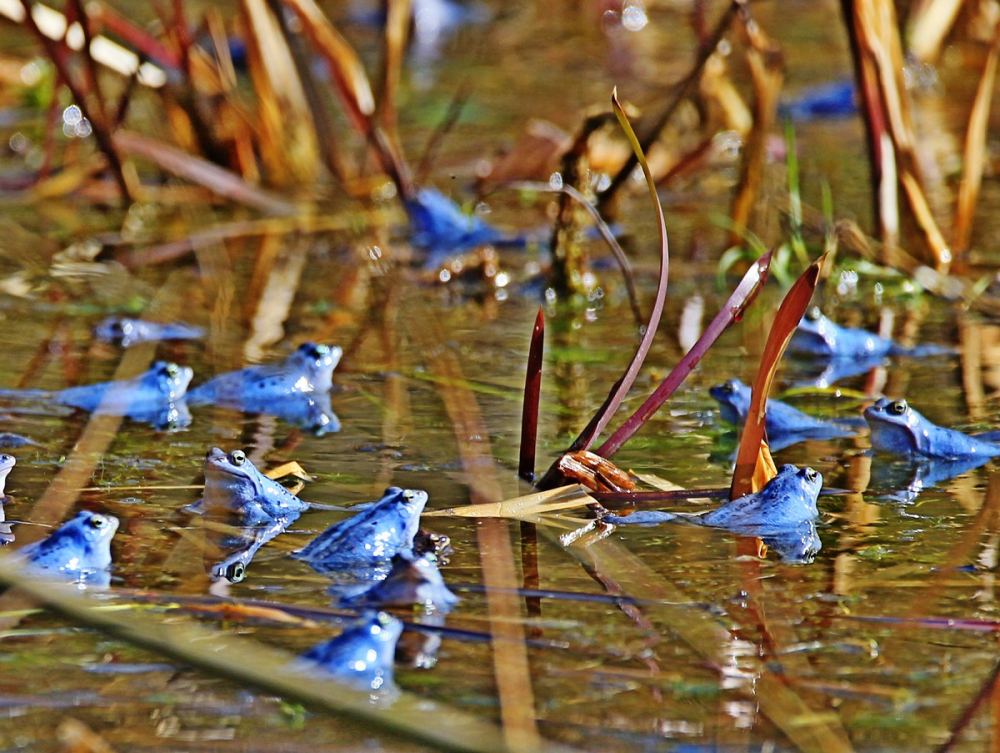
The rather alarming shade of cyanosis-cerulean is actually just the way these frogs try to impress a mate. Perhaps the effect is lost on our human eyes.
After all, research has found that the most dramatic change in the males' breeding coloration occurs partly in the ultraviolet range (roughly 350–400 nanometers). While we can’t see that, the female frogs certainly can.
Technicolor critters aside, Białowieża is treasured as one of the world’s most valuable long-term ecological study sites. Unfortunately, it’s also one that is at risk.
Białowieża encompasses parts of Poland and Belarus, and only one-third of the Polish region is protected as a natural park and nature reserves. The rest is subject to forest management, which is why the remaining protected section was awarded UNESCO World Heritage site status.
That didn’t stop the Polish environment minister pushing to triple logging in the district in the mid-2010s, though. The construction of a massive border wall between Poland and Belarus in 2021 has also become an obstacle for wildlife, as well as people.
WWF has been working in collaboration with other environmental groups to wind back plans for industrial logging, but in 2016 they reported that over 100-years’-worth of dead spruces have been removed. Precious dead wood that will take another century to replace.
As a forest whose life is fueled by death, time could be running out for Europe’s last great primeval forest.