Nature
 PUBLISHED


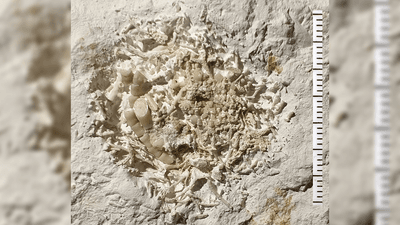


The Stevns Klint (Cliffs of Stevns) in Denmark are perhaps best known for providing evidence of the dinosaur-ending Chicxulub impact, but now, this geological site has thrown up a much grosser find – a 66-million-year-old fossilized pile of animal vomit.
The regurgitated blob was discovered by Peter Bennicke, a local amateur fossil hunter. Upon splitting a piece of chalk that he’d picked up during a walk by the cliffs, Bennicke found that it contained some unusual-looking fragments.
With Bennicke having taken the find to the Geomuseum Faxe, the mysterious specimen was cleaned up and examined by palaeontologist John Jagt. An expert in sea lilies – which are marine invertebrates, not plants as the name might suggest – Jagt found that at least two different species of these creatures were present.
The paleaontologist concluded that the sea lilies had been eaten and then partially spewed up by some sort of animal. Over the course of the next 66 million years, the seafood chunder had fossilized, becoming a regurgitalite; this is one type of a wider group of trace fossils known as bromalites, which originate from the digestive systems of organisms.
“It is truly an unusual find,” said Geomuseum Faxe Museum curator Jesper Milan in a statement. “Sea lilies are not a particularly nutritious diet, as they mainly consist of calcareous plates held together by very few soft parts.”
“But here is an animal, probably a type of fish, that 66 million years ago ate sea lilies that lived on the bottom of the Cretaceous Sea and regurgitated the skeletal parts back up,” continued Milan. “Such a find provides important new knowledge about the relationship between predators and prey and the food chains in the Cretaceous Sea.”
Given its unique nature, the ancient barf was also determined by a committee to be “Danekræ”. This term refers to natural objects found in Denmark that are of scientific or exhibition value, though the name itself “is in Old Danish and means ‘Danish creature’,” as Milan told IFLScience in an email.
Under Danish law, Danekræ have to be handed over to a recognized natural history museum – not that many other people would want to hold on to a bunch of sick anyway, even if it is fossilized. It works out for both parties though, as the finder gets compensation, and a valuable chunk of natural history gets preserved for years to come.
The other good news is that the specimen is soon going on display at Geomuseum Faxe, if your idea of a pleasant day out is getting a closer look at what fish vomit was like in the Cretaceous period.