


 Nature
 PUBLISHED



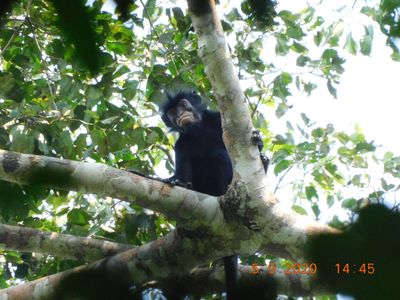


In the depths of the Democratic Republic of the Congo, a new species of colobus monkey has been discovered. This represents only the fifth new species of monkey to be described in the past 75 years, and the researchers already think it's endangered.
Rumors of a new species began in 2008 after an unexpected sighting and a partially obscured photograph of a monkey, but nothing was seen again until 10 years later when a much clearer image was taken. This set researchers onto a dedicated mission to find this elusive species.
“The first clue appeared in 2008 during a Lukuru Foundation expedition to the remote forests east of the Lomami River in what is now central Lomami National Park," Kate Detwiler from Florida Atlantic University said in a statement sent to IFLScience. "The field team photographed a large black monkey, but the image captured only the back of the animal and was too blurry to determine what species it was.”
And so they set to finding out. Between 2018 and 2022, 114 field observations of the new species were recorded. The monkey is named Colobus congoensis and is known by local communities as Likweli. Local people were particularly important in finding this species, and the team spoke to 52 villages in their search, but only eight could recognize and describe the monkey or knew its rough distribution.
“This discovery is both exciting and deeply personal, highlighting the extraordinary biodiversity of my homeland and how much remains undocumented,” said Junior Amboko, a PhD student at Florida Atlantic University and member of the team. “I was honored to name the species ‘Colobus congoensis,’ recognizing the Congo Basin’s remarkable natural heritage and, we believe, marking the first primate named after the Democratic Republic of Congo itself – underscoring both its global importance and local pride.”
The new monkey species is both genetically and morphologically distinct from other known species. Likwelis weigh about 7 kilograms (15 pounds), have glossy black fur, a long tail, and a patch of orange and white fur around the mouth and nose. This gives them a mask-like appearance not seen in other colobus species. They also have a bright white patch at the base of their tails. The males and females look very similar, making them quite tricky to tell apart high up in the canopy.
There are three genera of colobus monkeys based on their color: black-and-white colobus (genus Colobus), red colobus (genus Piliocolobus), and olive colobus (genus Procolobus). The new species was seen often with both the Angola colobus (Colobus angolensis) and Lomami red colobus (Piliocolobus parmentieri).
Miss Waldron’s red colobus is on the Re:Wild list of lost species and is close to being the first primate species declared extinct in 500 years, though a small group might persist in Côte d’Ivoire. The last conclusive sighting was made in 1978, and no video or photographic evidence of the species exists.
Another defining characteristic of the Likweli monkey is its roar. All colobus monkeys roar, and their sounds can carry great distances through the forest, however the researchers recorded the roar of the likweli and found that it was acoustically distinct from the roar of its closest relative, showing again that this is a new-to-science species.
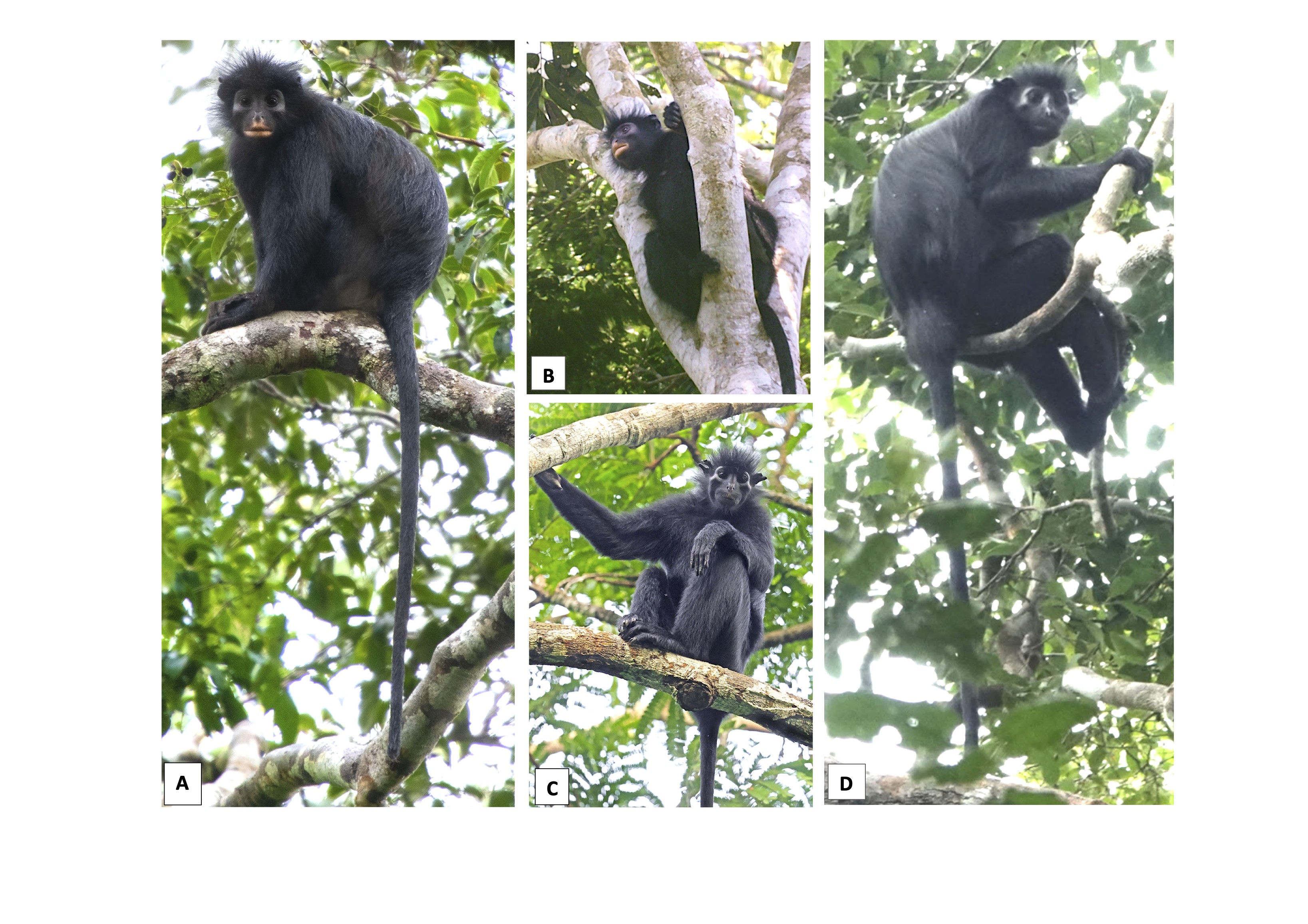
The monkeys have a range of just 1,700 square kilometers, which is small for a colobus. This area of canopy-dense forest is between the Lomani and Lilo rivers, and the small size suggests the likweli are sensitive to habitat quality. Given this small range and population size, the researchers recommend the species is listed as endangered by the IUCN.
“The primary threats are hunting pressure and habitat loss as human populations continue to grow and expand into forested areas," said Detwiler. "The forests that Likweli prefers are also well suited for agriculture, meaning these same habitats are increasingly attractive for farming and settlement."
"Because Likweli occurs nowhere else, the species has very little margin for error if its habitat is fragmented or lost.”
The team plan to do many more observations of likweli monkeys to learn more about their population, as well as their feeding and reproductive habits. The likweli also represent a distinct evolutionary lineage diverging from its nearest relative 4-5 million years ago, which opens up another avenue for study.
“The discovery of Colobus congoensis is both a scientific triumph and a sobering reminder that some of Earth’s rarest creatures may vanish before the world even knows they exist,” said Detwiler.
The paper is published in PLOS One.




 1
1