Nature
 PUBLISHED



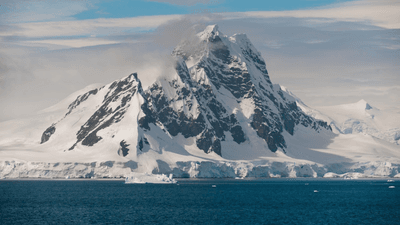


Antarctica really is unlike anywhere else on the planet. The most isolated continent on Earth, it’s home to a rich diversity of life, some of which isn’t found anywhere else on Earth – and new research just proved there could be plenty more where that came from.
Historically, we’ve concerned ourselves with the big things that are unique to Antarctica. Think about Belgica antarctica, a wee wingless midge, or the range of marine animals also endemic to the southern continent (although it’s worth noting that the latter creatures move around the Southern Ocean).
But it could be that we’ve been overlooking an entire habitat. That’s why scientists got their spades out to investigate the tiny microscopic organisms living in Antarctica’s soils.
Making big (microbial) moves
Microbes have a head start when it comes to dispersing because they’re really, really small.
Such a size means they can take flight and move around in the atmosphere. They might also catch an ocean current and drift off to pastures new, and then there’s all the animal guts they can ride around in.
Still, Antarctica is really far away from just about everything.
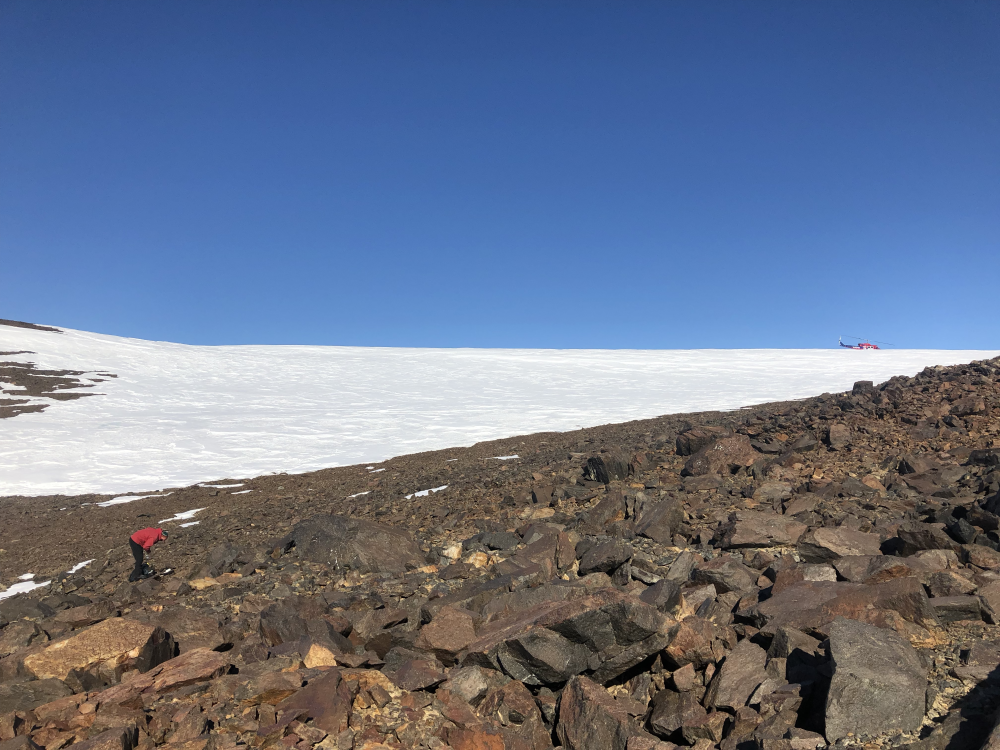
“If we do find we’re looking for endemic microorganisms, a good place to start is Antarctica, because it’s an entire continent that is geographically isolated,” said Noah Fierer, Director of the Center for Microbial Exploration, in a release. “It also has unique conditions not typically found in other soil environments.”
“Cold is the obvious one, but also super dry; Antarctica is a desert.”
Working with postdoctoral researcher Nick Dragone and a team of researchers, Fierer decided to investigate by focusing on a group of bacteria that’s found just about everywhere. It’s known as Arthrobacter, and it can be found from Antarctica to Colorado and the tropics.
Battle of the microbes
The team sequenced the genomes of the Arthrobacter found in Antarctica and compared them against strains found elsewhere. They found that 90 percent of the strains they collected were unique.
“Arthrobacter as a group may be found all over the planet, but when we look closely at individual strains, just like penguins, Antarctica clearly has its own distinctive biological history,” said Byron Adams, professor of biology at Brigham Young University and a co-author of the study.
Next, they grew some of their Antarctic samples so they could put them through their paces in the lab.
Exposing the bacteria to harsh conditions demonstrated that while they were slow-growing compared to other strains, they were tough as nails, capable of enduring the extremes of temperature and aridity.
A rare shiny, perfectly adapted to life in Earth’s biggest frozen desert.
“There is a long-standing assumption in microbiology that ‘everything is everywhere,’” said Dragone. “Antarctica has often been viewed as a possible exception, and our findings support that idea.”
“Some Antarctic soil microbes appear to be distinct from those found in soils elsewhere around the world.”
Small microbes, big impacts
Convincing people to care about the loss of microscopic life might not be so easy as selling them penguins and seals, but it’s never been more pressing to establish exactly what lives in Antarctica. Between 2002 and 2025, Antarctica shed approximately 135 gigatons of ice per year, says NASA.
A meeting was called at The Royal Society in London last year to sound the alarm over extreme changes unfolding in Antarctica with ramifications that will affect us all. Safeguarding the region’s future means taking stock of what we stand to lose, be that the towering icebergs of one of Earth’s last wildernesses, or the tiny lifeforms hiding in its soils.
"We tend to think of biodiversity in terms of penguins, seals, and whales, but this shows that some of Antarctica's most distinctive species are microscopic,” said Adams. “Protecting Antarctic biodiversity also means protecting the biological history contained in a handful of soil.”
The study is published in the Proceedings of the National Academy of Sciences.