Nature
 PUBLISHED


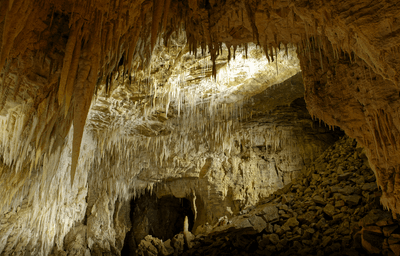


Inside a hillside cave, researchers have unearthed a million-year-old ecological time capsule that offers a rare snapshot into a "lost world" long before the arrival of Homo sapiens.
The discoveries have emerged from the Moa Eggshell Cave, found near Waitomo on New Zealand's North Island. This region is no stranger to spectacular caverns, including the glowworm caves, which are lit up with thousands of bioluminescent larvae.
Fossils were first collected from the Moa Eggshell Cave when it was found in the 1960s, but palaeontologists have recently returned to the site to find they had barely scratched the surface of this prehistoric treasure trove.
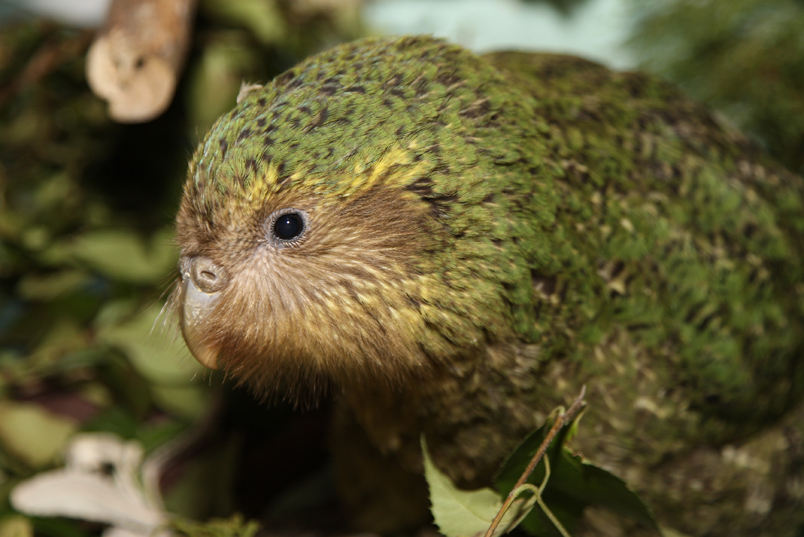
Deep inside, the team unearthed fossils from 12 ancient bird species and four frog species. One of the most significant finds is a new species of parrot, Strigops insulaborealis, which is an ancient relative of the Kākāpō. This gorgeously green bird is known for being flightless and ground-dwelling, but the researchers suspect its prehistoric relative could have taken to the skies since its legs appear to have been much weaker than its modern incarnation.
They also found the remains of an extinct ancestor of the modern Takahē, another iconic bird of New Zealand, as well as an extinct species of pigeon that’s closely related to Australian bronzewing pigeons.
The fossils were dated using layers of volcanic ash preserved within the cave’s strata. They were discovered between two distinct layers of ash from eruptions occurring 1.55 million and 1 million years ago, confirming that these animals thrived within that relatively brief window of time.
As the oldest known cave site on the North Island, it provides the first Early Pleistocene vertebrate fauna ever recorded in a New Zealand cave, filling a massive void in the region’s natural history.
"This isn't a missing chapter in New Zealand's ancient history, it's a missing volume," Dr Paul Scofield, study co-author from Canterbury Museum Senior Curator of Natural History, said in a statement.
The sheer diversity of the extinct creatures found within the cave highlights a startling rate of loss occurring in the past 1 million years. By comparing this cave to other sites, the researchers conclude that about 33 to 50 percent of species went extinct during the million years before humans arrived in New Zealand, most likely as a result of cataclysmic volcanic eruptions and rapid climate shifts driven by stronger glacial–interglacial cycles.
All of this shows that upheaval is nothing new for New Zealand’s wildlife. Long before people set foot on the islands, ecosystems were repeatedly shaken apart and reassembled – perhaps that's another reason why their animals are so strange.
"For decades, the extinction of New Zealand's birds was viewed primarily through the lens of human arrival 750 years ago,” explains Associate Professor Trevor Worthy, lead study author from Flinders University.
"This study proves that natural forces like super-volcanoes and dramatic climate shifts were already sculpting the unique identity of our wildlife over a million years ago."
The study is published in Alcheringa: An Australasian Journal of Palaeontology.