Nature
 PUBLISHED


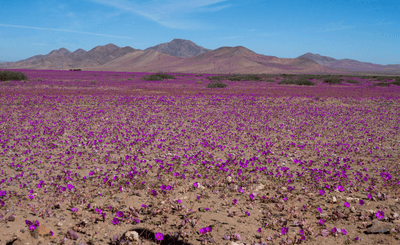


The Atacama Desert is one of the world’s oldest continually dry regions, but it has recently bloomed with a lush, flowery blanket thanks in part to the freak weather summoned by the developing super El Niño.
Chile's Atacama Desert is the driest non-polar desert on Earth because it's trapped between the Andes Mountains and the coastal range, creating a double rain shadow that blocks moisture from both the Amazon rainforest and the Pacific Ocean.
It receives an average of about 15 millimeters (0.6 inches) of rainfall each year, although its hyper-arid core can get as little as 1 to 3 millimeters (0.04 to 0.12 inches) annually, if not even less.
Wet weather in a dry land
This year, however, the Atacama region has been showered by heavy rain due to the record-breaking El Niño event in the eastern Pacific, with some areas reportedly receiving 180 millimeters (7 inches) of rain this season.
While the deluge has caused problems elsewhere in South America, it’s been a blessing for the Atacama Desert as it has allowed millions of long-dormant seeds to awaken.
The bloom is already well underway, and Chilean authorities forecast that the fields of colorful flowers could cover up to 15,000 square kilometers (5,791 square miles) at the peak of the season in October.
“The Flowering Desert is a phenomenon that depends not only on rainfall, but also on factors such as soil absorption, temperatures, and solar exposure,” Gabriela López, provincial head of Protected Areas for CONAF Atacama, said in a translated statement.
“Atacama is blooming, and we want Chile to turn its attention to our region. This phenomenon represents a great opportunity for tourism, our entrepreneurs, and the regional economy, but it is also a heritage that we must all protect,” added Sofía Cid, regional presidential delegate.
Bloomin' marvelous
The flowering desert is composed of 1,893 plant species, many of which are only found in this part of the world, according to UC Chile. Some can lie dormant as seeds for up to 10 years, waiting for a few drops of rain to spring back to life.
Desert flowers possess a collection of adaptations that allow them to endure drought conditions, like waxy coatings that hold in moisture, fine hairs that reflect sunlight, small leaves, and specialized root systems.
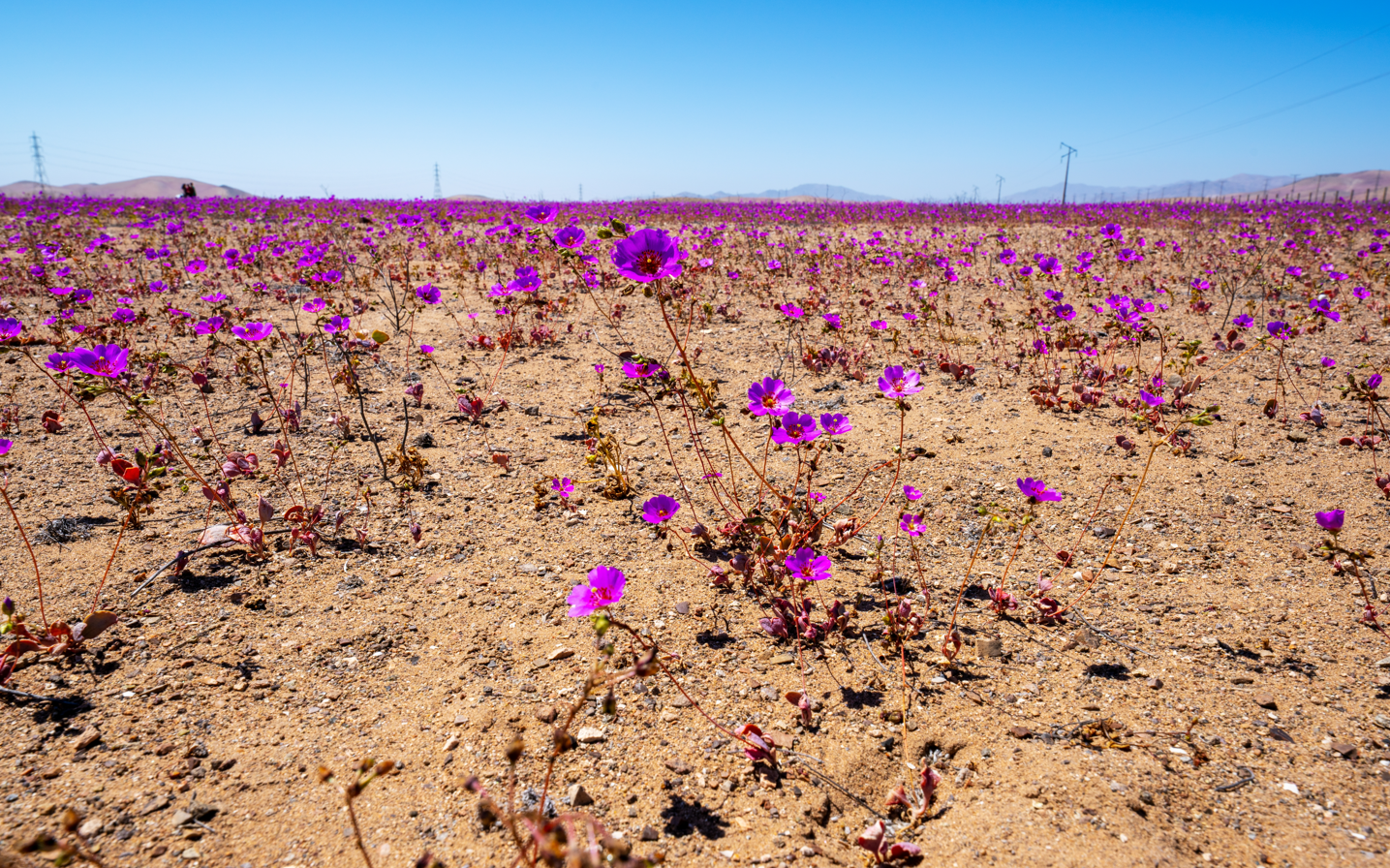
Many are bursting with color, from vivid pinks and purples to buzzing yellows and pale blues. This vibrant display is a reflection of their short but sweet existence. During a desert bloom, their time window is short and pollinators are sparse, so bold, high-contrast flowers offer a reproductive advantage.
Around 15 blooming events have taken place in the Atacama over the past 40 years, arriving sporadically every three to ten years when conditions are just right.
However, the most recent was only last year, in 2025. Before that came a bloom in 2022, which was unusual because it happened during La Niña, followed by another in 2017 and a major bloom in 2015.
Desert blooms in the Atacama are a wondrous sight, and it's a real stroke of luck to get two in back-to-back years.