Nature
 PUBLISHED


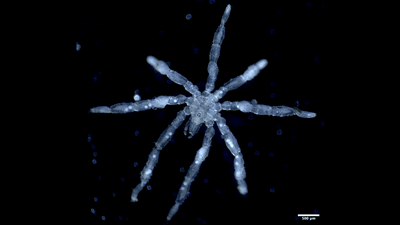


There’s no getting away from the fact the sea is brimming with life strange enough to be alien. Doing that reputation no favors is the recent discovery of two new sea spiders in the Salish sea, the first to be discovered here in almost a century.
With red eyes, hairy legs, three-lipped mouths, and eggs coming out of their legs, it’s hard to know where to start with these creatures. But let’s give it a go, shall we?
What are sea spiders?
Sea spiders aren’t true spiders, but they are related. Spiders didn’t evolve until their ancestors moved onto land around 400 million years ago, whereas sea spiders, which go back 500 million years, are from a lineage that never left the sea.
So, why so spider-like? Their remarkably similar body plan of more legs than you can shake a stick at is an example of convergent evolution, whereby the same trait emerges in two unrelated animals.
While terrestrial spiders are capped at eight legs, sea spiders can go up to 12, but most mirror their terrestrial counterparts. Spindly and rather small, sea spiders commonly live as parasites, but as this latest study reveals, even parasites can have parasites.
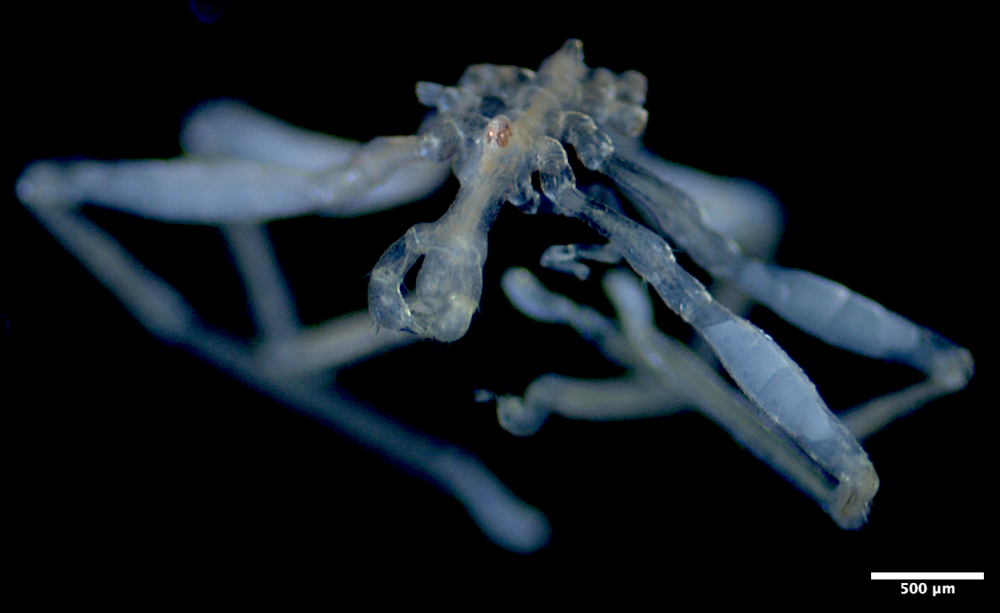
A Salish Sea (spider) surprise
Study author Cormac Toler-Scott was looking for data on how sea spiders are impacted by climate change when it dawned on him that it didn’t really exist. That’s because, to date, we know little about the biodiversity of this region, let alone how it lives.
Intent on changing that, Toler-Scott and colleagues went sea spider hunting in the Salish Sea near Quadra Island, Vancouver, Bamfield, and Victoria from 2023 to 2024. Their efforts were rewarded with two new-to-science species, and hoo boy – are they a pair of oddballs.
Oddball number one is Callipallene pilosuspedes, so named for its hairy feet. It has red eyes and a short proboscis tipped with a three-lipped mouth that it uses to suck juices from its host.
Sounds weird, looks weirder.
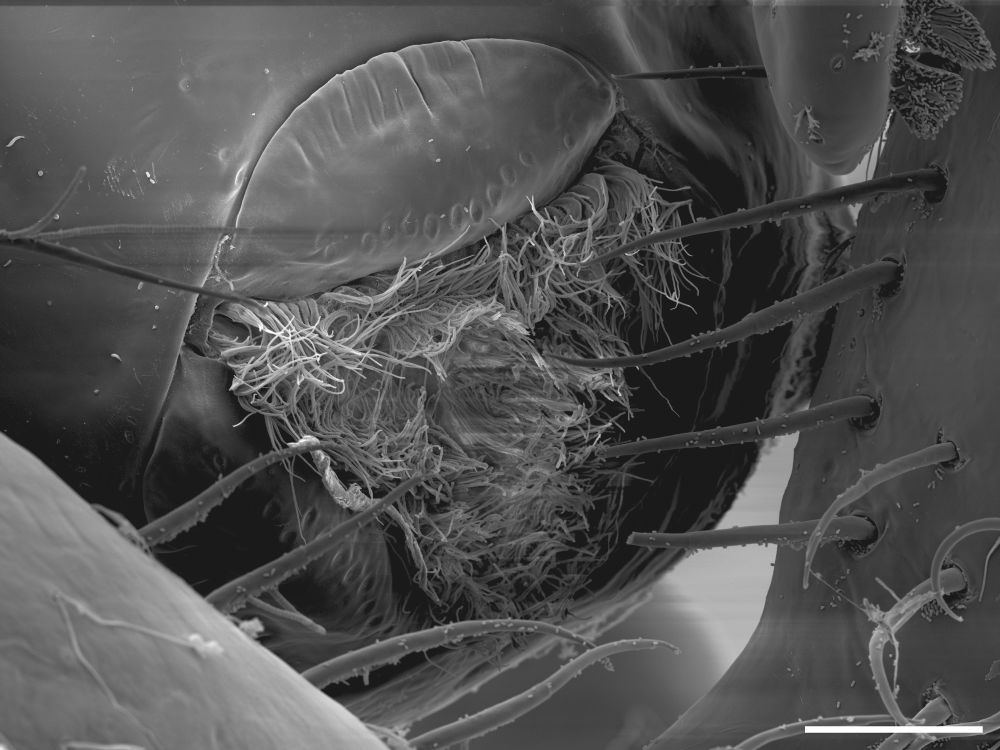
Oddball number two is Tanystylum kiixin, named in honor of the ancient Indigenous village found near where the specimens were first collected. The latter name, pronounced kee-hin, is a reference to the sound made by waves crashing on the base of the village.
Its comparatively short legs (seen in the image at the top of this article) have pores from which the females produce eggs. These are then scooped up by a male who will glue the eggs to his own legs where they’ll develop.
Parasite party
Their bodies were also found to be home to tiny parasites, demonstrating the Russian-doll-esque organization of parasitic relationships. To quote Toler-Scot, it’s like “an ecosystem within an ecosystem within an ecosystem.”
The team hopes to continue to build on the known diversity of sea spiders in the Salish Sea having seen such success in a single field season. Plenty more parasites to come, no doubt.
The study is published in the journal Organisms Diversity & Evolution.