Nature
 PUBLISHED
 1
1





In a previous job, on an otherwise uneventful Tuesday afternoon, I was standing in an office that looked like it hadn’t changed much since the 1970s. I was handed a chunk of rock that was dark and speckly, but didn’t look like much.
Its relatively benign appearance belied the fact that it was a lump of meteorite, within which were fragments of material that, the curator told me as I casually ran my thumb over its surface, are older than the ground on which we were standing.
In fact, the curator continued, they are older than the Sun and everything else in the Solar System.
At that moment in time, holding a piece of rock that was 4.6 billion years old, it’s fair to say I had something of an existential crisis. How could it be that this little rock nestled in my palm existed before the Earth had even formed?
The deep sea of human history
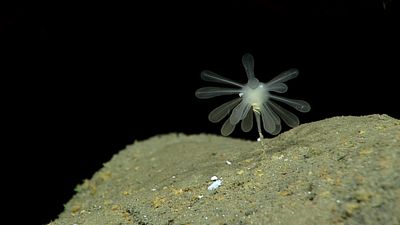
A couple of months later, I experienced a similar feeling of extreme insignificance that also sent primeval questions swirling around that little monkey brain of mine. This time, rather than being triggered by a piece of rock, I was crouched down and face-to-face (face-to-arm?) with a sea lily.
This beautiful creature, with a long stem and countless frilly arms forming an almost flower-like structure at the tip, looked almost identical to countless ancient fossils I’d seen in museums. But this one, I was told by the researcher who had collected it from the perpetual darkness of the deep sea some 5,000 meters beneath the waves, was a mere 300 years old.
Again, it felt like the ground had opened up and I was being dragged down the plughole of life.
This incredible animal had spent its entire life living and growing in complete darkness. As it swayed slowly in the near-freezing waters, above it was not only the weight of 5,000 meters worth of water, but a great swathe of human history.
As it implanted as a tiny larva on a piece of rock, Mozart's mother was being born. As it grew long and unfurled its arms, Captain Cook got his first glimpse of Australia. While it extended itself out into the current, Victor Hugo published his groundbreaking novel Les Misérables. While it sifted debris slowly drifting down from the surface, the waves above were being churned by warships and U-boats as two world wars raged.
That was, until a little submersible robot flooded it with light – the first light this animal had seen in its entire three centuries of life – and plucked the lily from the seafloor.
And that sea lily wasn't alone. Every time researchers descend into the depths of the oceans, they find a whole menagerie of animals that look like nothing we've ever seen before (and, conversely, have never seen anything like us, either).
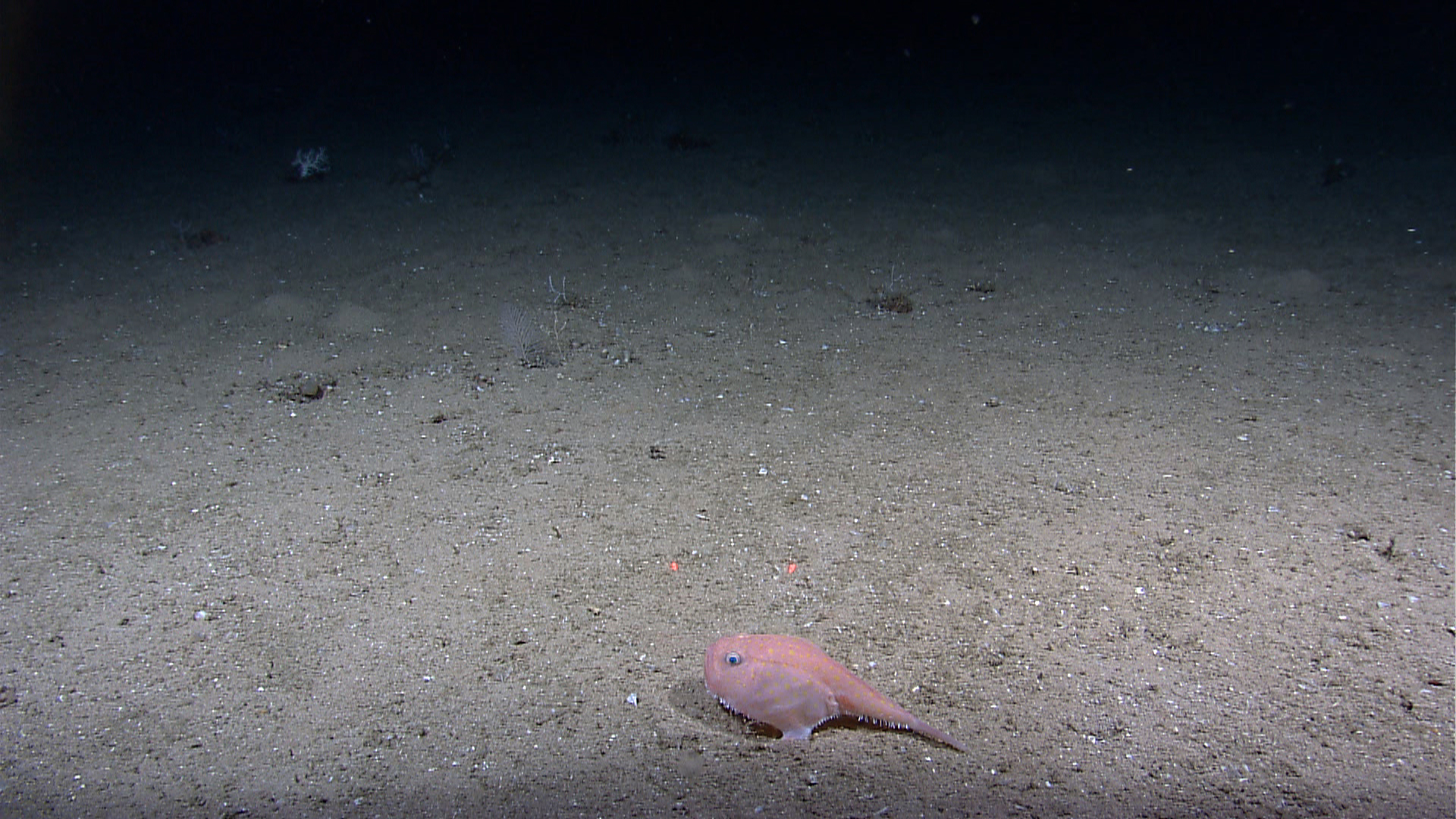
A ghostly white ping-pong ball on a stick, sponges made of glass, fuzzy worms that shimmer with rainbow iridescence, hot-pink sea cucumbers with chubby little hands, translucent fish with jelly-like flesh.
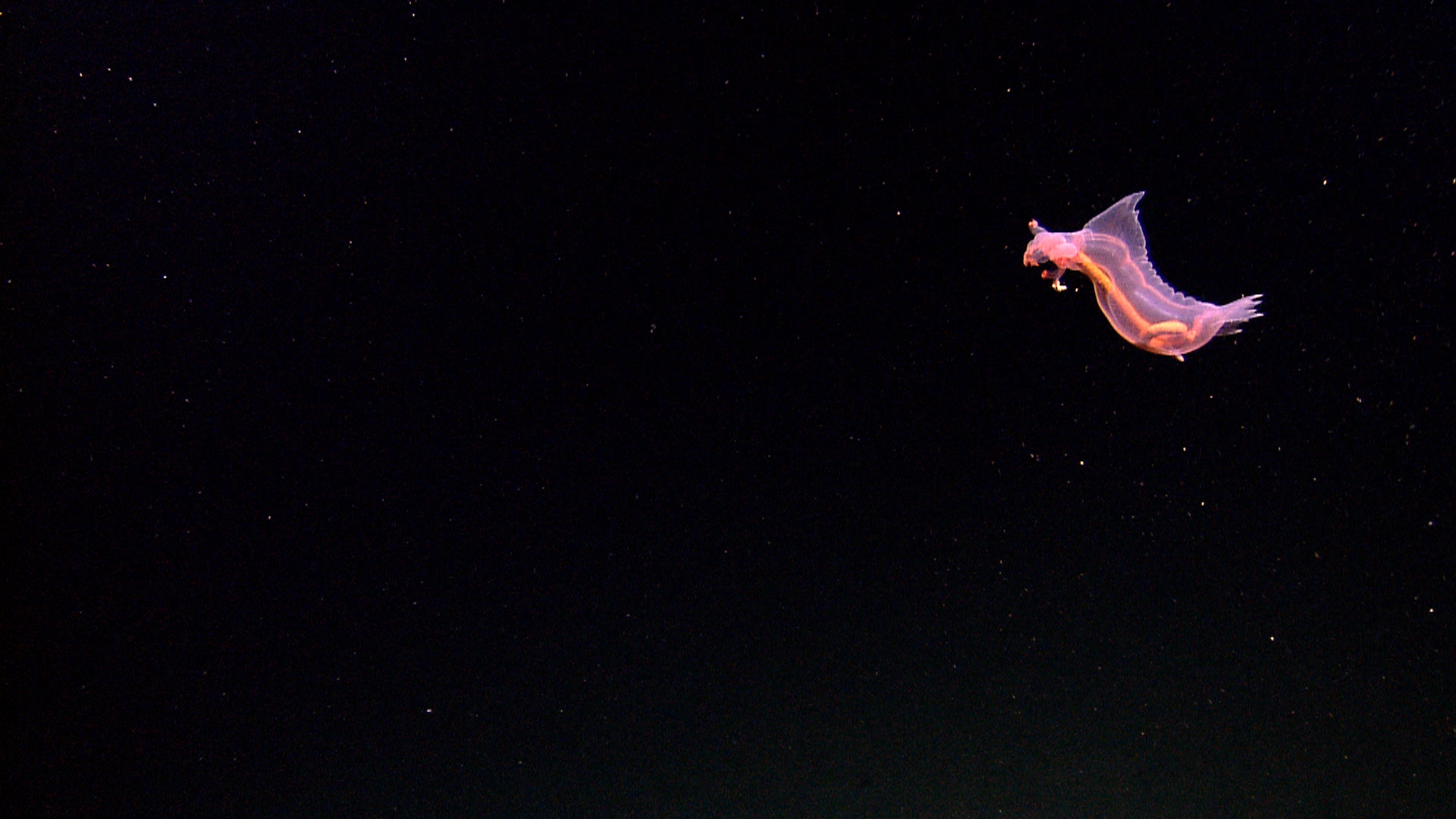
Almost every animal researchers find in the deep ocean is an entirely new species, and unlike species found on land, we can be certain they have never before been seen by any humans ever.
Exploring the deep sea is as close as we can possibly get to exploring an alien planet and documenting the weird and wonderful life found on its surface.
Time and space collapsed into the depths
And the abyssal plains of Earth's oceans, especially the Pacific, are vast. They stretch for literally thousands of kilometers in all directions, huge expanses of muddy seafloor teeming with life. Living in and on this soft, delicate surface are countless millions – even billions – of animals that have been silently persisting for unimaginable periods of time.
In fact, these deep-sea ecosystems are so stable, the researcher told me, that this environment probably hasn’t changed much in roughly 80 million years.
Just let that sink in a little bit.
Some parts of the deep-sea abyssal plains have remained unchanged for 80 million years. This means that they formed when dinosaurs were still stomping around on land, but, insanely, before Tyrannosaurus rex or Triceratops first appeared.
That’s right, the abyssal plains are older than T.rex. During this time, the bodies of pliosaurs, mosasaurs, and plesiosaurs would have formed ‘reptile’ falls on the very same surfaces that today are the sites of bountiful whale falls. The marine snow falling from the surface would still have blanketed the deep, but it would have been derived from the remains of pterosaurs and ammonites.
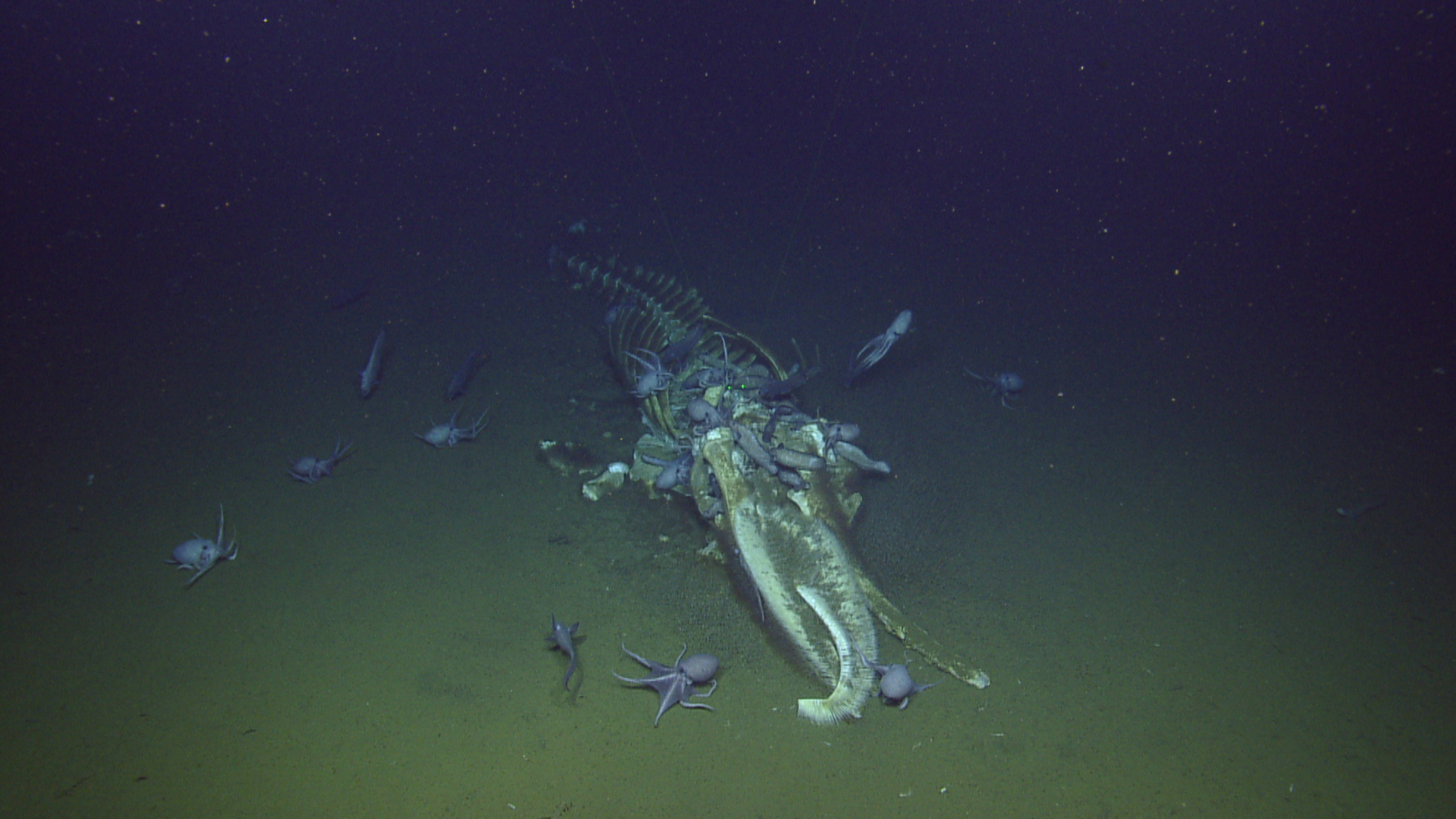
Not only that, but the abyssal plains existed long before whales evolved, before ducks were paddling around on lakes, and even before oak trees first sprouted on the forest floors. They are older than the Amazon rainforest and the dizzying array of birds, frogs, and flowers that bombard the senses today. They are older, even, than Mount Everest.
That means that visiting the Pacific deep-sea floor isn't just like traveling to an alien planet, it's like traveling back in time itself.
And that is reflected in the bones that litter the seabed. Because researchers have found the remains of whales that no longer exist. They have found fossils of animals that, over millions of years, evolved, lived, and sank without a trace until a fragment of bone was lifted from the depths.
It is this unimaginable span of space and time that, filled with some of the most incredible animals with which we share this planet, feels to me like staring into the all-consuming abyss.
It is glorious, it is extraordinary, and it is mesmerizing. But it is also ever so slightly terrifying and – in its most literal sense – awe-inspiring.
Would I rather go to space or the deep sea? The deep sea, every time. Let me descend into that abyss and be consumed by the meaninglessness of human existence once and for all.
IFLScience Hot Takes is a semi-satirical opinion column where we take a silly or outrageous idea and argue for it as if it's our earnestly held belief… as long as we can find good scientific reasons to back it up.
Do you agree with Josh? Or do you think other emotions are more appropriate when considering the deep places of our planet? Let us know!