Nature
 PUBLISHED
 1
1




Deep below the surface of the Indian Ocean, way beyond where sunlight reaches, scientists aboard a mini-submarine discovered the deepest, oldest, and biggest accumulation of whale fossils and carcasses ever found. It is one of the most extraordinary underwater discoveries of the past century, and it could spark a paradigm shift in the way we understand life in the deep.
The whale graveyard was found by researchers from the Chinese Academy of Sciences, the University of Pisa, and New Zealand's National Institute of Water and Atmosphere Research during a cruise through the Indian Ocean with the deep-sea submersible R/V Fendouzhe.
Their destination was the remote Diamantina Zone, a dramatic landscape of ocean trenches and ridges formed millions of years ago when the Australian and Antarctic continents tore apart. At one of its deepest points, buried in the seafloor sediment, they found the graveyard of bones.
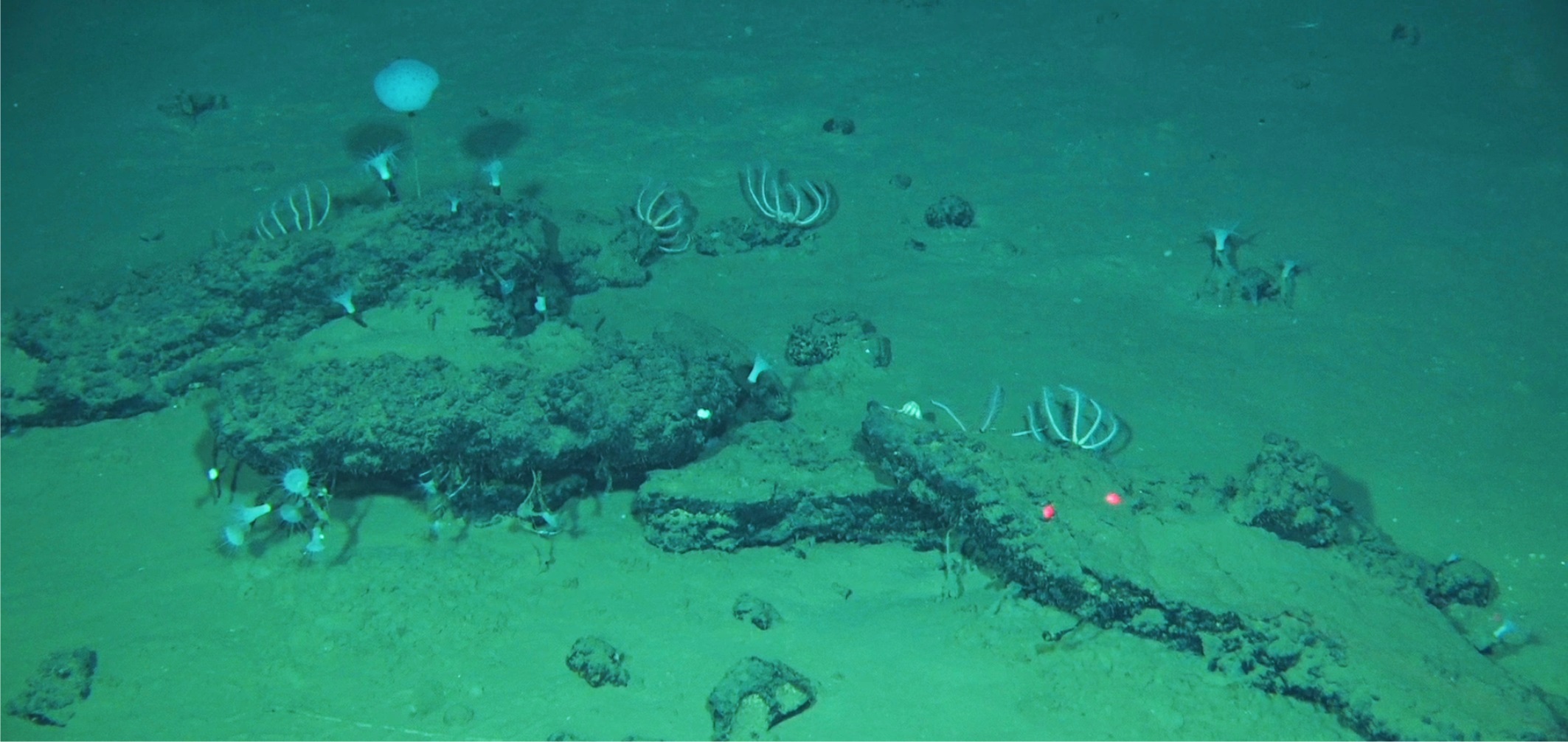
Clearly, they had to return. Through a total of 32 dives to the site, the team identified 485 whale-fossil sites and five active whale falls that stretch for around 1,200 kilometers (745 miles) along the sea floor, ranging in depths of 4,200 and 7,000 meters (13,779 to 22,965 feet). Based on the area they studied, that works out to a staggering density of around 759.5 whale remains per square kilometer, the team reports in their paper.
Previously, the deepest whale fall site was found 4,204 meters (13,792 feet) beneath the Southwest Atlantic, meaning this latest discovery in the Indian Ocean is the deepest of its kind by a long shot.
Why are so many whales here?
The team speculates the concentration of whale remains in this particular patch of ocean likely comes down to underwater topography. The region's V-shaped underwater troughs make ideal foraging grounds for beaked whales, which feast on deep-sea squid and fish, but may lead to their downfall and then funnel the carcasses into the observed area.
"The maximum dive depth for beaked whales is estimated to be more than 3,000 meters on the basis of lung collapse and oxygen storage. Thus, foraging at depths exceeding 3,000 meters would be too physiologically taxing for beaked whales and may heighten the risk of fatal exhaustion or decompression sickness," the authors write.
Sediment also accumulates slowly here, leaving carcasses exposed long enough to fossilize rather than being buried and lost.
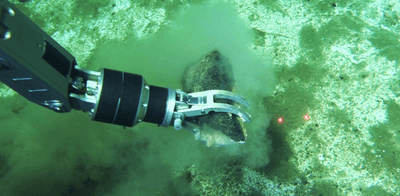
Using the submersible's robotic claws, the team even recovered bones from the deep-sea site to study back in the lab. What they found is remarkable on many fronts.
First of all, the species found. The site includes extant species of beaked whale, such as the Andrews’ and strap-toothed beaked whales, and more surprisingly, some shallow-diving species like minke whales, as well as extinct whales, including a newly described species, Pterocetus diamantinae, named for the zone in which it was found.
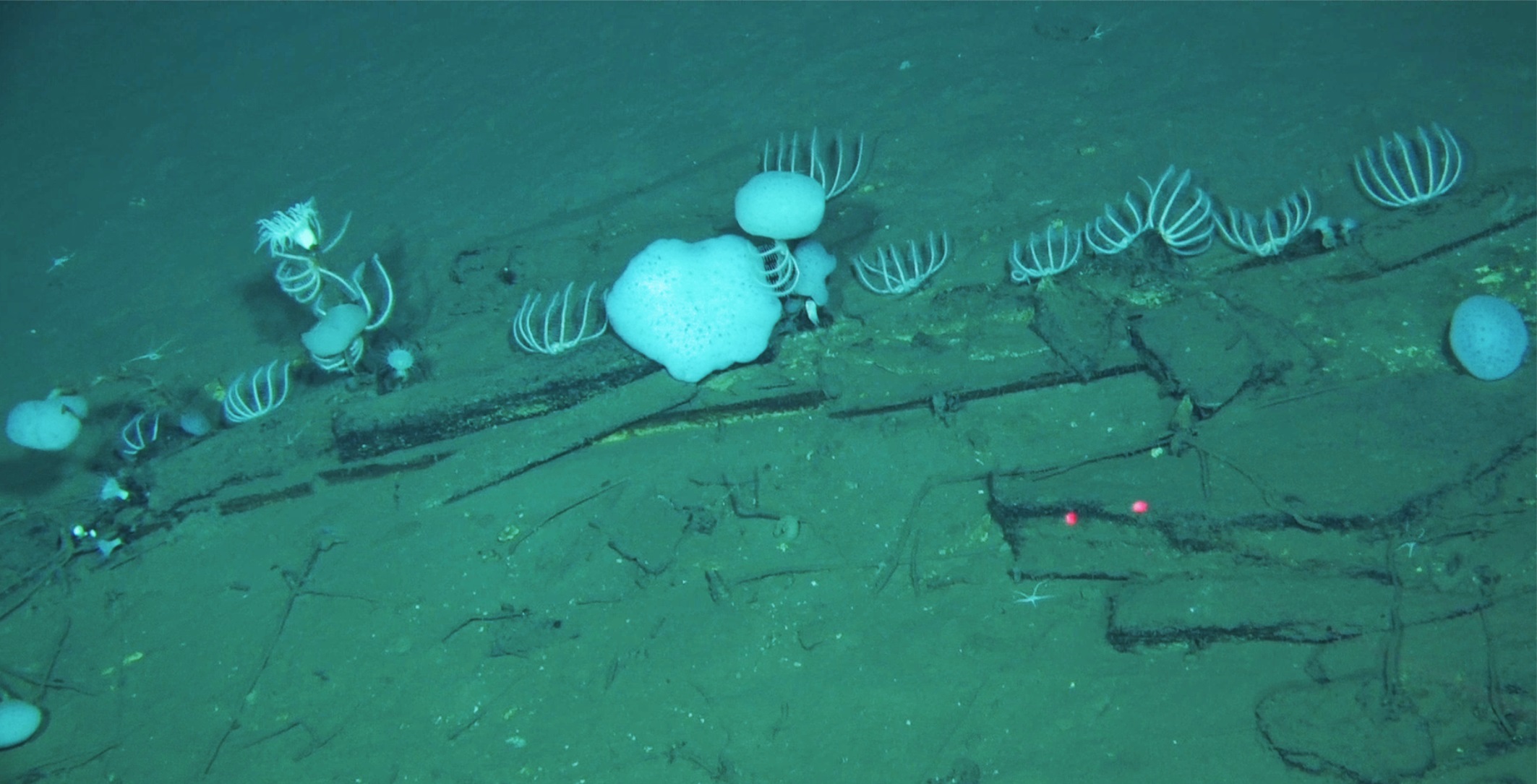
“Finding a ‘whale necropolis’ where there are nearly 800 skeletons per square kilometre is a surprise, and the mix of whale types is a puzzle,” Stephen Godfrey, a paleontologist at the Calvert Marine Museum, wrote in an accompanying News & Views article.
“As the researchers suggest, such a necropolis probably results from being on a migration route for filter-feeding species, while also a good place for the hunter species to dive deep for squid, but perhaps pushing them perilously close to their limits as they dive into this crack in the ocean floor."
Of the samples they managed to collect from the seafloor, the oldest skull dates back 5.26 million years.
"The oldest fossil, along with many younger whale skulls, provides evidence that whale falls have accumulated at this site uninterrupted for at least five million years."
Why whale fall matters
While it is a graveyard, it also teems with life. Acting as a rare stockpile of calories in the deep sea, the necropolis helps to support a wide collection of smaller animals: jellyfish, brittle stars, bone-boring worms, and sea snails. Many of the ones seen here are suspected to be entirely unknown to science. On top of that, there are a rich colonies of bacteria and other microbes that coat the bones in a white, fuzzy sheath.
This is precisely why so-called “whale falls” are so important to the marine ecosystem. When a whale dies, it eventually sinks to the seabed, where it serves as a giant feast for deep-sea dwellers that can last for years, if not decades.
In this instance, the implications may be even broader. The researchers suggest the Diamantina Zone may be a previously unrecognized “whale-fall chemosynthetic life corridor” that connects the ecosystems of the southeastern Indian Ocean, acting as a mega highway that helps life spread across the abyss.
"These findings reshape the understanding of the limits and biogeography of whale-fall ecosystems and establish some deep-sea floors as a fossil archive for tracing cetacean evolution over geological time," they wrote in their paper.
Godfrey says the discovery of the Indian Ocean whale graveyard has the same “flavour” as some of the most consequential underwater discoveries of the past century – and the best could still be yet to come.
“Just as the surprising discoveries of the coelacanth and first hydrothermal vents reshaped our view of life in the deep ocean, Peng and colleagues’ encounter with a vast fossil graveyard is a truly unique discovery,” he wrote.
“[Their] paper reminded me of a trailer for the first in a series of epic movies. I hope that there will be many more of these blockbusters to come."
The new study is published in the journal Nature.