Nature
 PUBLISHED



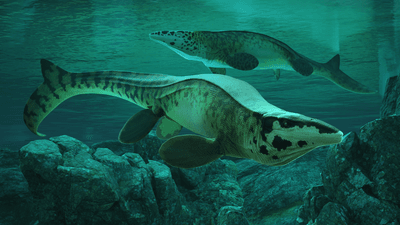


A new species of sea monster has been described from 80 million-year-old fossils, and it’s giving Tyrannosaurus rex a run for its money. Named Tylosaurus rex, it would have been a deadly marine predator in the Cretaceous seas of what we now call Texas. Fitting, then, that it’s been crowned “king of the tylosaurs”.
The new T. rex (not to be confused with the pliosaur "SeaRex" discovered in Kimmeridge in 2023) was a mosasaur that could grow up to 13.1 meters (43 feet) in length – that’s about the length of a New York bus. It is one of the largest mosasaurs ever discovered, confirming that this part of the world really is the home of huge.
“Everything is bigger in Texas and that includes the mosasaurs, apparently,” said lead author Amelia Zietlow at the History Museum at the Castle in Wisconsin in a statement.
An impressive specimen with an impressive name, but for Zietlow there’s much more to the story than a new species. The 80-million-year-old fossils the sea monster was described from weren't recently discovered. In fact, when Zietlow first came across them at the American Museum of Natural History they were misidentified as Tylosaurus proriger.
T. proriger was first described 150 years ago, and there were several specimens, including its holotype (the specimen used to exemplify the species), available for comparison. It revealed several differences, including serrated teeth (a rare trait among mosasaurs) and larger stature. There were also some geographical and temporal disparities, as T. proriger is predominantly found in Kansas dating back to 84 million years ago, whereas the other fossils were from Texas and dated back 80 million years.
So, a new holotype was born. This time for the new T. rex. It’s on display at the Perot Museum, having been discovered back in 1979 near Dallas, and, by all accounts, it would’ve been an absolute nightmare when it was alive.
“Besides being huge, roughly twice the length of the largest great white sharks, T. rex appeared to be a much meaner animal than other mosasaurs,” said study co-author Ron Tykoski at the Perot Museum. “Through our study and examination of well-preserved fossils collected throughout the north Texas region, we have evidence of violence within this species to a degree not previously seen in other Tylosaurus specimens.”
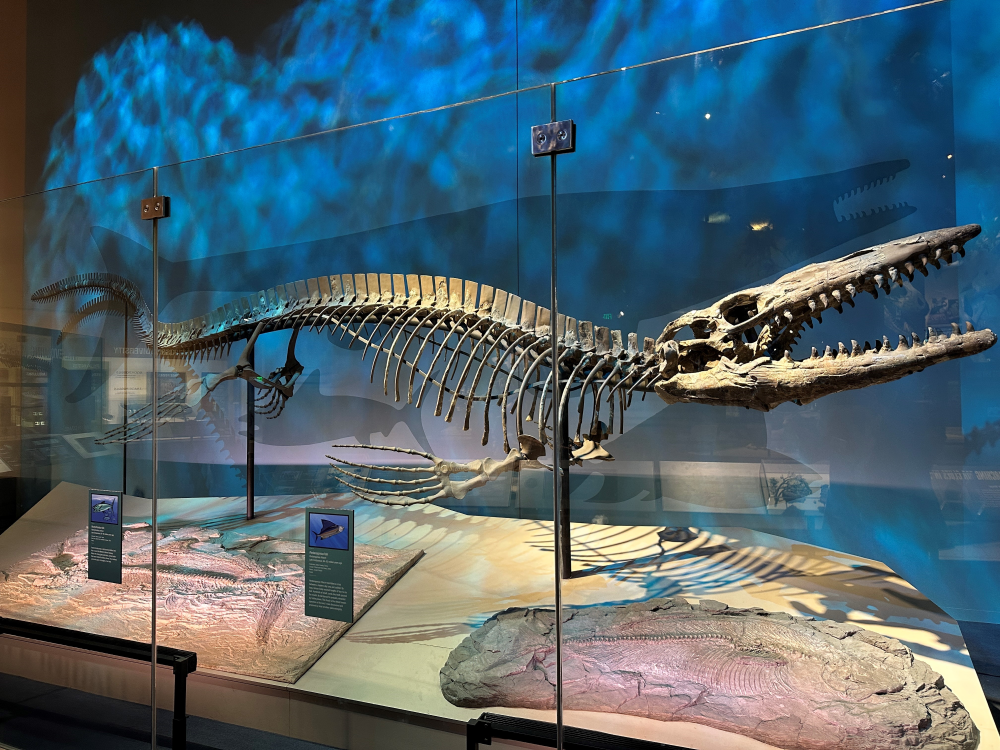
Yes, T. rex didn't like to play nice. And to drive home the message, the holotype in Perot comes complete with a missing snout and fractured lower jaw. Nicknamed “The Black Knight,” the researchers say it’s unlikely these injuries could have come from anything other than fighting with its own kind.
A lesson in big, mean, marine reptiles, and a reminder to look back on museum collections in search of sea monsters that might have given us the slip.
The researchers have also collaborated with the developers of the dinosaur video game Path of Titans, who have created a model of the sea beast with a new skin based on the diamondback rattlesnake. The desert reptile is found in Texas, also the home of Tylosaurus rex.
“This discovery is not just about naming a new species,” said Zietlow. “It highlights the need to revisit long-standing assumptions about mosasaur evolution and to modernize the tools we use to study these iconic marine reptiles.”
The study is published in the Bulletin of the American Museum of Natural History.


 1
1