Nature
 PUBLISHED


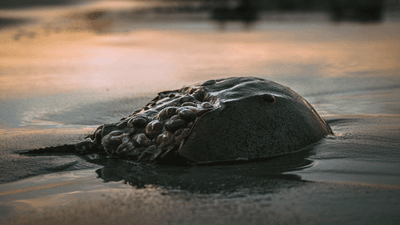


The horseshoe crab is a living fossil that’s been scuttling along shorelines virtually unchanged for 445 million years, long before dinosaurs ever stomped across the Earth. They have very strange blue blood, and of all the species that have come to be since these marine oddities first emerged, it just might be the most valuable blood of any animal alive today.
That’s because horseshoe crab blood has been critical to the creation of vaccines that have saved millions of lives, and it all comes down to its strange coloration. Unlike the iron-rich blood that runs through your veins, Atlantic horseshoe crabs (Limulus polyphemus) have copper-rich blood that’s icy blue in color.
In place of white blood cells, they have cells known as amebocytes, which are extremely effective at detecting bacterial endotoxins. Even at levels less than one part per trillion, amebocytes can trigger coagulation, forming a clot around invading bacteria in a way that – in situ – protects the horseshoe crab’s body from toxins.
Pharmaceutical companies have used these amebocytes for decades as a way of testing whether vaccines are free from bacterial contamination, in what’s known as a Limulus Amebocyte Lysate test. The efficacy of the test means horseshoe crab blood fetches somewhere in the region of $15,000 per liter, and if you’ve ever had a vaccine, chances are you have horseshoe crabs to thank for its safety.
Such a test is crucial because otherwise, we risk contamination that could harm or even prove fatal to every person on the receiving end of that particular vaccine, which during a pandemic like COVID-19 would’ve meant a lot of people. However, the search is on to find a more sustainable alternative (such as the synthetic equivalent, recombinant Factor C), as overharvesting has led to a decline in their populations.
While harvesters only take 30 percent of their blood before returning them to the ocean, it’s thought 10 to 30 percent of horseshoe crabs don’t survive. To make matters worse, it's been suggested that females breed less after being bled, further hampering their recovery.
Their blue and valuable blood isn’t all that’s surprising about these “crabs”. Horseshoe crabs are not, in fact, crabs. They’re not even members of the crustacean family, for that matter.
They’re actually related to spiders as a member of the major subdivision of arthropods, Chelicerata. This group includes the arachnids and scorpions, both of whom have to shed their exoskeleton as they grow, and the same is true of horseshoe crabs. When the time comes to molt, they’ll crawl out the front of their shell leaving their small exoskeleton behind, and you can see a horseshoe crab mid-molt in all its creepy wonder in this video.
So, is it time we started looking in a new direction to protect one of Earth’s weirdest and oldest relatives? There’s an awful lot more to these creepy “crabs” than their blood.
Oh, and if you were hoping to make your millions dealing in scorpion venom, we’ve got more bad news.