


 Nature
 PUBLISHED


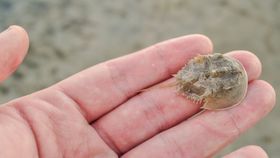


Despite their name, horseshoe crabs are not, in fact, crabs or even members of the crustacean family. They’re actually related to spiders as a member of the major subdivision of arthropods, Chelicerata. This group includes the arachnids and scorpions, both of whom have to shed their exoskeleton as they grow, and so too do horseshoe crabs. A video has now captured the moment a baby horseshoe crab sheds its old shell, revealing a youthful new layer beneath.
Arthropods are notable for their exoskeletons, which are made of the hardy long-chain polymer chitin. The exoskeletons and shells they grow provide protection from predators, but their rigidity means they also inevitably become too small. As they grow, a soft external layer will develop beneath their hardened shell, but eventually the time will come for them to wriggle out of the old one to allow a new chitinous shell to harden. The soft shell beneath is pleated and flattened to fit under the old, smaller shell, but once it's revealed it slowly stretches out and hardens. Beach-goers often find the old discarded shells of these creatures washed up on the beach, which can have quite a ghostly appearance.
Horseshoe crabs will ditch their shells around 18 times before reaching reproductive maturity at around 10 years of age, with six of these happening in the first year of life when they grow rapidly. The living fossils will grow to a width of around 30 centimeters (1 foot) if they survive to adulthood, though excessive harvesting for their blue blood is threatening population numbers.
In the wild, the shedding of their shells takes several hours as the horseshoe crabs make gentle pulsing movements to gradually slip out of their shells. The video was posted by Bailey Steinworth, a marine biologist from the University of Florida, and has been sped up so that the entire process can be observed in just 16 seconds. The horseshoe crab in question is just 1 or 2 years of age and about 6.3 centimeters (2.5 inches) in length.
While it’s great to see things happening in the scientific world outside of epidemiology at the moment, for one Twitter user the video still brought up thoughts of life in quarantine.
We’d recommend keeping your lockdown loaves free of arthropods.

 1
1