Nature
 PUBLISHED


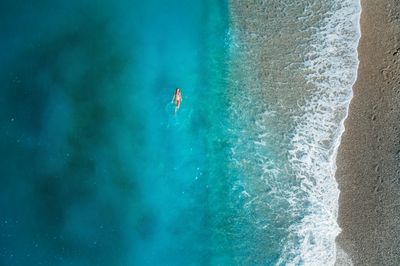


Earth looks like a giant blue marble from space, but zoom in closer and you’ll find the planet’s waters come in a rich range of hues, from sapphire and cerulean to murky greens, greys, and browns. So, where in the world can you find the bluest water?
Small amounts of pure water appear to be perfectly clear and colorless, but in larger quantities, like lakes and seas, it will often take on a striking shade of blue. This is because the water molecules absorb longer wavelengths of light, like red, more efficiently than shorter wavelengths, like blue.
When sunlight hits a deep body of water, the red light is readily "soaked up", while the blue light is more prone to be scattered and reflected back to our eyes. Water’s color can also be tinged by the presence of impurities, including minerals, sandy sediments, mud, and organic material, all of which influence how light moves through it. While purity and clarity do not always guarantee a deep blue hue, they serve as a reliable proxy.
The freshest freshwater champion
As if its name wasn’t a giveaway, the clearest known body of freshwater is Rotomairewhenua / Blue Lake in New Zealand’s Nelson Lakes National Park. A 2011 study by the National Institute of Water and Atmospheric Research (NIWA) found that the lake’s visibility extends up to around 80 meters (262 feet) underwater, which is extremely close to the theoretical limit for pure water.
This, it's been suggested, makes it the clearest known freshwater in the world and clearer than almost all seawater on Earth.
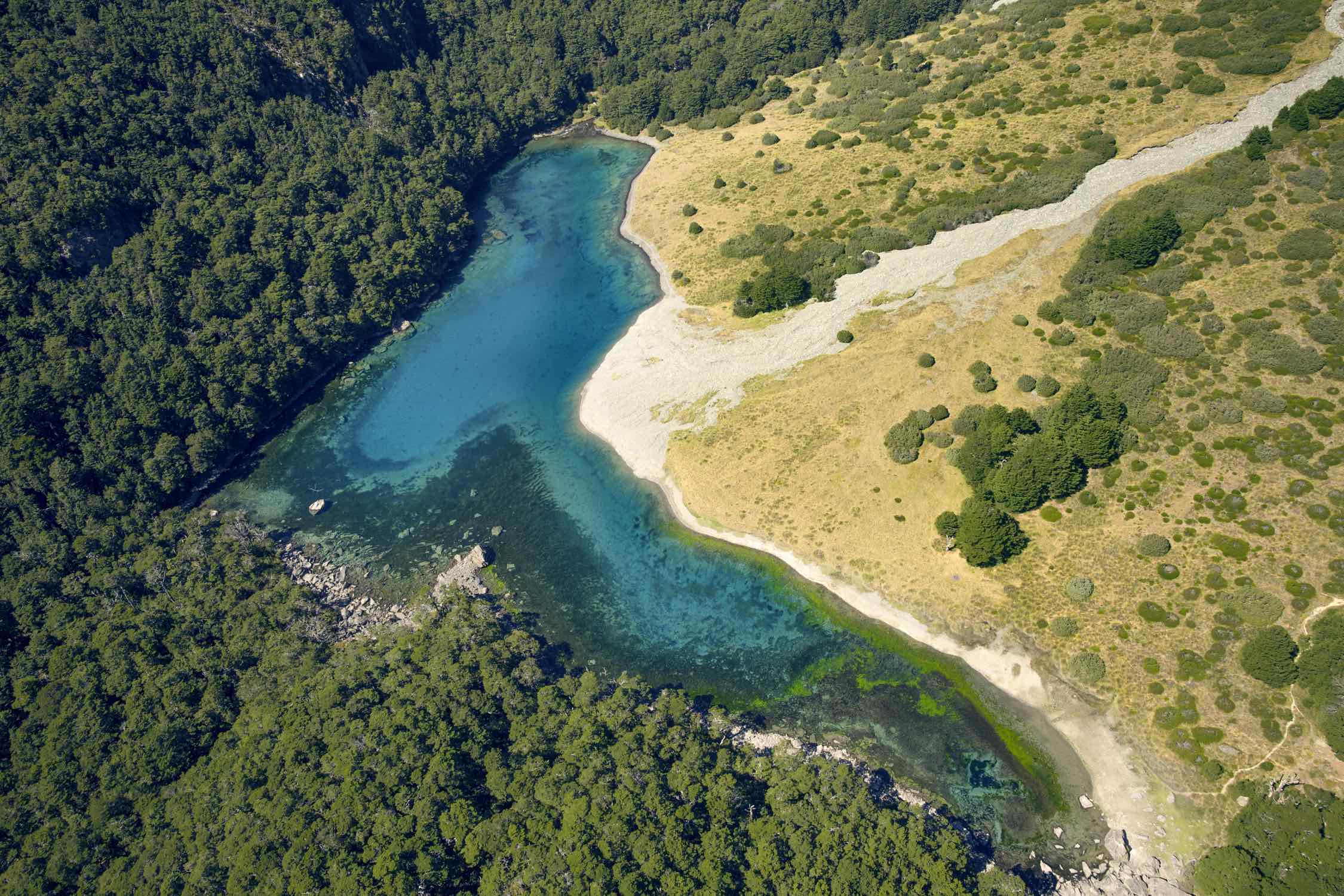
"There may well be other systems somewhere in the world that are comparable but there's not very much wriggle room between the clarity of Blue Lake and pure water," Dr Rob Davies-Colley, principal scientist at NIWA, told the Nelson Mail, per NIWA. "If there's anything else in the world clearer, it could only be very slightly clearer."
It’s believed the water is so clear because it's filtered through a moraine (glacial debris), before arriving in the lake.
The clarity of the water is so high that it takes on vibrant tones of blue-violet. No wonder it's considered to be a sacred site by local Māori.
What's the bluest or clearest seawater on the planet?
When it comes to seawater, things get a little murkier, so to speak.
One worthy competitor is the Weddell Sea, part of the Southern Ocean that encircles Antarctica. In 1986, researchers from the Alfred Wegener Institute tested the water of the Weddell Sea on a sunny day using a Secchi disk, a simple tool used to measure water transparency.
The disc was visible from 79 meters (259 feet) away underwater, smashing the previous record for water transparency. Once again, this is approaching the theoretical limit for pure water.
However, satellites provide a different view. Since the late 1970s, NASA has used satellite data to measure ocean color as a way to estimate the abundance of phytoplankton in different parts of the sea. Greens and yellows suggest there are high levels of chlorophyll from the phytoplankton; blues indicate there are low levels.
In 2017, their analysis clearly showed that a large patch of the South Pacific had the most expansive and bluest waters in the world.
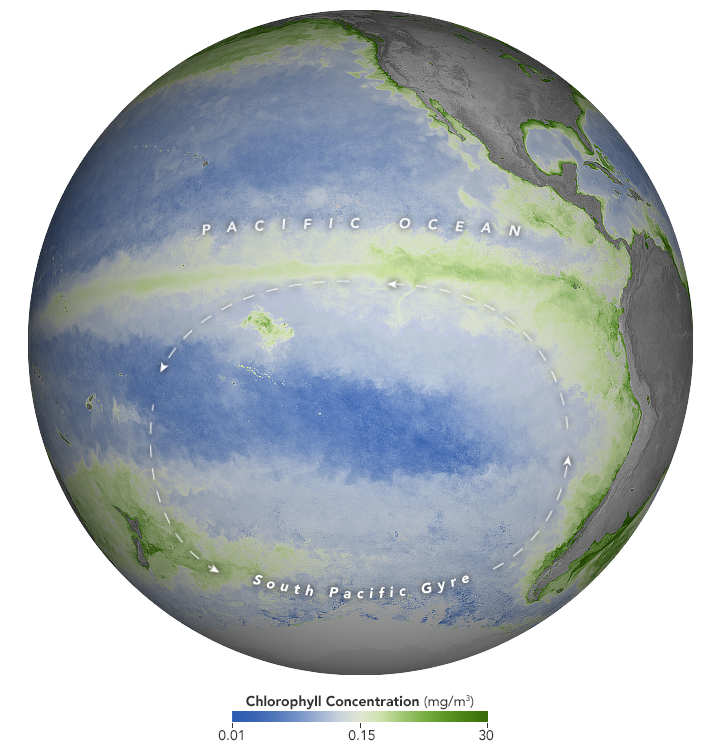
This is because the region is in the center of the South Pacific Gyre, a giant system of swirling currents. These lively waters can stunt life by pushing nutrients, like nitrogen and phosphorus, to deeper waters where photosynthesis is not possible. Because there’s an absence of life, the waters beam with a pure blue color.
“This blueness is the macroscopic expression of its dearth of ocean life. We have seen nary a fish nor other ships since we departed Tahiti—this is not a major shipping route. Oceanic gyres are often called the deserts of the sea. On land, desert landscapes are limited in their capacity to support life by the availability of water. Here, lack of water is not the issue. Water, however, is at least the co-conspirator in keeping life from flourishing,” a NASA blog explained in 2017.
To entice would-be tourists, travel blogs will often boast that a certain holiday destination has the bluest waters in the world. One name that often crops up is Pasqyra Beach (Mirror Beach) in southern Albania, known for its pebbly bay and bright turquoise waters. Other frequently mentioned hotspots include the shores of Croatia, Greece, the Maldives, the Bahamas, Belize, Iceland, and the Philippines.
While many coastal locations around the world do offer remarkable clarity and blueness, it’s not always possible to verify these claims. That said, if any deep-pocketed benefactor wants to commission IFLScience to settle the debate by sending us to investigate these locations in person, we would be professionally obligated to consider the offer.