Nature
 PUBLISHED
 8
8




Without photosynthesis, there would be no life on Earth. It’s the process that enables organisms like plants and phytoplankton to create energy from the Sun, and it’s also a hugely significant contributor to carbon sequestration – something our existence depends on, as without it, the planet wouldn’t be habitable for humans.
Only catch is, there is a minimum amount of light needed for the process to be able to support living organisms. It raises interesting questions about how life persists in some of the planet’s most remote, and sometimes darkest, regions.
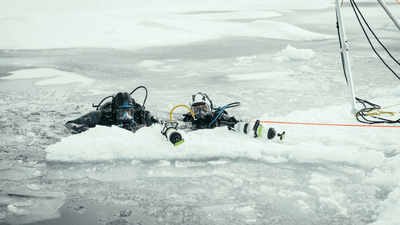
Those questions are what led Will Smith to the North Pole as part of his new National Geographic series, Pole To Pole. There, he was meeting with microbial oceanographer and polar marine ecologist Allison Fong. A trip that was well worth the journey, because she was about to take him under the ice to discover what lives beneath the North Pole.
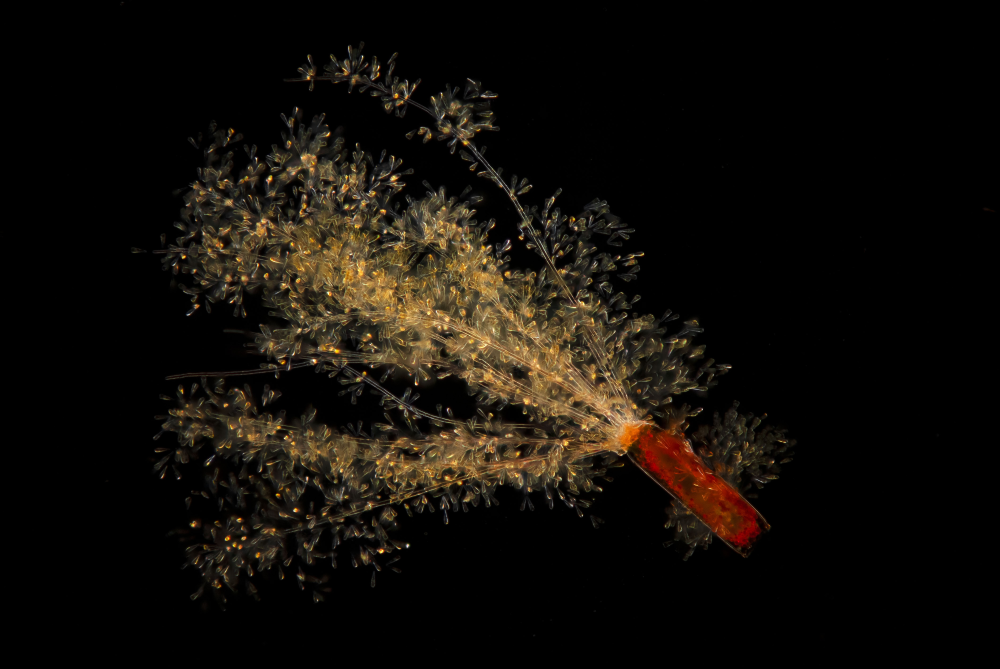
To the uninitiated, a patch of green stuck to the ice might not look very exciting. For Fong, it’s everything, because if there’s one thing I’ve learned about Allison Fong, it’s that she is absolutely mad for microbes.
“Gosh, I love microbes,” she told IFLScience. “Microbes are my jam. They are the unsung heroes of our planet because people take them for granted.”
“People don’t realize it, but microbes are everywhere. They are the reason that you and I can be alive. We actually have more microbial cells within our bodies than we do human cells on any given day. Every surface of our planet, even the things we build, are covered in microbes.”
I didn't expect it to be that magical. I only expected it to be cold with low visibility. I didn't expect it to be sparkly.
Allison Fong
It figures, then, that something so ubiquitous would be such an exciting avenue of research in the fight for our climate. Even more so when you remember that microbes like phytoplankton practice – yes, you guessed it – photosynthesis.
Fong’s work builds on a huge body of research into the photosynthetic potential of phytoplankton, and in her episode of Pole To Pole, it’s revealed how they can keep on producing energy in this way even in imperceptibly low levels of light. Finding out involved diving beneath the ice to collect samples for study, and by all accounts, swimming beneath the North Pole isn’t an experience you forget.
“It's like being in a chandelier,” said Fong. “I know it sounds weird, but it's like being inside of a crystal chandelier/palace kind of thing, because there's a lot of light coming in, and then it all gets refracted off of those ice crystals.”
We are what happens in the Arctic Ocean. It affects where we can grow food. It affects where it rains. It affects where we see storms. It affects so many things.
Allison Fong
“It's a little disorienting, but you really feel sparkly. It's very magical. I didn't expect it to be that magical. I only expected it to be cold with low visibility. I didn't expect it to be sparkly.”
“It was incredible, incredible. Definitely in the top five, maybe the top three, most incredible things I've ever experienced.”
It's hoped that our understanding of phytoplankton’s photosynthetic potential could help us in the fight against climate change. There’s a lot more research to go, but Fong hopes the episode can be a poignant reminder that we’re all more connected – people, and microbes – than perhaps we appreciate.
“We are what happens in the Arctic Ocean,” she said. “It affects where we can grow food. It affects where it rains. It affects where we see storms. It affects so many things. Things that we experience in our everyday life.”
“Mostly I hope people are just in awe and wonder of the incredible planet that we live on, and that they somehow translate that feeling of wonder and awe into positive actions in their everyday life. To protect our planet and to protect the ecosystems that we live in.”
Pole To Pole premieres January 13 on National Geographic, then January 14 on Disney+ and Hulu.