Nature
 PUBLISHED


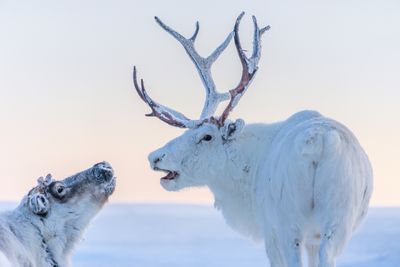


The Arctic has entered a “new era” of bioclimatic conditions where extremes have become the norm, according to scientists led by the Finnish Meteorological Institute.
In their new study, researchers in Finland analyzed long-term changes in the terrestrial Arctic using several so-called “bioclimatic variables,” such as daily mean temperatures, levels of precipitation, snow cover, wind speeds, and so on.
“Seasonality, such as the growing season and snow conditions, is known to be crucial for ecosystem functioning and the success of northern species. However, changes in bioclimatic extreme events have not been previously studied in a comprehensive way,” Professor Juha Aalto, lead study author from the Finnish Meteorological Institute, said in a statement.
Their findings showed that the entire Arctic region has experienced a major uptick of bioclimatic extremes in the past 30 years. This means rising average temperatures, longer heatwaves in the summer, warmer spells in the winter, and increased frost during the growing season.
They also note a significant increase in rain-on-snow events, whereby rainfall lands on a solid snow-covered landscape, causing floods and ice crusts that block wildlife from their grazing grounds, leading to mass die-offs. According to the new study, these catastrophic events have started impacting up to 10 percent of the Arctic land area.
“This finding suggests that as the climate changes, Arctic ecosystems will be increasingly exposed to climate conditions they have never experienced before,” says Professor Miska Luoto from the University of Helsinki. “This may have significant long-term consequences for Arctic nature.”
The study notes that these extreme events have only recently begun to occur across one-third of the Arctic, suggesting that deepening change lies ahead.
While the finer points of this latest study are new and add to the body of evidence, it’s hardly surprising to hear that the Arctic is experiencing a drastic shake-up. Numerous other teams of scientists have also found that climate change is forcing the Arctic region into an entirely different climate state.
Arctic warming is happening at lightning speed, significantly faster than the global average, due to a phenomenon known as Arctic amplification. Melting sea ice accelerates heating by exposing darker land and water, which absorb more sunlight, and shifting winds and ocean currents funnel even more heat northward.
The “new Arctic” is a place of thinner ice, shifting rainfall, unpredictable snowfall, and temperatures that defy what life has adapted to for millennia. For the plants, animals, and humans that live here, the future is looking very uncertain.
The study is published in the journal Science Advances.