Nature
 PUBLISHED


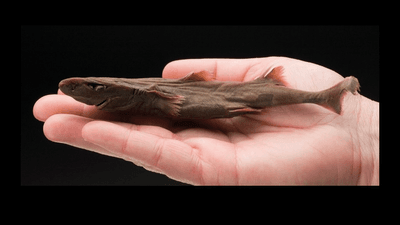


Often when people think “shark” the mind will immediately start playing the Jaws soundtrack. However the world’s oceans (and some lakes) are full of a wide variety of shark species, from the famous great white, to the hammerhead, the bull, and everything in between. Now it’s time to take a look at the world’s smallest shark species: the dwarf lanternshark.
What is a dwarf lanternshark?
Dwarf lanternsharks (Etmopterus perryi) are rare and highly elusive members of the lanternshark genus Etmopterus. They are only known about from a few sightings and accidental catches off the coast of South America. It is thought that the population lives in the western central Atlantic at depths of between 283 and 439 meters (928–1,440 feet).
Just how small is a dwarf lanternshark?
Given that the tiny sharks are so elusive it is difficult to know for sure, but it's generally reported that they can reach a maximum of 21.2 centimeters (8.3 inches) in total length. A study from 2021 caught 153 individuals to investigate the population structure and found one dwarf lanternshark that measured 28.9 centimeters (11.4 inches) long, representing a new maximum body length for this species.
The head of the dwarf lantern shark is thought to be around a fifth to a quarter of its entire body length and their mouths hold an impressive 60-plus sharp teeth. The species has very large eyes, thought to maximize the amount of light available to them in the dark depths of the ocean.
Specimens have revealed a dark brown color with black markings on the skin. Some of these markings are made up of cells called photophores, which produce light. These light-producing features are thought to attract smaller fish to the shark, which it then preys upon.
The sharks are thought to be ovoviviparous, with an egg yolk sac that feeds a litter of two or three offspring until they are born as live young.
Is the dwarf lanternshark in trouble?
The IUCN Red List marks the dwarf lanternshark as “Least Concern”, the lowest on the extinction risk scale. However, the most pressing danger to this species is both the lack of accurate information on their ecology and the threat of deep-sea fishing trawlers. “A 2009 research trawl study off Caribbean Colombia found this species in 39 percent of trawls, and it made up just over 1 percent of abundance and biomass,” writes the IUCN.
What's the biggest shark in the world?
In contrast to the tiny dwarf lanternshark, the largest shark in the world is the whale shark (Rhincodon typus) reaching an impressive 18 meters (60 feet) in length. Whale sharks are also the world’s largest omnivores.


 1
1