Nature
 PUBLISHED
 1
1



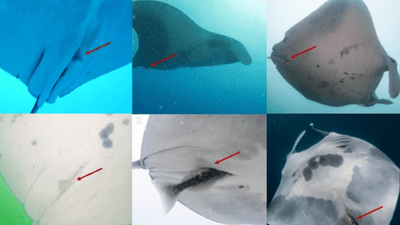


Ahem, *puts on best David Attenborough impression*: Here, we see a remora hitching a ride on a manta ray. These suckerfish are equipped with mouths made for clinging, but it’s not interested in riding on the manta ray's back. Oh no, this fish is hitching a ride on the inside.
This is the scene described in a new paper about a never-before-documented interaction between remoras and manta rays. On seven occasions across a 15-year study period, remoras were observed entering the cloacas of several different manta ray species. In short: they were swimming into their butts.
As the following video shows, the behavior is fast. Blink and you’ll miss it, but there is one giveaway: their tails poke out. The study was led by PhD candidate Emily Yeager in collaboration with University of Miami Shark Research, the Marine Megafauna Foundation, and Manta Trust.
One notable observation included in their dataset involved a freediver in Florida who was swimming near a manta ray in July 2023. No doubt a memorable swim given what happened next.
“[The] freediver approached an adult Atlantic manta ray from behind,” write the study authors. “Upon initial approach, a medium-sized Remora remora was visible near the manta ray's pelvic fins.”
“Once the diver passed into the ventral plane of the manta ray, the remora appeared to startle and quickly inserted itself into the manta ray's cloacal opening. In response to this intrusion, the manta ray briefly shuddered before continuing to swim away with the remora still inside of its cloacal opening.”
To borrow the words of IFLScience’s Marketing Specialist Charlie Haigh, “Never thought I’d see a manta ray clench its butt cheeks.”
With so few observations, it’s evidently not every day you see a remora diving into a manta ray’s cloaca, but this kind of behavior is far from unprecedented among fish. The pearlfish is famous for its penchant for living inside the butts of sea cucumbers. A choice of residence experts described like “a biodiversity hotel.”
Then there’s remoras themselves, known for wriggling into the mouths, gill slits, and – yes – even cloacas of whale sharks, the world’s largest fish. So, why does an animal famous for clinging to the outside of something risk going inside? The authors of this latest paper suggest the behavior offers three potential benefits:
- It provides shelter and protection from predators.
- It enables them to gain access to food (aka, edible feces) inside the manta rays’ butts.
- It reduces drag while hitchhiking, making for a smoother – if not a little claustrophobic – ride through the ocean (see the remoras' POV when riding on a humpback).
A bit gross from a human perspective, but it’s a good deal for the remoras. The manta rays, however? Not so much.
“The presence of a moderately-sized remora in a manta ray's cloacal opening could impede mating behavior, live birth, or defecation if the cloacal diving behavior occurs for extensive periods of time,” suggest the authors. Although the exact mechanisms driving cloacal diving and gill attachment behaviors remain unclear, it is apparent that Echeneidae-host relationships are more physiologically and ecologically complex than previously understood.”
The study is published in the journal Ecology and Evolution.