Nature
 PUBLISHED


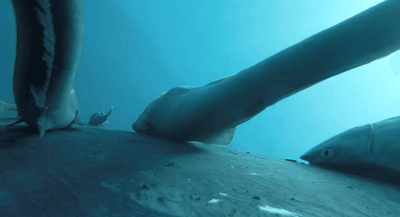


Have you ever wondered what it’s like to be a suckerfish, hitching a ride on the belly of a humpback as it cruises through the deep blue sea? No, probably not, but this unusual vantage point offers surprising insight into the migrations and behavior of the world’s whales and their clingy companions.
In a recent project, marine biologists at Griffith University attached suction-cup cameras to the bodies of humpback whales along the East Coast of Australia.
The incredible footage shows the camera alongside a batch of remora, better known as suckerfish or sharksuckers, that latch onto whales and other marine animals.
The remora do this to conserve energy, gain protection from predators, and enjoy a buffet of organisms living on the whale’s skin, such as sea lice and other parasites. They also enjoy nibbling off flakes of dead skin, helping to keep the whale clean and in good shape.
It’s a great example of a mutually beneficial relationship — although the humpbacks don’t seem too appreciative of the partnership.
“Remoras are harmless and are not a parasite to the whales; in fact, they can benefit the whale by removing sea lice and other crustaceans wanting to settle on the whale’s body. However, they do seem to be in much higher numbers – about 15-20 remoras per whale – with whales that appear to shed more skin,” Dr Olaf Meynecke, a Griffith University marine scientist and co-leader of the Whales and Climate Research Program, said in a statement.
“In some cases, we saw as many as 50 remoras on a single whale. Even though they are likely beneficial for the whales, as they eat other host organisms such as sea lice, the whales seem to dislike their presence. We have observed whales eyeing them, undertaking multiple breaches, then checking again,” he added.
The team hopes the footage will help clarify how remoras and whales interact throughout their migrations. While it’s known that these humpbacks spend part of the year in Antarctic waters, it remains unclear whether their hitchhikers stay with them for the entire journey.
Additionally, scientists don’t have a full picture of the remoras’ lifecycle, although they believe it could be closely tied to the movements of the whales.
“There is also the interesting life cycle of remoras. Their spawning takes place in the East Australian Current, then the little larvae develop to tiny suckerfish but have to then find a host,” explained Dr Meynecke.
“That could suggest the time of reproduction could be linked to the whales’ migration cycle,” he added.