Humans
 PUBLISHED



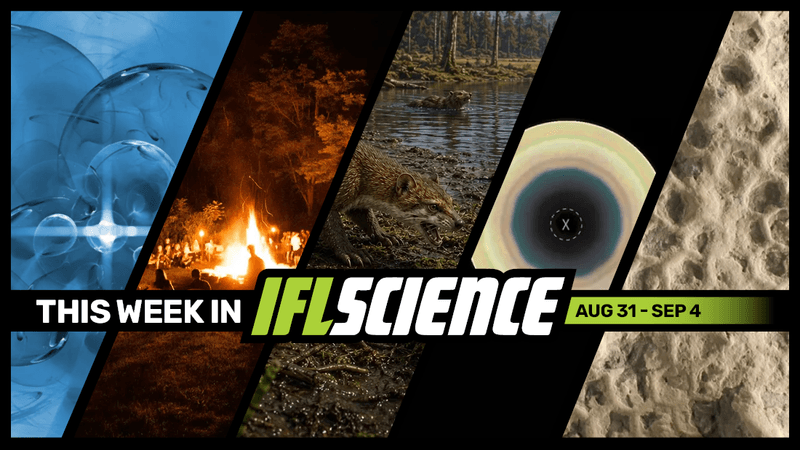
This week, these science-backed brain exercises are the first-ever clinical proof that “brain training” can reduce key Alzheimer’s markers, some scientists think dopamine might be the missing piece in treating long COVID, and tens of thousands of human languages are now mostly extinct thanks to colonialism and imperial expansion. Finally, we spoke to a palaeontologist who has both named a dinosaur and had a dinosaur named after him to find out how you go about naming a new species.
Create an IFLScience account to get all the biggest science news delivered straight to your inbox every Wednesday and Saturday.
Orcas Ram Sunfish So Hard They Explode “Into Thousands Of Pieces” And No, We’re Not Joking
One of the world’s most intelligent animals just revealed it has another trick up its sleeve in video footage of a new-to-science behavior. In it, we see a female orca holding a sunfish. It then lets go just as an adult male slams into the sunfish at great speed, causing it to explode “into thousands of pieces”. Read the full story here
Brain Training That Really Works? First-Ever Clinical Proof That Science-Backed Exercises Can Reduce Levels Of Key Alzheimer’s Marker
We all know the importance of training our bodies to maintain our fitness, but have you thought about training your brain? You could go on your phone’s app store right now and download any number of games that purport to do just that – I typed “brain training” into mine just now and got dozens of results. The big question, of course, is whether they actually work. Read the full story here
Many Long COVID Patients Are Still Seeking Answers 6 Years On. Some Scientists Think Dopamine Might Be The Missing Piece
Millions of people around the world are still dealing with the impacts that COVID-19 had on their long-term health. Some estimates say long COVID affects 5 percent of the global population, so it’s clear to see that improved understanding of the condition and better treatments are an urgent priority. Read the full story here
Astronomers Have Found Clearest Evidence Yet Of First Moon-Like Object Beyond Our Solar System – But It's Nothing Like The Moons Back Home
A brown dwarf is wobbling on its path around a star in a manner that indicates it has its own giant satellite. This represents the best evidence yet for a “three-tiered" stellar system; in other words, a star system other than our own that features a moon. The first known "exomoon", if you will. However, this discovery is sure to stir up debate on how we define planet, moon, and more. Read the full story here
Humans Once Spoke Tens Of Thousands Of Languages, But Now They’re Mostly Extinct Thanks To Colonialism And Imperial Expansion
Between the early Holocene and the Age of Empires, the number of languages spoken around the world skyrocketed from just a handful to tens of thousands. However, over the past few millennia, this cacophony of dialects has been largely silenced, with the expansion of political superpowers largely to blame. Read the full story here
TWIS is published weekly on our Linkedin page, join us there for even more content.
Feature of the week:
How Do You Name A Species? A Palaeontologist With A Dinosaur Named After Him Spills The Beans
Senior Science Writer Rachael Funnell speaks to Professor Paul Barrett, a scientist who has named around 20 new species of dinosaurs and even has one named in his honor, to find out just how difficult it is to establish that your unidentified organism is unlike any other ever described on Earth. And what rules apply if you succeed in proving you've discovered a rare specimen unknown to science? Read the full story here
More content:
Have you seen our e-magazine, CURIOUS? Issue 48, July 2026, is available now. This month, we asked, “What Is Archaeoastronomy?” – check it out for exclusive interviews, book excerpts, long reads, and more.
PLUS, the We Have Questions podcast – an audio version of our coveted CURIOUS e-magazine column – continues. In episode 22, we ask, “Where Is The Human Heart Located?”
The Big Questions podcast is back for season 6! In episode 3, we ask “How Do You Name A New Species?” Host Rachael Funnell sat down with Professor Paul Barrett, a palaeontologist at London’s Natural History Museum, who has seen taxonomy from the other side, naming new species himself.