Humans
 PUBLISHED


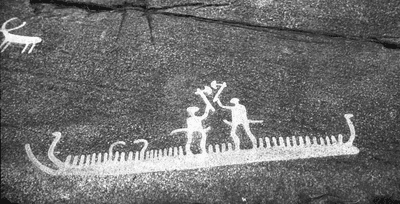


Back in the 1930s, a pseudoscientific think tank established by Nazi politician Heinrich Himmler went to ridiculous lengths to try and prove a completely absurd theory about the origins of the German people. Specifically, the organization – known as the Ahnenerbe – attempted to demonstrate that an ancient Aryan race had emigrated from a Nordic Atlantis, and that their religious writings could be found carved into Scandinavian cliffsides.
This bizarre mythological narrative had been doing the rounds in nationalist circles in Germany since the 19th century and formed the basis of the so-called völkisch movement, with which Himmler was obsessed. In 1935, he and the discredited scholar Herman Wirth established the Ahnenerbe with the objective of proving the validity of this fairytale.
Wirth then spent the following year travelling around Scandinavia, making plaster casts of Bronze Age rock art. In total, 221 separate casts were produced, with the majority coming from Bohuslän on the west coast of Sweden.
Examining the casts as well as archival sources related to the project, archaeologist Mattias Legnér from Uppsala University explains in a new study that Wirth had some pretty deranged plans for these plaster replicas.
"Holy scripture" of the Aryan race
According to historic documents, it seems the Nazi scholar intended to recreate the prehistoric landscape of Bohuslän as part of an outdoor museum in Germany, where the rock art would be presented as the “holy scripture” of the mythological Aryan civilization.
For example, one particular image appears to show a pair of feet, which Wirth interpreted as representing the Indo-Germanic “God son”, analogous to the figure of Jesus Christ in Judeo-Christian religions. According to both Wirth and Himmler, these spiritual runes and symbols were the world’s earliest form of writing and attest to the superiority of the Nordic race over all others.
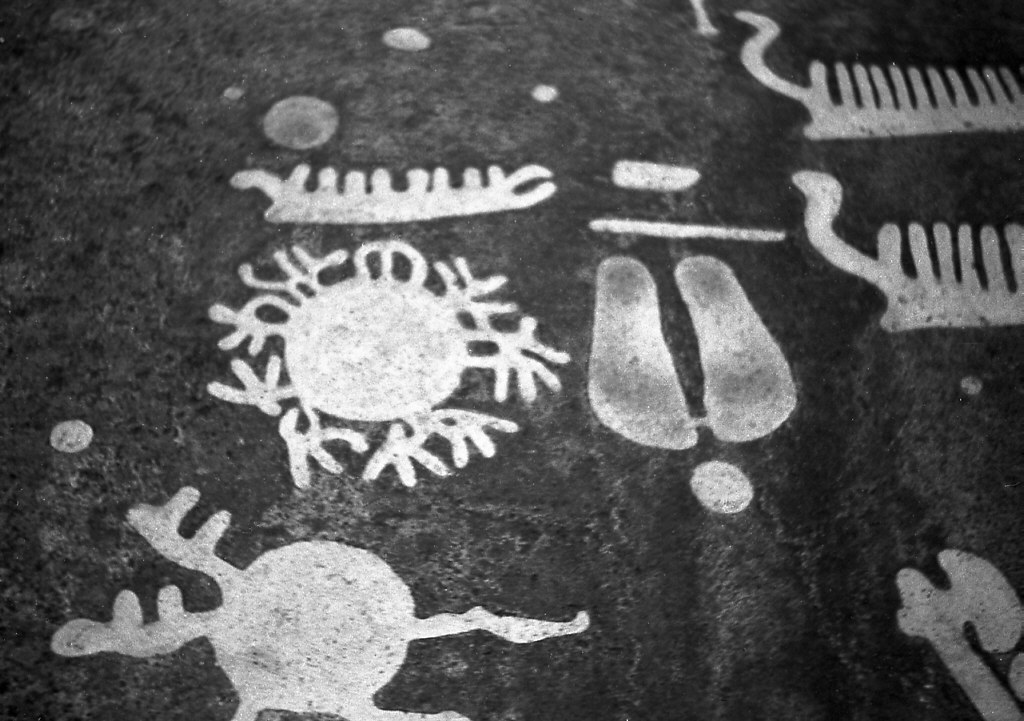
Moreover, the völkisch movement championed the idea that the German and Scandinavian nations were all descended from this same group of Atlanteans, but that their superior way of life had been gradually eroded due to excessive mixing with foreign populations.
“Ultimately, Wirth’s aim was not just to study the past but to lay the groundwork for the restoration of a lost social and racial order in which the Nordic peoples would unite and return to an agrarian way of life free from capitalism, communism and all Jewish influence,” explains Legnér in his paper.
The point of the museum, therefore, was to inspire Germans to “turn their backs on the decadence of the cities and on the Judeo-Christian culture in its entirety, and return to their primordial roots.”
In the end, however, Wirth fell out with Himmler after suggesting that women had acted as political and spiritual leaders in ancient Germanic society. As a consequence, he was kicked out of the Ahnenerbe and his ridiculous outdoor museum was never built.
The study is published in the journal Antiquity.