Humans
 PUBLISHED


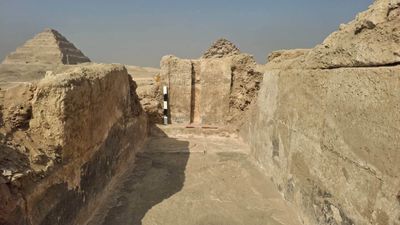


When building an ancient Egyptian tomb for a raging workaholic, always remember to fit a magic door so he can commune with the world beyond.
Archaeologists have recently been excavating tombs at the Saqqara necropolis, a UNESCO World Heritage Site around 40 kilometers (24 miles) southwest of Cairo. In the latest discovery, the team found a stunning tomb dating to the Old Kingdom, roughly 4,700 to 4,200 years ago.
Hieroglyphics around the tomb suggest it belonged to a high-ranking official named Sekhentyu-Ptah, who proudly listed his job titles like the ancient equivalent of a LinkedIn influencer: royal chamberlain, supervisor of the king's works, supervisor of royal documents, priest of the goddess Maat, and supervisor of scribes.
As if those inscriptions weren't enough to flaunt his status, the tomb was also packed with grave goods, including over 100 figurines to act as minions for the deceased in the afterlife. Archaeologists also found three stone sarcophagi, still sealed in their original condition, along with a wooden falcon figure, pottery, and other artifacts.
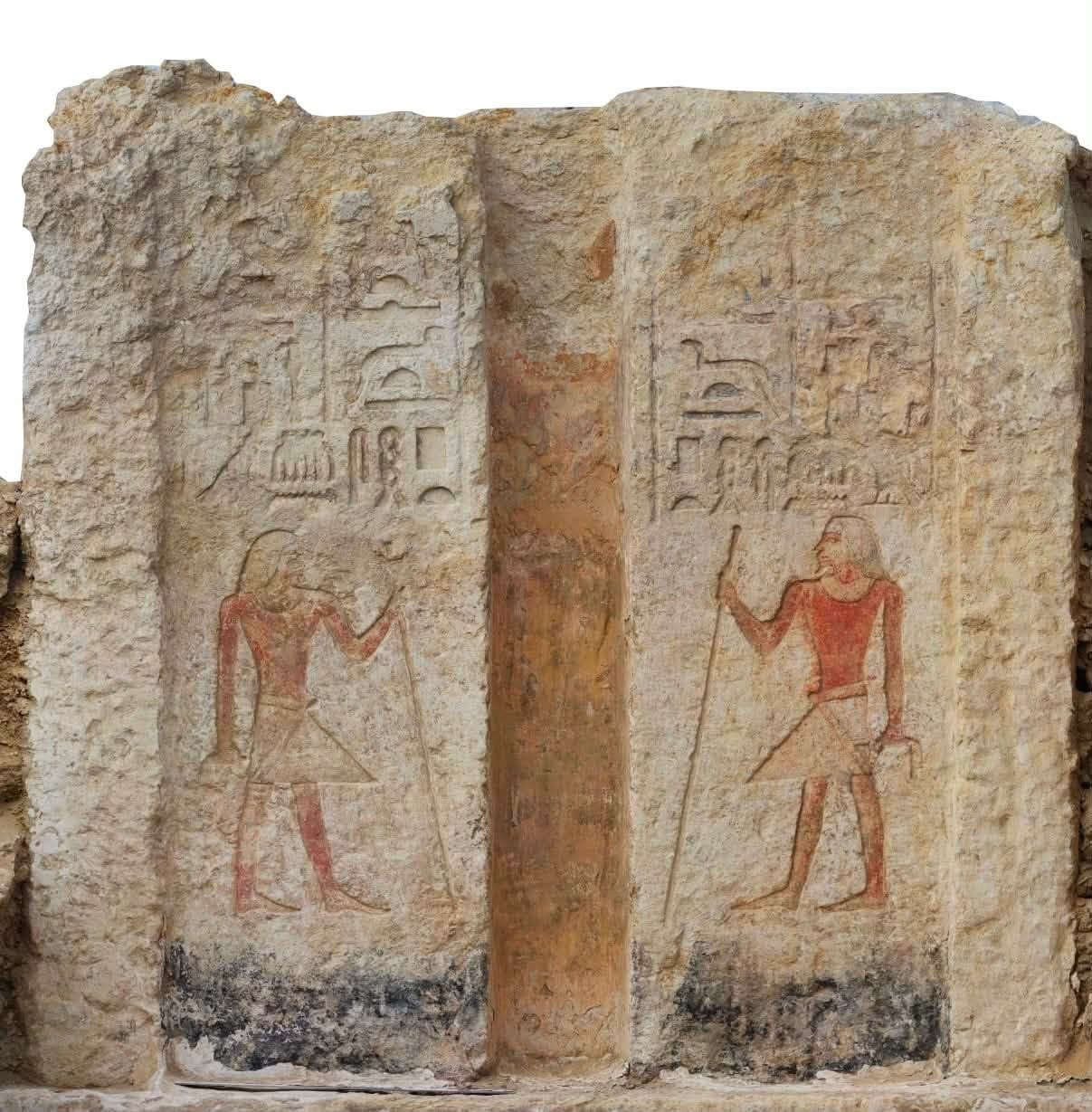
Perhaps most fascinating about his tomb is the funerary objects in front of the false door, including an offering table, an offering disc, and a purification basin.
This false door wasn't meant to trick grave robbers (though that would've been handy, since the tomb was looted at some point over the millennia). Instead, it served as a symbolic and spiritual gateway between the worlds of the living and the dead, allowing spirits to pass through.
Beyond this find, Saqqara holds a collection of royal pyramids and pyramid ruins, including the oldest known pyramid in Egypt, known as the Step Pyramid of Djoser. It’s also home to one of the oldest, most complete mummies from the ancient Egyptian world.
People have been studying the Saqqara necropolis since the mid-19th century, but it’s still turning up surprises. So much so, Egypt has launched a renewed push to turn the site into a hub of tourism and archaeology, up there with its better-known cousins, the Giza pyramid complex.
Officials believe Saqqara is arguably just as fascinating, if not quite as grand, but remains far less visited due to dodgy roads, a shortage of restrooms and cafeterias, and its greater distance from Cairo.
“Giza is architecturally and historically narrow: [It's] fundamentally a Fourth Dynasty pyramid field. Saqqara, for its part, hosts pyramids, temples, private tombs, an underground animal necropolis and a monastery, spanning nearly the full length of ancient Egyptian history,” Egyptologist Magdy Shaker told AL-Monitor.