Health and Medicine
 PUBLISHED





Millions of people around the world are still dealing with the impacts that COVID-19 had on their long-term health. Some estimates say long COVID affects 5 percent of the global population, so it’s clear to see that improved understanding of the condition and better treatments are an urgent priority.
A new study could point this quest in a different direction, by finding the first evidence that long COVID is associated with injury to the brain’s dopamine system.
What happens when dopamine neurons die
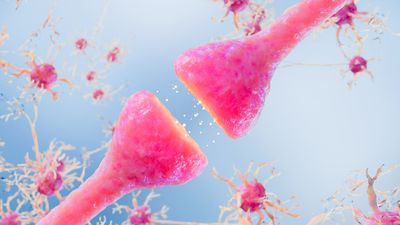
Dopamine is often called the “pleasure chemical”, but that only scratches the surface of all the functions this neurotransmitter can perform.
Many different pathways throughout the brain use dopamine to help transmit information – what’s referred to as “dopaminergic signaling” – but the disease it’s probably most closely associated with is Parkinson’s disease.
In Parkinson’s, dopaminergic neurons in a part of the brain called the substantia nigra are selectively degenerated over time. As these brain cells die, there’s a negative impact on movement control which leads to the gradual progression of symptoms like tremors, stiffness, balance issues, and slow movements.
Because the loss of neurons is so specific to the dopaminergic system, treatment for Parkinson’s – particularly in the earlier stages – relies on adding more dopamine back into the system to compensate.
The medication levodopa (L-dopa) was a revolution in Parkinson’s treatment when it was developed and continues to be used today, often in combination with another drug called carbidopa. When L-dopa reaches the brain, it is converted into dopamine that the cells can use, helping to relieve motor symptoms.
Caught in a dopamine trap?
Coming back to this idea of the “pleasure chemical”, it’s true that dopamine is also heavily involved in reward pathways within the brain. Because of this, it’s linked to addiction, habits, and compulsive behaviors.
This has come screeching into the public consciousness recently in conversations around social media use and misuse. People speak of getting caught in a “dopamine trap” as they waste hours doomscrolling. Conversely, you’ll find endless people embracing mood-boosting colorful clothing under the hashtag #dopaminedressing.
Dopamine is also a regular topic of conversation in online spaces discussing neurodiversity.
A link between dopamine and attention deficit hyperactivity disorder (ADHD) was first proposed back in the 1960s when it became clear that stimulant drugs could help relieve hyperactivity and inattentiveness in some people with the condition.
It’s not as simple as saying that low dopamine causes ADHD, Jyoti Madhusoodanan recently wrote for Nature News – rather, dysregulation of dopamine signaling is likely to be one among several factors influencing the condition, including the involvement of other neurotransmitters like serotonin.
These examples are a bit like opposite ends of a spectrum. In Parkinson’s disease, the dopamine link is inescapable and clear. Dopaminergic signaling is selectively targeted, and countering that by adding extra dopamine back into the system can help relieve symptoms, at least for a time.
In ADHD, decades’ worth of research has hinted that dopamine is involved – and this resonates with many patients as well – but it’s more likely to be one strand in a complex interplay of factors.
Misunderstood and often invisible
Long COVID as a diagnosis may only be about six years old, but it shares commonalities with other post-viral syndromes and conditions like ME/CFS (myalgic encephalomyelitis/encephalopathy and chronic fatigue syndrome), which have been documented for far longer.
These conditions have a history of being misunderstood and even stigmatized, with many patients reporting difficulties in accessing medical care, accommodations in the workplace, and simply in being believed about their symptoms.
The fact that typical scans and tests may not show clear evidence of disease in long COVID “does not imply absence of brain pathology,” point out Eric Guedj and Danielle Beckman in a commentary published alongside the new research.
“What cannot be seen is too often considered uncertain.”
The authors of the new study sought to illuminate the invisible by using positron emission tomography (PET) imaging, which involves radiotracers that quite literally light up on images when they bind to target proteins.
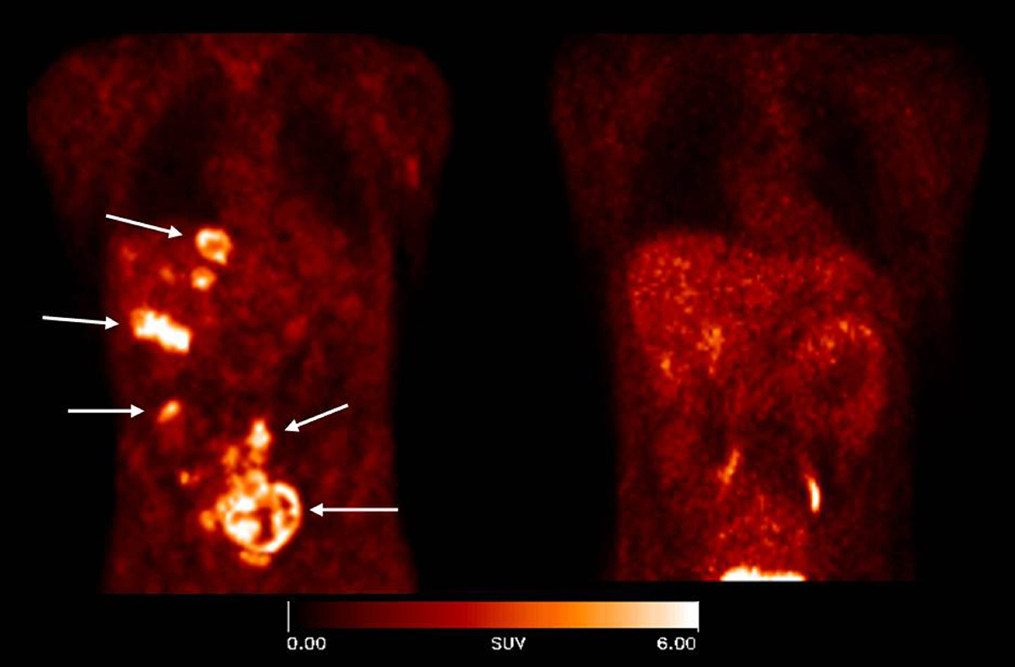
They were looking for dopaminergic neurons, and they observed in 24 individuals with long COVID that there were lower levels of these across all major parts of the brain known as the striatum. This brain region is involved in motivation, movement, and cognition. The images from the long COVID patients were compared with 43 healthy controls.
Lower dopamine neuron density in specific parts of the striatum was found to correlate with symptom patterns – for example, decreased markers in the ventral striatum were associated with loss of motivation, while a decrease in the caudate putamen was linked to memory problems.
“Our findings provide compelling evidence that long COVID involves the loss of dopamine-releasing neurons,” said senior author Dr Jeffrey Meyer, of the Brain Health Imaging Centre at the Centre for Addiction and Mental Health in Canada, in a statement.
This tallies with previous research, Meyer explained, which suggests that the brains of people with long COVID show elevated inflammation in regions with lots of dopaminergic neurons.
“We know that inflammation can injure dopamine neurons. While our earlier research showed high levels of inflammation in those regions, this study provides direct evidence that the dopamine neuron marker is reduced in the same regions – and that this loss correlates with patients’ symptoms.”
A radical shift?
For patients, this could mean a shift in how their condition is understood, and perhaps a future of better treatment options. That could also impact those with related conditions like ME/CFS.
It’s still early days, however.
“[T]here are theoretical reasons why changes in dopamine production could be involved in both long COVID and ME/CFS – where previous research has also queried a link,” commented Dr Charles Shepherd, Trustee and Honorary Medical Advisor to the ME Association, who was not directly involved in the study.
“While this new research, which found damage to the dopamine nerve pathways in long COVID, provides some support for this hypothesis it's too early to draw any firm conclusions, especially in relation to the possible use of drugs that are already being used to treat conditions such as Parkinson's disease where an abnormality in dopamine production is well established.”
Meyer and the team are planning a clinical trial targeting dopamine function in long COVID, so we may know more in the near future.
While it’s important not to get ahead of ourselves, for patients it’s abundantly clear what a difference any improvement in the current treatment landscape could make.
“For five years I have been seeking answers on what happened to me after I contracted COVID in 2021,” said Susan Deuville, a lived experience research advisor to Meyer.
“It was a crushing loss of the life I had and the person I was before. The research of Dr. Meyer brings hope. It also validates what long COVID sufferers have always known – long COVID is real and the effects are devastating.”
The study is published in the journal eBioMedicine.