


 Nature
 PUBLISHED





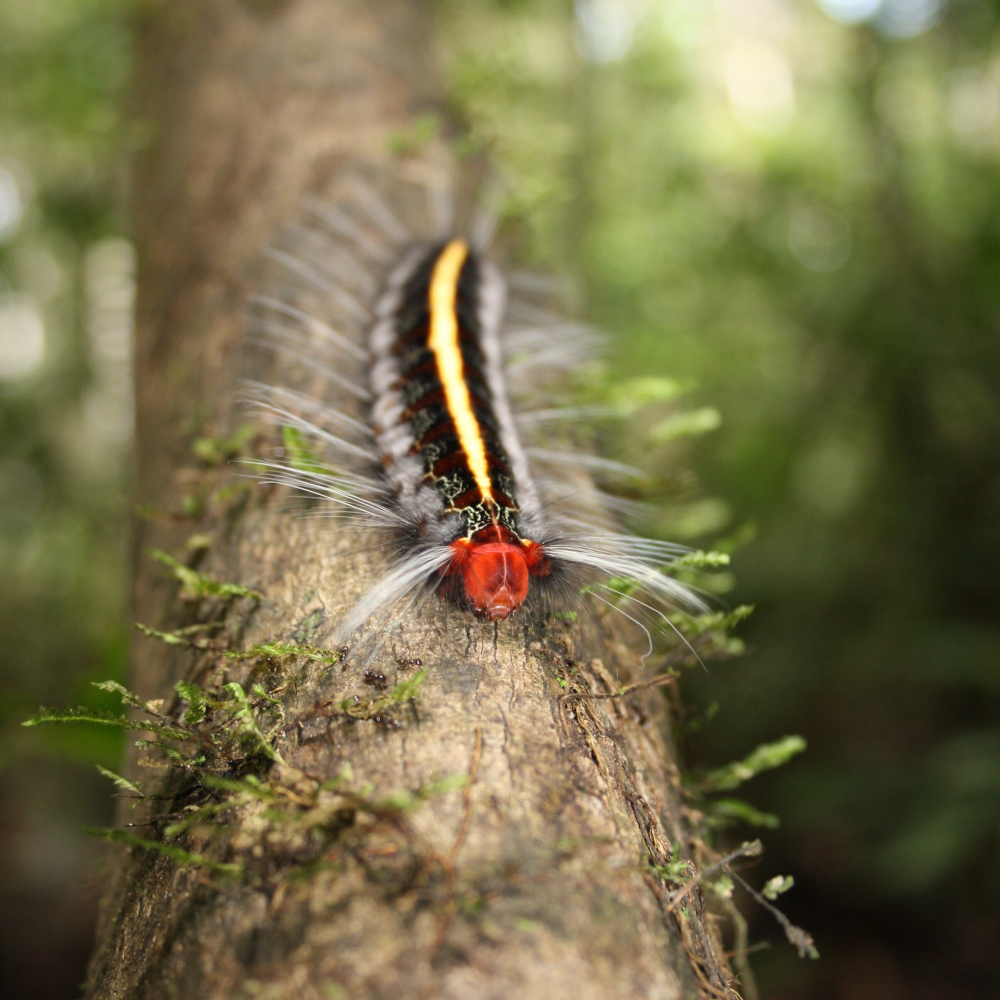
I once photographed a fluffy caterpillar with a racing stripe in the Amazon rainforest. It was without doubt one of the strangest creatures I’d ever seen, but nobody at the research station could tell me what it was.
Upon returning to the UK, I was desperate to find out and sent emails to institution after institution. A member of the tussock moths was the closest I could get. From just a photo, nobody could help me out with a genus or species.
So, had I discovered a new-to-science animal? I doubt it, but a girl can dream and the experience was enough to make me realize I knew very little about how you name a new species.
It was time to find out, and so I called palaeontologist Professor Paul Barrett. Paul is a scientist who has named around 20 new species of dinosaurs and even has one named in his honor: Vectipelta barretti, a 140-million-year-old ankylosaur.
Having been part of the naming process from start to finish, I was curious to find out from Barrett just how difficult it is to establish that your unidentified organism is unlike any other ever described on Earth. And what rules apply if, unlike me, you succeed in proving you've discovered a rare shiny.
What kind of evidence do you need to declare a new species?
Prof Paul Barrett: With any new species, whether it's a bacterium, a tree or a dinosaur, what you have to do is demonstrate that it's clearly distinct from every other species that we've already named. This comes down to a lot of comparisons, essentially.
So, you find your candidate, and you have a hunch that it might be something new because there's something slightly unusual or something slightly askew about it. Then you basically go to a library, and that library might be a museum collection, it might be a botanic garden collection, it might be an actual library of publications, and then you start trying to narrow down what it is.
Things like birds and bats can be distinguished on the basis of calls and even sometimes on the basis of parasites.
Prof Paul Barrett
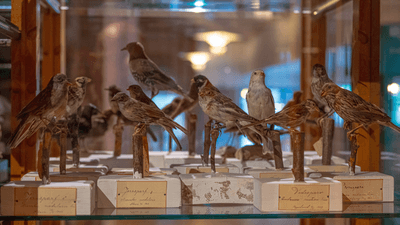
Most specialists will immediately know the larger group that their thing belongs to, and they will start narrowing it down iteratively from that point, rejecting some of the groups and narrowing down those decisions to get to a smaller number of things where you get into really detailed comparisons to start to pull things apart.
The morphology of the animal, looking at its shape and size and the features that it has, and looking at those very detailed features to see, is it really that different? Is this feature a difference that might be related to, say, the sex of the animal rather than to a species difference?
Is it a feature that might be related to the growth stage of the animal? Are we looking at an adult or a juvenile? Or is it a feature that might be subject to what we call “individual variation”? So, for example, in humans that might be hair colour or height. Is it a feature that's actually just a population feature rather than something that marks it out as a truly unique species?
Are there examples where the physical differences aren’t enough?
PB: A lot of species look really similar, particularly when we're talking about things like bacteria, but also when we're talking about even very complicated animals. Some insects, mammals, and birds can really only be distinguished by genetic evidence because their bodies otherwise look quite similar.
Things like birds and bats can be distinguished on the basis of calls and even sometimes on the basis of parasites, because parasites can be species-specific. Spotting a new species of parasite on a bird might be an indication it's actually a different species of bird from one that has a different type of parasite.
There are rules on what you're allowed to do and what you're not allowed to do. Some of those rules are practical and grammatical, like you can't name a single species that consists of a single letter of the alphabet.
Prof Paul Barrett
Those species that are very difficult to tell apart by eye we call cryptic species, and a lot of work over the last couple of decades has made genetic tools more widely available and more precise. [They are] showing a lot of the things that we thought of as one widely distributed species might actually be a bunch of species that all look the same but have stopped breeding together at different edges of that very large range.
So, at first instance [species identification] is often a by eye, [searching for] something that looks different, but actually a lot of species discovery at the moment is being driven by this more molecular approach of going back to museum collections or collections made in the field and saying, does this animal really interbreed with these other things that look the same that live 1,000 miles [1,609 kilometers] away, or not? There's still a huge amount of species discovery going on all the time.
Are there rules about the name you choose?
PB: There are rules on what you're allowed to do and what you're not allowed to do. Some of those rules are practical and grammatical, like you can't name a single species that consists of a single letter of the alphabet. You're also not meant to name species things that are offensive or defamatory.
There are also some other conventions, like it's generally frowned upon to name things after yourself. Similarly, people do sometimes name things after their kids and things like this, but that's viewed by some other people as also essentially naming it after yourself – so not strictly breaking that code, but slightly bending it, at least.
Back in the day, there would have been people naming things after figures like Hitler, for example, and this is obviously something that is not considered acceptable today
Prof Paul Barrett
People also use species names in different ways. So, they might use the species name to highlight a particularly unusual feature of the animal and pull it out and say that this is what we named it after because it's why it's so distinctive. Sometimes they use the geographic location just to know where it comes from.
Other times they'll use it to honor a person or a group of people. That could be someone who has helped a lot in the research. It could be a mentor of theirs. It could be a public figure that they admire. It could be another scientist, and they're trying to commemorate their work. Again, not really any rules on who, other than good taste, basically, and trying not to offend other people.
Have species names ever been disputed for causing offense?
PB: There are certainly historic examples of this. Back in the day, there would have been people naming things after figures like Hitler, for example, and this is obviously something that is not considered acceptable today.
There are a number of other historic figures that are similarly unpleasant that have also been permanently honoured in this way by having a new species or a new genus named after them. At this particular point in time, where we're trying to redress some of these historic imbalances in recognising people and in making sure that we're not honouring people who are morally questionable or ethically questionable. There's a lot more scrutiny and a lot more spotlight on this.
Curious to know more? Listen to the full interview here on IFLScience's The Big Questions podcast. You can listen to this episode and subscribe to the podcast on all your favorite podcast apps: Apple Podcasts, Spotify, Podbean, Amazon Music, and more.

 1
1