Nature
 PUBLISHED
 1
1




It's a common misconception that evolution acts with intention. Changes are random, but reinforced by a fitness to their environment. It's hardly surprising, then, that some real weirdos turn up in the fossil record.
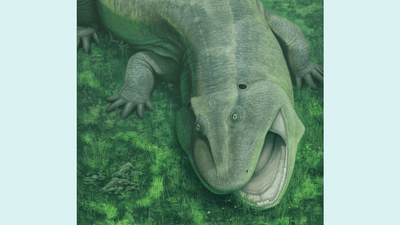
Just look at the new species of amphibian-like critter scientists have described from fossils found in Brazil. It had bizarre, twisted jaw bones and teeth that stuck out sideways. Why? It’s a good question.
The new-to-science species has been named Tanyka amnicola. The first part comes from local Indigenous Guaraní language, meaning “jaw,” while amnicola means “living by the river.”
Its fossils were retrieved from a dry riverbed in Brazil, near the Amazon, where scientists have been searching for 15 years. During one of the earlier expeditions, Professor Jörg Fröbisch of the Museum für Naturkunde, Berlin, found a particularly puzzling jawbone.
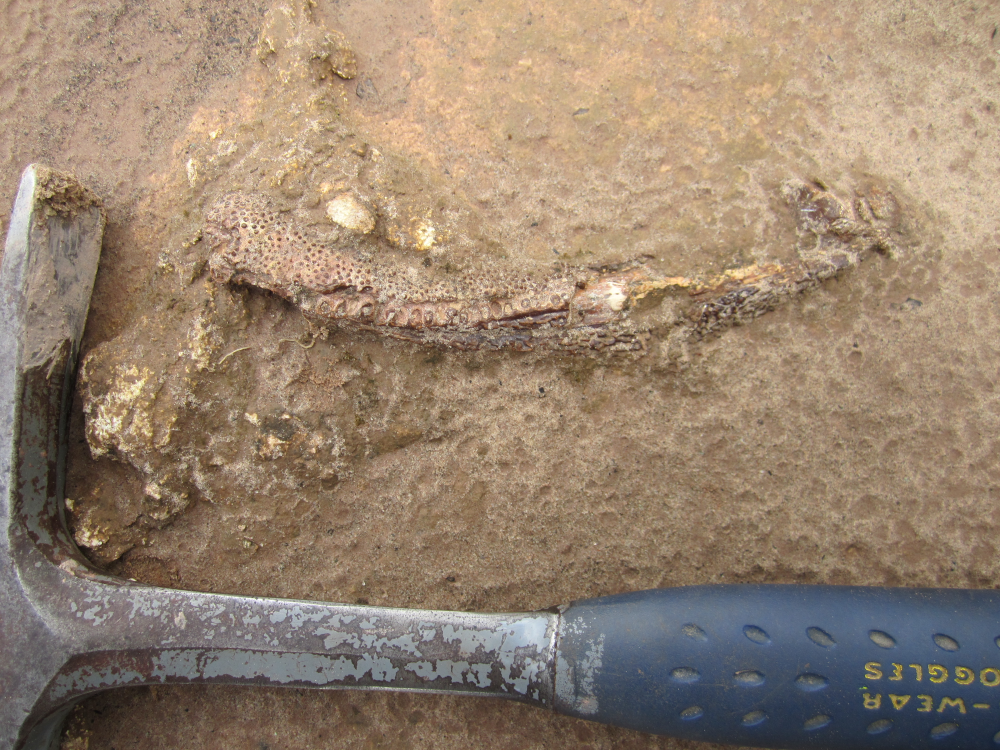
It was twisted with a strange arrangement of teeth, but this was no malformation. Oh no, this was a pivotal step to a switch-up in diet.
You see, this specific arrangement appears to have created the perfect piece of kit for grinding up plants. When the mouth was closed, the teeth would’ve been in contact, creating a rough surface to break down tough material.
Tanyka was a early representative of four-legged animals, known collectively as tetrapods. This includes amphibians, reptiles, birds, and mammals alive today, but when Tanyka was alive most of its relatives were carnivores. Unusual, then, to discover that it was well-adapted to eating plants, though that doesn’t necessarily mean it was a strict herbivore.
And it gets weirder still, as Tanyka belonged to an archaic group that lived 30 to 50 million years earlier. That means it was a kind of living fossil when it lived 275 million years ago, belonging to a group we didn’t think had held on for so long.
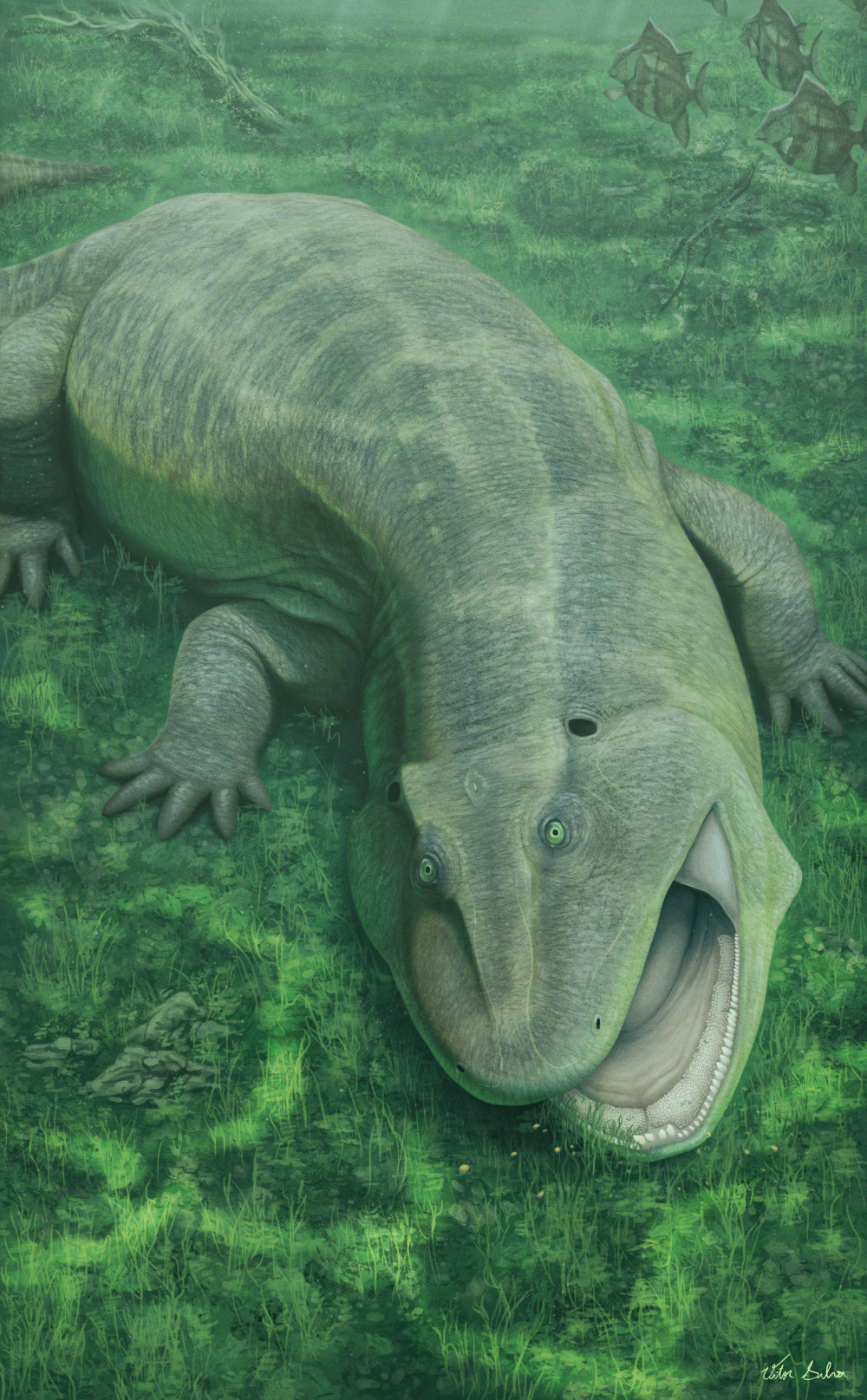
“Tanyka is from an ancient lineage that we didn’t know survived to this time, and it’s also just a really strange animal,” said Jason Pardo in a statement, the study’s lead author, who worked on this project as part of his postdoctoral fellowship at the Field Museum in Chicago. “The jaw has this weird twist that drove us crazy trying to figure it out.”
“We were scratching our heads over this for years, wondering if it was some kind of deformation, but at this point, we’ve got nine jaws from this animal, and they all have this twist, including the really, really well-preserved ones. So, it’s not a deformation, it’s just the way the animal was made.”
You do you, Tanyka amnicola.
The study is published in the journal Proceedings of the Royal Society B: Biological Sciences.