Nature
 PUBLISHED



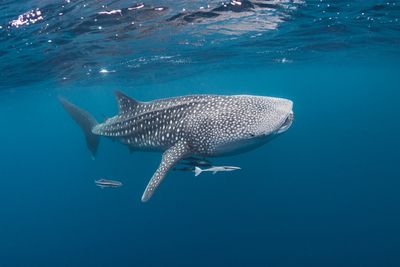


Have you ever wanted to cruise underwater alongside a whale shark? Well then, you’re in luck.
Researchers in Australia have managed to attach underwater cameras to the sides of five whale sharks, revealing what these ocean giants get up to when out of sight beneath the waves.
It turns out the enormous animals display a whole range of previously unknown behaviors. This includes a rather relatable one the researchers described as “gliding slow feeding,” in which they simply sink to the bottom of the ocean with their mouths open, allowing food to passively end up in their gobs. Same whale sharks, same.
But more importantly, the footage is giving researchers their best glimpse yet into the hidden lives of these incredible animals.
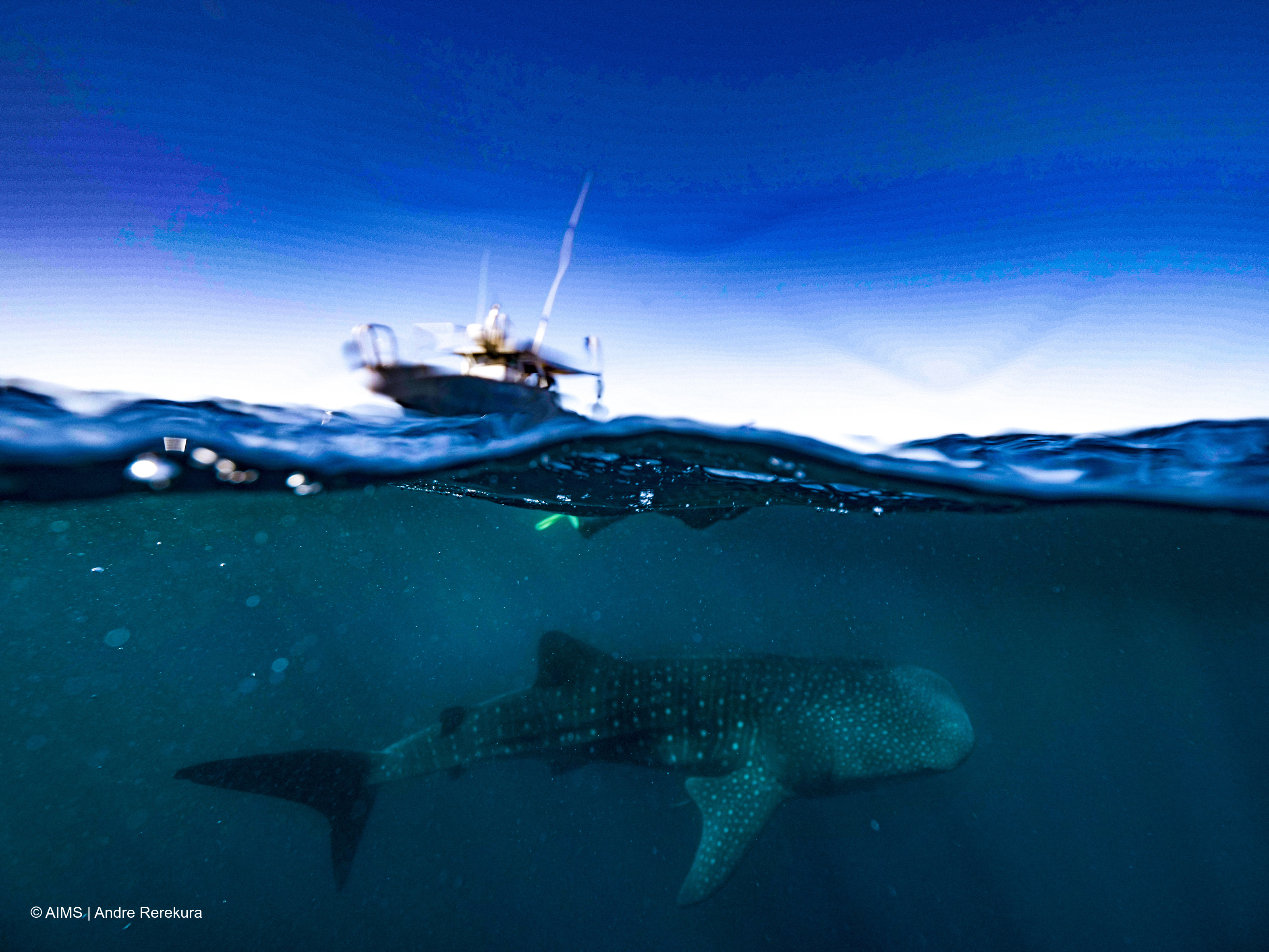
Much of our knowledge about whale sharks comes from either snorkeling with the giant fish or watching them from boats. This means we’re only ever observing the animals when they’re lazily cruising along the ocean surface using their massive mouths to hoover up plankton.
As a result, scientists have been missing out on a huge variety of whale shark behavior that goes on while they are deep underwater.
To change that, researchers have been sticking cameras to the sharks around Ningaloo Reef, Australia, to record what they get up to. By combining this footage with observations in previously published papers, the researchers were able to describe 36 types of behavior.
Out of these, a full third involved feeding, which, according to the researchers, should surprise no one.
“It’s not surprising that the biggest fish in the oceans is so food-oriented, given they eat some of the smallest prey,” explains Christine Barry, PhD candidate at the Australian Institute of Marine Science and Murdoch University, in a statement.
“But what we didn’t realise, is just how many ways they go about it, compared to other large filter-feeding animals like whales and basking sharks.”
In fact, the sheer amount of time the sharks spend eating has led the team to describe them as “serial snackers,” which again feels incredibly relatable.
Out of the 12 feeding behaviors, an impressive 6 were entirely new to science. Not only are the fish skimming the surface and sinking with their mouths wide open, but they’re also swimming straight down to the seafloor with their mouths agape and wiggling their bodies as they feed on the surface.
This huge diversity in feeding behaviors is in contrast with other large filter feeders. For example, the second biggest fish in the sea, the basking shark, only really has one.
“Their wide range of feeding strategies, from actively suctioning prey-filled water to effectively sinking with their mouths open, means they can maximise their feeding opportunities across different environments,” said Barry.
The paper describing these results has been published in the journal Marine Biology.