Nature
 PUBLISHED
 1
1





What you'll discover in this article...
- Gastroliths are a trace fossil. These rocks were swallowed by dinosaurs while they were still alive, and in some species helped to grind up their food.
- We've previously recognized gastroliths as a marker of intensive stomach-grinding, but new research demonstrates how their specific shape can tell us so much more.
- As study author Ryuji Takasaki told IFLScience, a fascinating finding about the gastrolith shape of early theropods could explain how these dinosaurs were able to switch to a herbivorous diet so many times throughout their evolution.
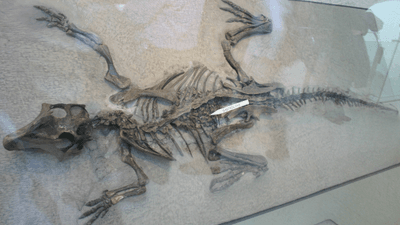
There’s a kind of fossil dinosaurs left behind that spent a lot of time in their bodies despite not being a part of them. These stomach stones are known as gastroliths, and they were swallowed by all kinds of dinosaurs.
A muscular stomach might have been a ‘preadaptation’ towards tooth reduction in several strictly herbivorous taxa, including modern birds.
Ryuji Takasaki
We used to think the presence of gastroliths among a species heavily suggested they were either herbivores or relied on stomach-grinding as a digestive strategy.
But new research has revealed the story is more complicated than that. In fact, these worn-out rocks can reveal all sorts of information we might otherwise not find in the fossil record.
“Gastroliths should no longer be treated simply as evidence that a dinosaur was herbivorous or possessed a gastric mill,” said study author Ryuji Takasaki of the Okayama University of Science to IFLScience.
“Their shape can instead provide evidence about how actively food was mechanically processed inside the stomach.”
The many ways of turning food to mush
Have you ever wondered why birds can swallow their food whole without getting next-level indigestion? It’s because these animals, like many other dinosaurs, grind their food within their stomachs.
That wasn’t the only digestion strategy available to dinosaurs, however.
Some dinosaurs, such as sauropods, fermented food within their intestines. This would have created a kind of gastric furnace that would’ve gotten so hot some scientists have suggested it could be a driver behind their long necks as a way of getting their brains away from all that heat.
Then there were the chewers, who broke down their food in much the same way as we do.
We know these strategies existed, but pinning them down to a particular species hasn’t always been easy because all the squishy bits we need to determine how they processed food – the stomach and intestine – don’t tend to survive in the fossil record (although we did find a 245-million-year-old liver that still had some color, so don’t rule it out).
Searching for hard evidence of squishy bits
In lieu of soft tissues, one indicator we’ve looked to is gastroliths. These rocks are hardy enough to survive for millions of years, but it seems we've been overlooking their value.
This new research challenges the simplicity of old hypotheses. Instead of focusing on the presence of gastroliths alone, it says you need to be looking at their shapes.
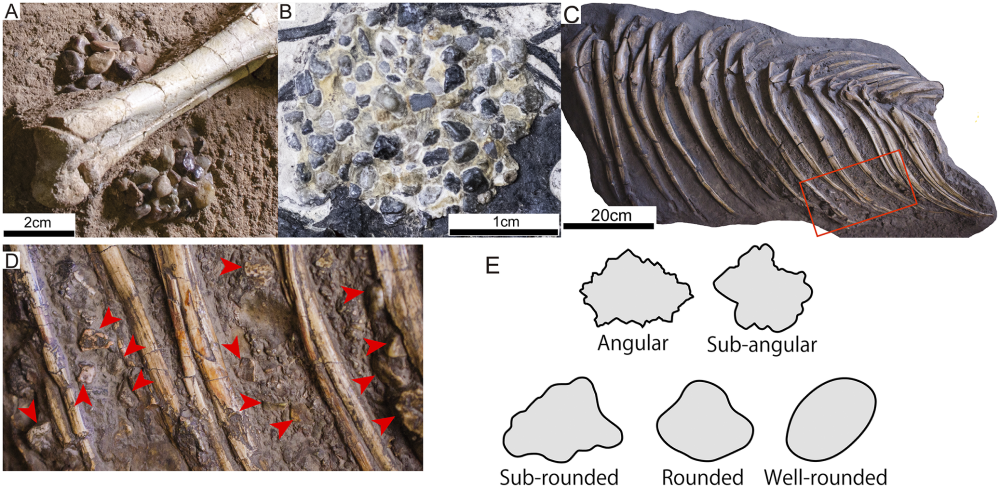
Reaching that conclusion involved looking at a lot of animals’ stomach stones. To start with, they took 104 living animals, of which 46 species mostly represented birds and crocodilians (some extant examples of which don't swallow gastroliths for digestion).
For each animal, they looked at the shape of the gastrolith as well as the animal’s stomach muscles and diet, and found a strong relationship between all three. They were then able to use this information to build a model that could be applied to dinosaur gastroliths.
Dino digestion
The results showed that rounded stones were an indicator of more grinding going on in the gut thanks to strong stomach muscles. These dinosaurs were eating like modern birds, relying heavily on the stomach to break down food.
Sharper, more angular stones indicated there wasn’t much grinding going on in the gut. These were found in sauropods, which fits with a reliance on microbial fermentation instead.
Where things got a little surprising was among the theropods. The two-legged avian dinosaurs that gave rise to everything from Tyrannosaurus rex to Velociraptor and the only dinosaurs still alive today: birds.
We often associate this group with the bloodthirsty predators, so it was a little unexpected to find evidence of rounded gastroliths long before true birds evolved.
A fascinating takeaway that could help explain why theropods went from being so toothy to so beaky.
“A muscular stomach may have evolved early in theropods,” said Takasaki. “Such a muscular stomach might have been a ‘preadaptation’ towards tooth reduction in several strictly herbivorous taxa, including modern birds.”
So the gastrolith is not the signature stomach-grinding stone of herbivores we once thought it was, and is in fact an easter egg of ancient information that strays beyond the digestive system.
The study also points to a wider diversity of digestive strategies among dinosaurs than previously recognized, while reminding us to feel grateful that, as mammals, we get to simply chew our food.
I don’t know about you, but personally I'm not sold on the prospect of a gastric furnace filled with rocks.
The study is published in the journal Paleobiology.