Nature
 PUBLISHED
 1
1


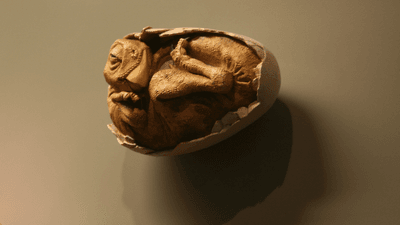


The skulls of two baby predators found littered among a nest containing the near-complete embryo of an Oviraptor puzzled scientists when they described the find back in 1994. Why were these Velociraptor-like animals in such close association with what appeared to be the nest of its prey? The juiciest among several explanations is that it could’ve been an example of brood parasitism.
Snarling, toothy jaws, and killer hooked claws, the mental image the word “Velociraptor” brings to mind is a frightening one, but the more we learn, the more relatable they become. They were feathered theropod dinosaurs, about half the size they were depicted in Jurassic Park, closer to that of a turkey than the Deinonychus the original JP raptors were based on.
There are two known species: Velociraptor mongoliensis and Velociraptor osmolskae, and they both join the Dromaeosauridae as feathered carnivores. As for what they were like as parents? Well, that’s where some dromaeosaurid remains become very interesting.
It centers around Oviraptors, and whether or not they were the egg thieves their name suggests. Fossils of Oviraptors incubating and brooding their eggs tell us that, actually, they were caring for eggs rather than trying to steal them, but one such nest led to a very curious discovery.

Among the eggshell remnants found in the same heavily weathered nest that contained the nearly complete skeleton of an embryonic oviraptorid dinosaur (aka, baby Louie) were the partial skulls of two tiny dromaeosaurids. Their size indicated they were either embryos or hatchlings when they died, with one “preserved with eggshell adhering to it,” so what on Earth were they doing next to an Oviraptor egg?
Brood parasitism is perhaps the most alluring explanation. The parenting approach is adopted by cuckoos today, who will lay their eggs in the nests of other birds and leave them to it. The creator of the nest will lovingly tend to its invader until it hatches and shoves the native eggs out of the nest. The murderous invader ensures it gets all the resources from its adopted parent, who will carry on feeding the chick even after it grows bigger than the bird itself.
It's a savage approach to parenting, but you can’t knock the results. The cuckoo gets to continue its bloodline without lifting a finger after the egg-laying is over. Brood parasitism is seen in several bird species alive today, suggesting it’s a successful reproductive strategy that’s also an example of convergent evolution, with the trait appearing in unrelated birds. So, if birds evolved from dinosaurs, could some of their ancient ancestors have done the same thing?
Unfortunately, when it comes to dromaeosaurids, we have very little evidence to work from. Without well-preserved nests of dinosaurs like Velociraptor, it’s difficult to infer nesting behavior. That’s what makes the appearance of two dromaeosaurids next to an Oviraptor egg so exciting, but there are several explanations as to how they could have got there.
“Skulls of non-avian theropods this small are rare,” wrote Norell et al in their 1994 paper on the Oviraptor embryo and the two dromaeosaurid skulls, “and the close association of two specimens with the egg of another taxon is unlikely to be due to chance alone.”
“Although they are certainly from animals close to hatchling age, it is unclear whether they are embryos or neonates; the possibility that the dromaeosaurids are from an adjacent nest, were prey items of adult oviraptorids, were predators on the oviraptorid eggs, or even that one of the two taxa was a nest parasite, cannot be discounted. In any case, their intimate association with the oviraptorid eggs provides another reason for caution in identifying eggs on the basis of their associations with embryos not actually enclosed within them.”
What is it they say about not counting your Oviraptors until they’ve hatched?
Another curious clue as to whether or not brood parasitism was a trait that evolved before birds is egg coloration, especially among theropods like Velociraptor that are thought to have open nests. Dinosaurs known to bury their eggs were found not to have any pigment, while open-nesting eggs had the same pigments we find on bird eggs today.
It's possible, then, that egg coloration served a function for above-ground nesting dinosaurs. Whether that function was camouflage, temperature regulation, or an attempt to hoodwink other parents into thinking your egg is their egg? We don’t yet know, but it’s just another reminder that the birds living today aren’t so far from extinct dinosaurs as we might think.