


 Nature
 PUBLISHED


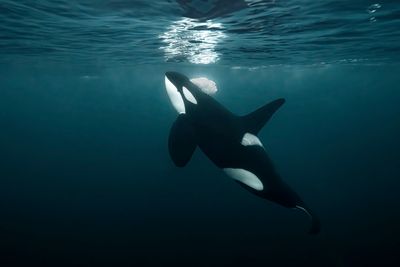


Since 2020 there has been an increase in reports of orcas attacking boats off the Portuguese and Spanish coasts. These interactions have ranged from the more benign investigations to the actual sinking of vessels.
Why, exactly, the whales are doing this is not really understood, although a new paper has sought to dive into these attacks. The scientists have been trying to gain insights into what might be driving the incidents, but also providing some suggestions of how to prevent them once started.
“Starting in May 2020, individuals within the Iberian subpopulation have been documented interacting with vessels through actions such as repeated physical contact, including forceful impacts (i.e., ramming), applying bodily force to move or destabilize vessel components, and various intensities of biting vessels,” write the authors.
“This has resulted in substantial damage to hundreds of boats and the confirmed sinking of nine vessels to date.”
Whales on a warpath
The events have happened within the waters around Portugal and Spain.
All the whales involved in these attacks belong to the genetically distinct Iberian orca subpopulation. Largely dependent on the bluefin tuna of the Mediterranean, as the number of the fish has dwindled due to fishing pressures, so have the numbers of the whales.
The International Union for Conservation of Nature now lists the Iberian killer whales as Critically Endangered, with the total number thought to be around 37 individuals that live in about six communities.
This latest study reported on seven separate events that occurred between 2018 and 2025 in which at least eight individual whales interacted with the research vessels.
“The intensity of these interactions varied from light contact with the hull to forceful maneuvers involving redirection, spinning, and even tilting of the vessel, suggesting a continuum of behavioral intensity from exploratory to more forceful expressions observed across encounters,” the authors write.
During these events, the researchers tried to figure out what was going on. Rather than it being purely play or curiosity-driven, the scientists found that the whales were also engaging in foraging and feeding behavior.
This has led them to suggest that perhaps the whales are attacking the boats because they are perceiving them as a potential competitor as they hunt for fish.
This is by no means conclusive, and the researchers note that there are still some inconsistencies with this theory, but one thing is clear. It seems like the whales are passing this behavior on to younger members of the community, meaning that it could be developing into a form of culture.
Rather than hoping that this culture dies out, it seems likely that we should instead be figuring out ways to mitigate it.
How to stop an orca attack
There has been mixed advice about what to do if the orcas do take an interest in a boat or yacht. Some have suggested switching the engine off and waiting it out, while others have recommended going into reverse.
Unfortunately, with the increase in incidents, there has also been an increase in antagonistic response from humans.
In 2023, one boat off the Spanish coast was reported to have thrown firecrackers into the water, presumably in an attempt to scare off the whales. Then, in 2026 officials launched an investigation after the matriarch of one pod was seen with what is thought to be gunshot wounds.
“Seeing Toñi, la abuela [the grandmother], like this is devastating,” Janek Andre, co-founder of the Iberian Orca Guardian Association, is reported to have said.
“If someone has deliberately fired a shotgun at her, this is not only an act of extreme cruelty against an individual animal. It is an attack on one of the last remaining members of a critically endangered population.”
The authors of the latest study suggest something far simpler to stop any incident: simply keep moving.
“Killer whale disengagement was consistently associated with prolonged vessel acceleration to speeds approaching 25 knots,” the authors write. “This pattern is consistent with previously documented interaction terminations and likely related to this speed being close to the species' maximum swimming capability.”
It seems likely that these incidents will continue, and so it will be critical to monitor these attacks and confirm why they are occurring and how to stop them.
The research was published in the journal Marine Mammal Science.




 1
1