Nature
 PUBLISHED


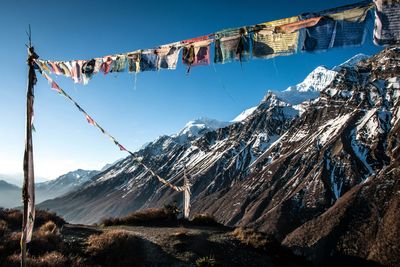


In the mountains of Tibet, glaciers have remained frozen since the last Ice Age, and this subzero repository is providing scientists with a rich record of Earth’s history.
The Guliya Plateau in northwestern Tibet contains the oldest continuously frozen ice outside the polar regions. Scientists have just pushed the date of the ice found here back around 100,000 years.
Ice from the Ice Age
In a new study, glaciologists from Ohio State University compared two ice cores drilled from the Guliya Plateau in 1992 and 2015, both measuring around 310 meters (1,017 feet) in length.
To assign them an age, the team looked for oxygen bubbles within the ice, then compared the isotope patterns to well-dated stalagmite records from nearby caves.
This indicated the ice became frozen at least 128,000 years ago, around the time some modern humans left Africa for the first time.
“It’s a really critical finding, because outside of the polar regions, this is the only ice core we have from the mountaintops that go back that far,” Lonnie Thompson, lead author of the study, professor of earth sciences at the Byrd Polar Research Center at The Ohio State University, said in a statement.
“Records out of Huascarán only go back over 30,000 years, not over 100,000, so that makes Guliya a very unique record,” he added.
Ice taken about 50 centimeters (20 inches) from the glacier's edge was dated to roughly 24,000 years old, proving the ice cap contains ice from the last Ice Age, which ended about 11,700 years ago and sparked the beginning of the Holocene.
“If we only had Holocene-era ice in Tibet, that would mean that the big ice sheets from the last Ice Age didn’t persist through the early Holocene, but evidence shows that it did,” added Thompson.
A window into Earth's past
The ice also carries a chemical ledger of past climate. The researchers noticed spikes in two radioactive isotopes – beryllium-10 and chlorine-36 – appear at about 187 meters (613 feet) depth, which they believe matches up with the Laschamp geomagnetic excursion, an event 41,000 years ago when Earth's magnetic field weakened and more cosmic rays bounced into the atmosphere.
But even old ice isn't infallible. Glaciers that have been frozen for tens of thousands of years are thawing at an alarming rate, including some in the region of Guliya, due to rising temperatures associated with climate change.
This is the case across the world, from the Alps to the Andes. A handful of glaciers in California's Sierra Nevada have existed for at least 30,000 years, but they are now on the brink of disappearing. If they vanish, the bare mountains beneath them will be seen by human eyes for the first time.
The age of this Tibetan ice is extreme, especially for non-polar ice, although substantially older ice exists in Antarctica and the Arctic.
The oldest dates to 6 million years ago and comes from the Allan Hills region of East Antarctica. Scientists are constantly on the hunt for even older samples, so that record could fall in the near future.
The new study is published in the journal Science Advances.