Nature
 PUBLISHED




Around 6 million years ago, tiny bubbles of air became trapped inside ice in Antarctica and have remained sealed ever since, quietly preserving clues to Earth’s ancient atmosphere like a prehistoric time capsule.
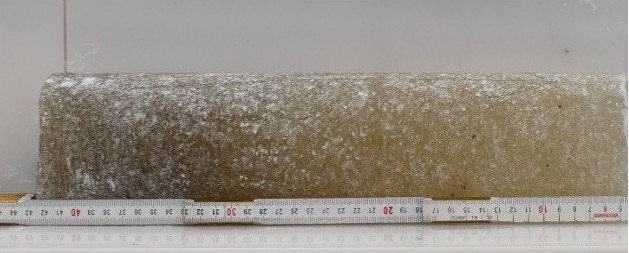
Back in 2025, an international team of scientists studied ice core cylinders gathered from the Allan Hills region of East Antarctica. Dated to 6 million years, they are the oldest directly dated ice samples ever collected on Earth.
These ice cores are more than just frozen water. They preserve tiny bubbles of air that capture a snapshot of Earth’s atmosphere from millions of years ago, when conditions were very different from today. By studying the chemical makeup of this trapped wind, scientists can dig out all kinds of snippets about the planet's distant past.
"Ice cores are like time machines that let scientists take a look at what our planet was like in the past. The Allan Hills cores help us travel much further back than we imagined possible," Sarah Shackleton, one of the lead researchers from Woods Hole Oceanographic Institution, said in a statement.
Given that ancient ice holds secrets about Earth’s climate history, researchers are constantly searching for even older samples, and there’s a friendly rivalry among teams around the world to uncover the record. Earlier in 2025, a team of European scientists unearthed a continuous ice core that reached 1.2 million years in East Antarctica. While the later discovery from Allan Hills isn’t continuous, the team was pleasantly surprised by its old age.
“We knew the ice was old in this region. Initially, we had hoped to find ice up to 3 million years old, or maybe a little older, but this discovery has far exceeded our expectations,” added Ed Brook, Director of COLDEX and a paleoclimatologist at Oregon State University.
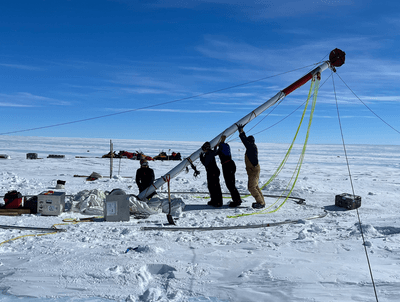
To get their hands on this ancient ice, the team drilled down into the sheet beneath their feet and recovered extremely long sausage-shaped cylinders of ice.
They had drilled between 100 and 200 meters (328 to 656 feet) deep along the fringes of the Antarctic ice sheet at spots where the mountain terrain and slow-moving ice had naturally pushed older layers toward the surface. In contrast, extracting the oldest continuous ice cores elsewhere in East Antarctica typically requires drilling more than 2,000 meters (6,561 feet) down.
"We're still working out the exact conditions that allow such ancient ice to survive so close to the surface," explained Shackleton. "Along with the topography, it's likely a mix of strong winds and bitter cold. The wind blows away fresh snow, and the cold slows the ice to almost a standstill. That makes Allan Hills one of the best places in the world to find shallow old ice, and one of the toughest places to spend a field season."
Once back in the lab, the team looked for levels of chemical isotopes found within the trapped air to reveal the condition of the atmosphere millions of years in the past.
This revealed that the region has experienced around 12°C (22°F) of cooling over the past 6 million years, a finding that neatly fits in with previous evidence that Earth was much warmer during this time compared to today.
“The team has built up a library of what we call ‘climate snapshots’ roughly six times older than any previously reported ice core data, complementing the more detailed younger data from cores in the interior of Antarctica,” said John Higgins of Princeton University.
“Given the spectacularly old ice we have discovered at Allan Hills, we also have designed a comprehensive longer-term new study of this region to try to extend the records even further in time, which we hope to conduct between 2026 and 2031,” added Brooke.
The study is published in 2025 in the journal Proceedings of the National Academy of Sciences.
An earlier version of this story was published in October 2025.