Nature
 PUBLISHED




Across the world’s oceans and coastal regions, animals are behaving in strange ways. Sea turtles are nesting in new places, fish are vanishing, and giant sharks are popping up in unexpected waters. Could the supercharged El Niño be to blame?
If you haven’t heard already, the world is currently in the grip of an extremely powerful El Niño event. It’s very likely to be one of the reasons why the latter half of this year has been wracked by so much extreme weather, from heatwaves and droughts to floods and unusual storm activity.
El Niño is a climate phenomenon characterized by warmer ocean temperatures across the central and eastern tropical Pacific Ocean, triggering a domino effect that has a broad influence on the weather across the world.
It is not surprising that the meteorological shake-up is having an impact on wildlife too.
Turtles take a detour
Take, for example, the behaviour of olive ridley sea turtles, which have been laying eggs on a beach in Orange County, California.
As per NOAA, it’s the first time any sea turtle species has been spotted nesting on the US West Coast, much farther north than their known territory in Mexico and Central America.
"While occasionally seen in Southern California following warm currents, this species has never been documented to nest in the United States," NOAA said in a social media post.
Sharks in strange places
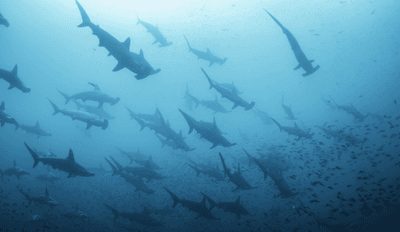
Southern California has also had a visit from hammerhead sharks, another species that’s rarely seen in this neck of the woods. The last time these sharks were spotted in Californian waters was 2015, which was another El Niño year.
The reason behind this unexpected appearance isn’t clear, but it could be explained by warmer Pacific waters pushing them further up the globe.
Likewise, a pilot caught sight of a whale shark, the largest fish in the world, while cruising between Malibu and Santa Barbara Island. Once again, this is an uncommon occurrence in this part of the Pacific that only occurs during El Niño events.
Where did all the fish go?
Fishers are certainly feeling the sting. Trawlers along Latin America's Pacific coast are reportedly coming to shore with half-empty nets as tuna, anchovies, and other widely eaten fish head to cooler waters. It's no coincidence that Pacific waters are several degrees above their average levels right now thanks in part to the ongoing El Niño.
Less fish means less food for seabirds. Scientists have sounded the alarm that several species of seabirds could be decimated as a result of the marine heatwave and its impact on their prey.
And it isn’t just the Pacific being affected. Over in Indonesia, El Niño has brought especially dry conditions, leading to rampant wildfires that are taking a disastrous toll on the native Bornean orangutans.
Many of the impacts from this El Niño are only just coming into focus, but the worst is yet to come. The World Meteorological Organization forecasts that the El Niño event will continue to gain strength before peaking towards the end of this year, with climate impacts “continuing well into 2027.“
If that's the case, the world can expect even more extreme weather, potentially lost animals, and strange goings-on in the months ahead.